College of Veterinary Medicine, Nanjing Agricultural University, Nanjing 210095, China.
Institute for Animal Hygiene, Animal Welfare and Farm Animal Behaviour, University of Veterinary Medicine Hannover, Hannover 30559, Germany.
Cells. 2020 Jan 18;9(1):243. doi: 10.3390/cells9010243.
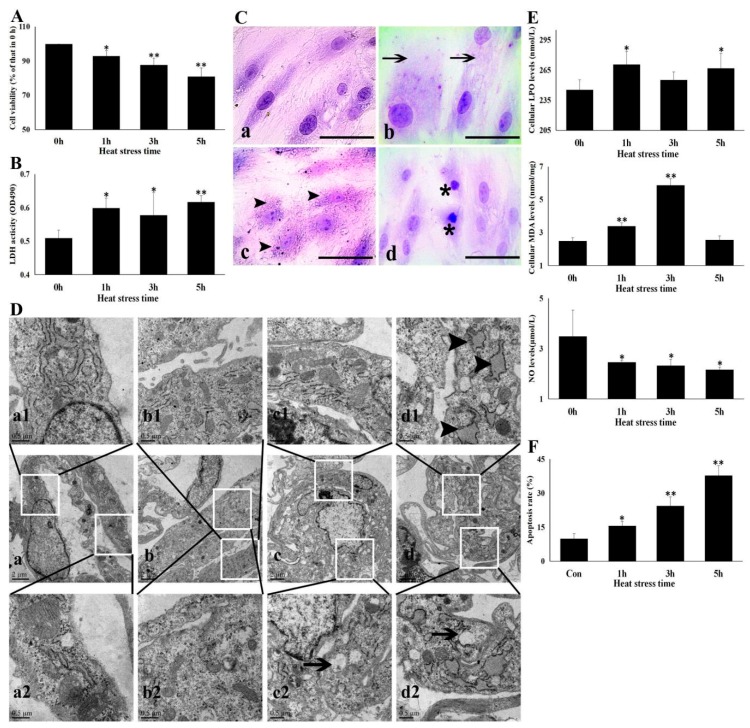
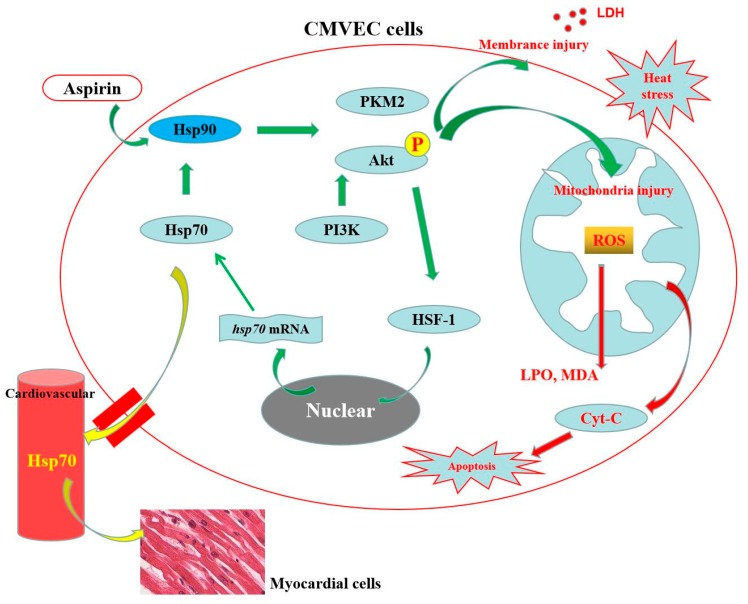
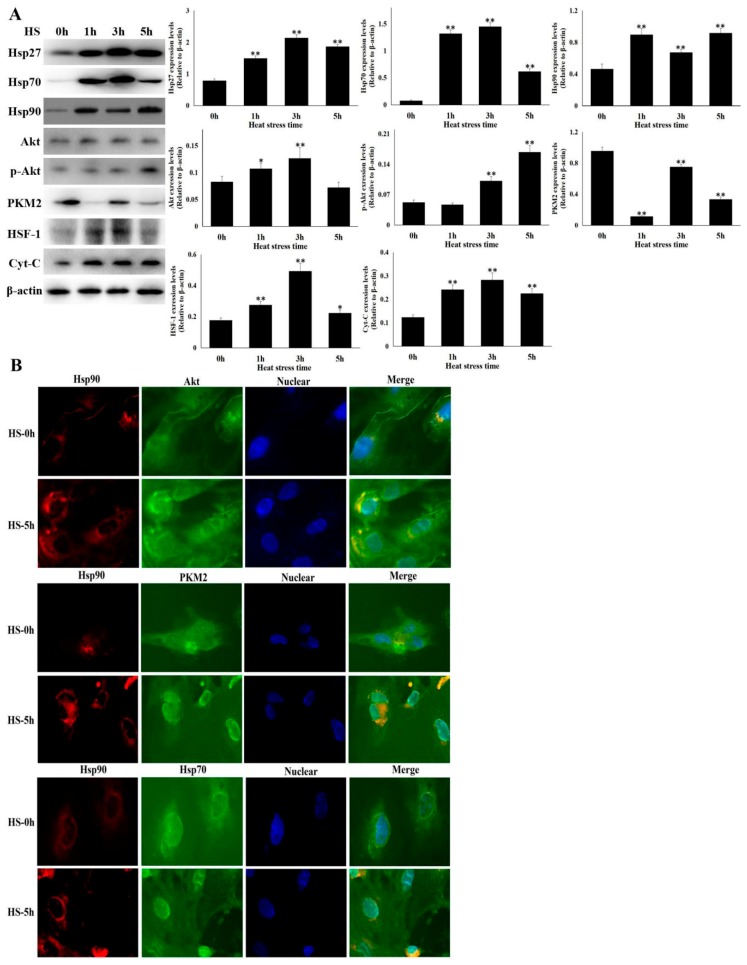
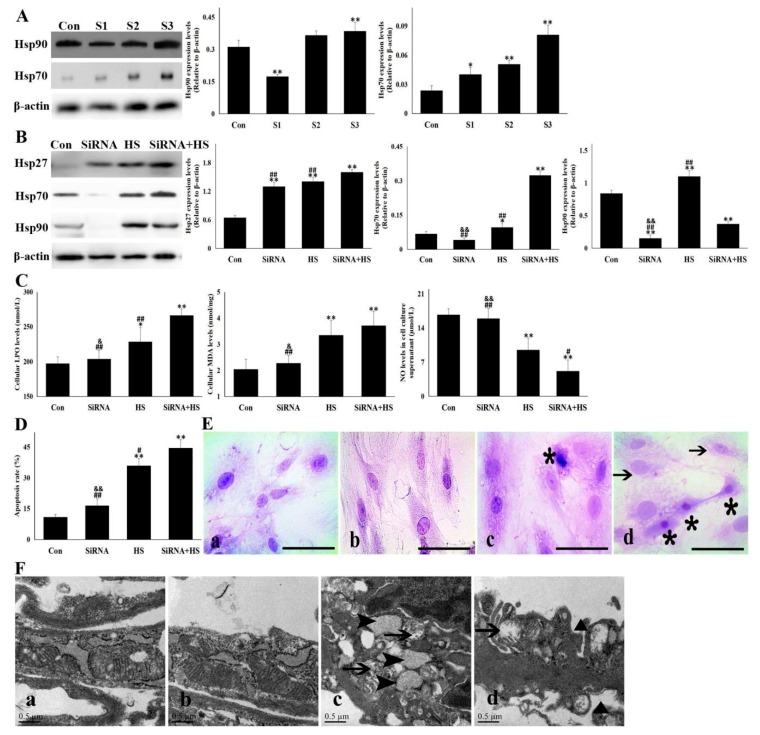
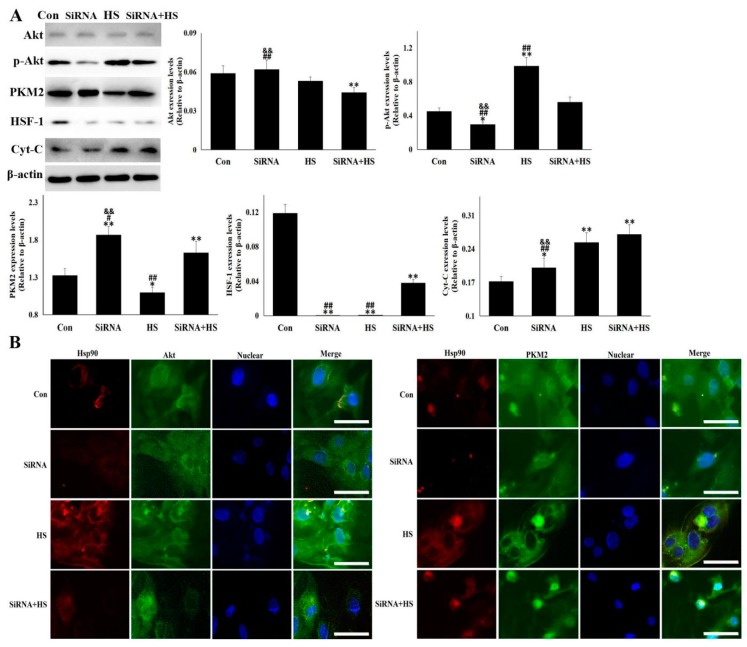
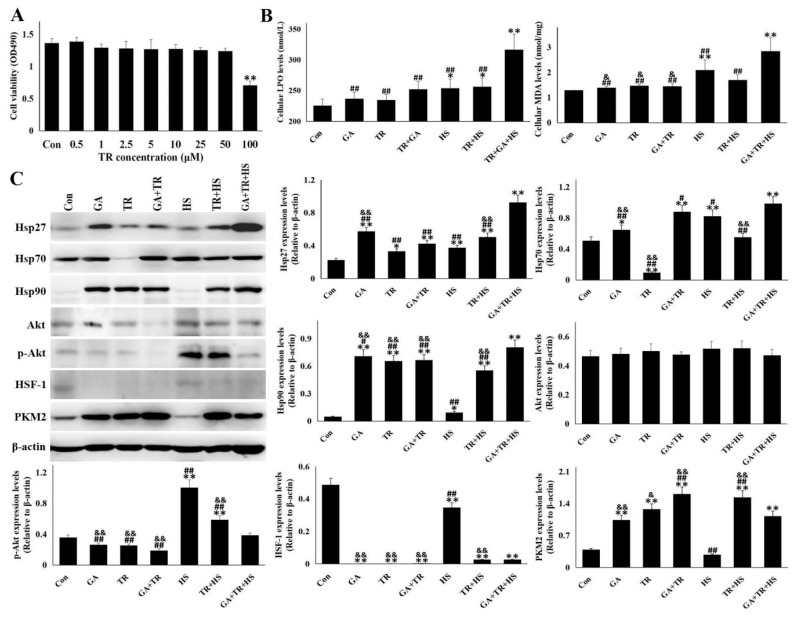
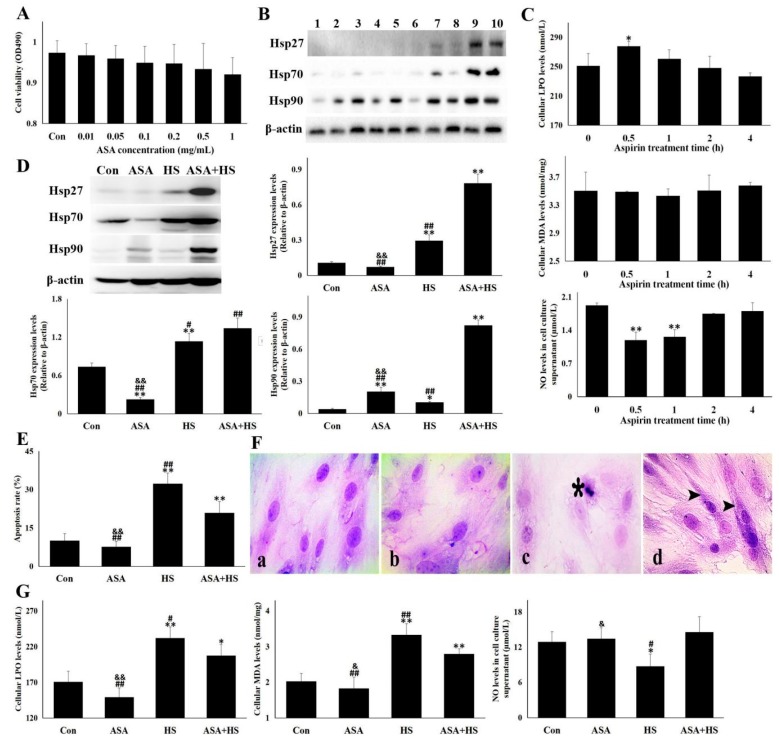
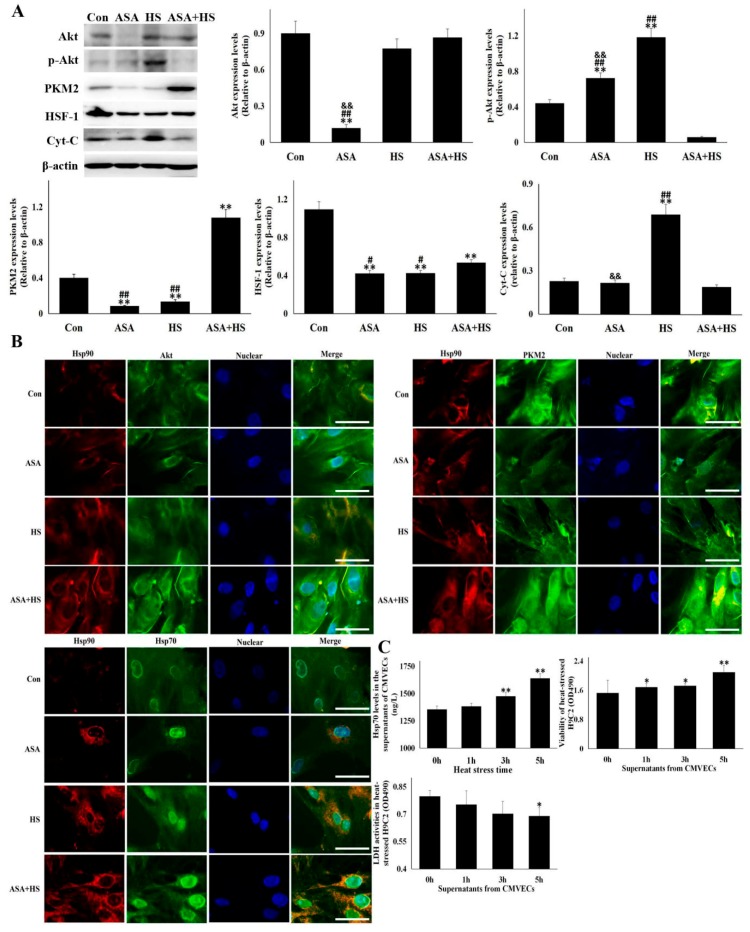
Heat stress (HS) often causes sudden death of humans and animals due to heart failure, mainly resulting from the contraction of cardiac microvasculature followed by myocardial ischemia. Cardiac microvascular endothelial cells (CMVECs) play an important role in maintaining vasodilatation. Aspirin (ASA) is well known for its protective abilities of febrile animals. However, there is little knowledge about molecular resistance mechanisms of CMVECs and which role ASA may play in this context. Therefore, we used a heat stress model of rat cardiac microvascular endothelial cell cultures in vitro and investigated the cell injuries and molecular resistance mechanism of CMVECs caused by heat stress, and the effect of aspirin (ASA) on it. HS induced severe pathological damage of CMVECs and cellular oxidative stress and dysfunction of NO release. Hsp90 was proven to be indispensable for resisting HS-injury of CMVECs through PI3K-Akt and PKM2 signaling pathways. Meanwhile, PKM2 functioned in reducing Akt phosphorylation. ASA treatment of CMVECs induced a significant expression of Hsp90, which promoted both Akt and PKM2 signals, which are beneficial for relieving HS damage and maintaining the function of CMVECs. Akt activation also promoted HSF-1 that regulates the expression of Hsp70, which is known to assist Hsp90's molecular chaperone function and when released to the extracellular liquid to protect myocardial cells from HS damage. To the best of our knowledge, this is the first study to show that HS damages CMVECs and the protection mechanism of Hsp90 on it, and that ASA provides a new potential strategy for regulating cardiac microcirculation preventing HS-induced heart failure.
热应激(HS)常导致人心力衰竭而突然死亡,主要是由于心脏微血管收缩,继而导致心肌缺血。心脏微血管内皮细胞(CMVECs)在维持血管舒张方面起着重要作用。阿司匹林(ASA)因其对发热动物的保护作用而广为人知。然而,关于 CMVECs 的分子抵抗机制以及 ASA 在这方面可能发挥的作用知之甚少。因此,我们使用体外大鼠心脏微血管内皮细胞培养的热应激模型,研究了热应激引起的 CMVECs 细胞损伤和分子抵抗机制,以及阿司匹林(ASA)对此的影响。HS 导致 CMVECs 严重的病理损伤、细胞氧化应激和 NO 释放功能障碍。Hsp90 被证明通过 PI3K-Akt 和 PKM2 信号通路对 CMVECs 的 HS 损伤具有不可缺少的抵抗作用。同时,PKM2 可减少 Akt 的磷酸化。ASA 处理 CMVECs 可显著诱导 Hsp90 的表达,从而促进 Akt 和 PKM2 信号,有利于缓解 HS 损伤并维持 CMVECs 的功能。Akt 的激活还促进了 HSF-1 的表达,后者调节 Hsp70 的表达,众所周知,Hsp70 有助于 Hsp90 的分子伴侣功能,当释放到细胞外液中时,可保护心肌细胞免受 HS 损伤。据我们所知,这是第一项研究表明 HS 损伤 CMVECs 以及 Hsp90 对其的保护机制,并且 ASA 为调节心脏微循环提供了一种新的潜在策略,以防止 HS 引起的心力衰竭。