Li Chun-Lian, Xue De-Xing, Wang Yi-Han, Xie Zhi-Ping, Staehelin Christian
State Key Laboratory of Biocontrol and Guangdong Key Laboratory of Plant Resources, School of Life Sciences, Sun Yat-Sen University, East Campus, Guangzhou, 510006 Guangdong China.
Plant Methods. 2020 Jan 16;16:3. doi: 10.1186/s13007-020-0551-4. eCollection 2020.
Plant receptors with lysin motifs (LsyM) recognize microbial signals such as fungal chitin and lipo-chitooligosaccharidic Nod factors of nitrogen-fixing rhizobia. It is generally assumed that ligand-induced dimerization of LysM receptors is an essential step in activation of intracellular kinase domains and downstream signaling. Consequently, genes required for plant defense and establishment of symbiosis are expressed. We recently found that three LysM receptor proteins (namely LYK1, LYK4 and LYK5) of form a tripartite receptor complex to perceive chitin. However, constitutive and ligand-induced interactions of LysM receptors generally remain difficult to be characterized.
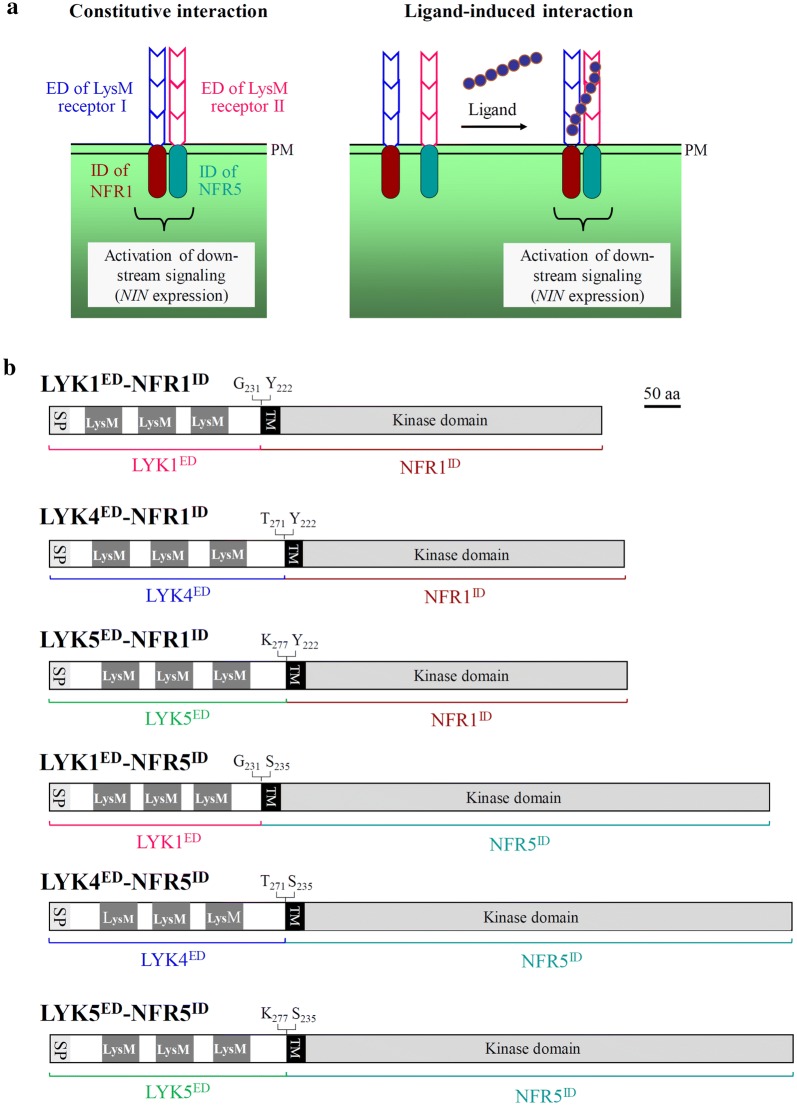
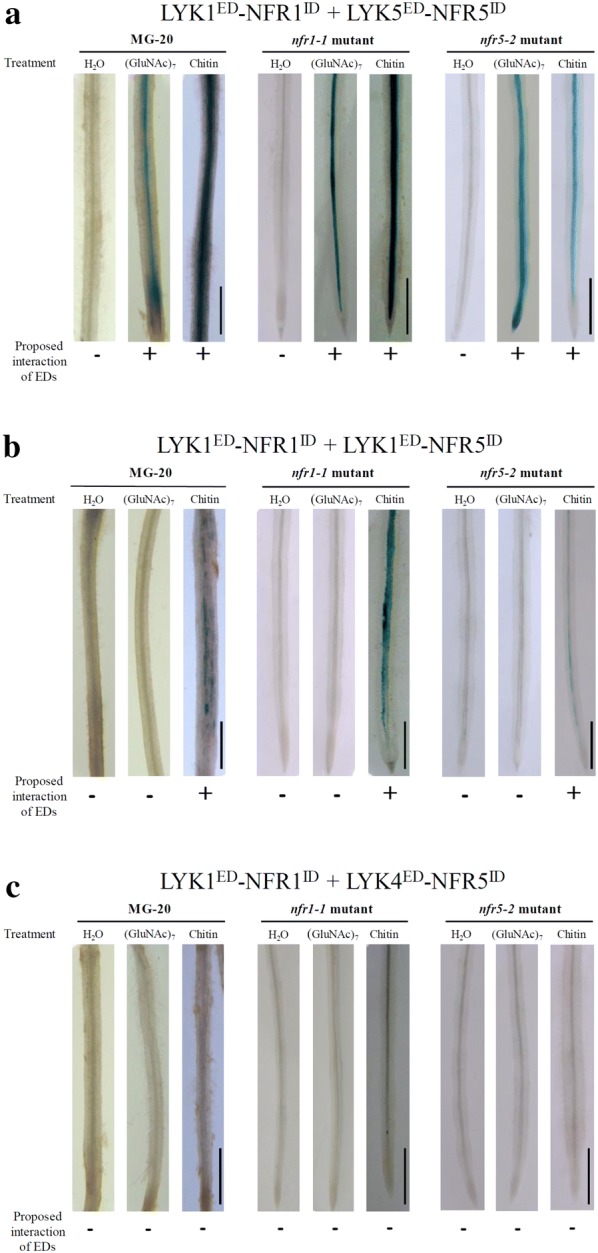
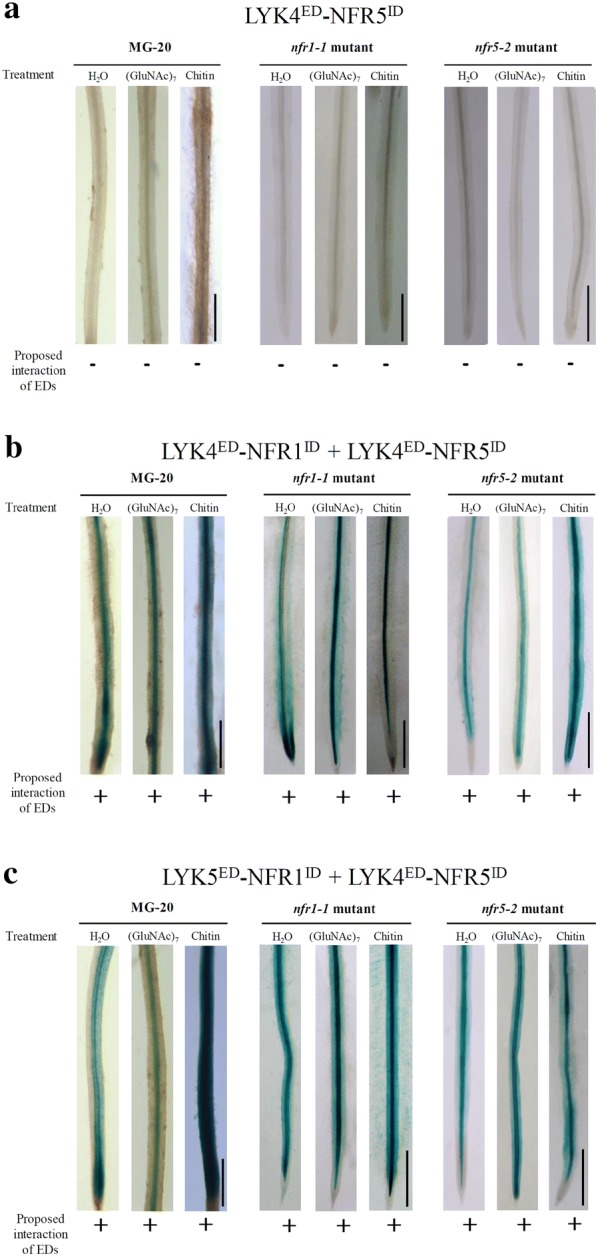
Interactions between ectodomains of LYK1, LYK4 and LYK5 were investigated by a chimeric receptor approach using hairy roots of the legume . Synthetic receptor pairs consisting of a LYK ectodomain and the intracellular domain of a Nod factor receptor (NFR1 and NFR5, respectively) were tested for their capacity to activate expression of the symbiotic (nodule inception) gene. The results indicated constitutive (LYK4-LYK4, LYK4-LYK5) and chitin-induced interactions (LYK1-LYK1, LYK1-LYK5) of the examined ectodomains.
We present a method to functionally analyze constitutive and ligand-induced interactions of LysM-type proteins.
具有溶素基序(LsyM)的植物受体可识别微生物信号,如真菌几丁质和固氮根瘤菌的脂壳寡糖结瘤因子。一般认为,配体诱导的溶素基序受体二聚化是激活细胞内激酶结构域和下游信号传导的关键步骤。因此,植物防御和共生建立所需的基因得以表达。我们最近发现,三种溶素基序受体蛋白(即LYK1、LYK4和LYK5)形成一个三方受体复合物来感知几丁质。然而,溶素基序受体的组成型和配体诱导的相互作用通常仍难以表征。
通过使用豆科植物毛状根的嵌合受体方法,研究了LYK1、LYK4和LYK5胞外域之间的相互作用。测试了由LYK胞外域和结瘤因子受体(分别为NFR1和NFR5)的细胞内结构域组成的合成受体对激活共生(结瘤起始)基因表达的能力。结果表明,所检测的胞外域存在组成型(LYK4-LYK4、LYK4-LYK5)和几丁质诱导的相互作用(LYK1-LYK1、LYK1-LYK5)。
我们提出了一种功能分析溶素基序型蛋白组成型和配体诱导相互作用的方法。