Zheng Chuanrui, Shan Letian, Tong Peijian, Efferth Thomas
The First Affiliated Hospital, Zhejiang Chinese Medical University, Hangzhou, Zhejiang, People's Republic of China.
Department of Pharmaceutical Biology, Institute of Pharmacy and Biochemistry, Johannes Gutenberg University, Mainz, Germany.
Dose Response. 2020 Jan 13;18(1):1559325819897180. doi: 10.1177/1559325819897180. eCollection 2020 Jan-Mar.
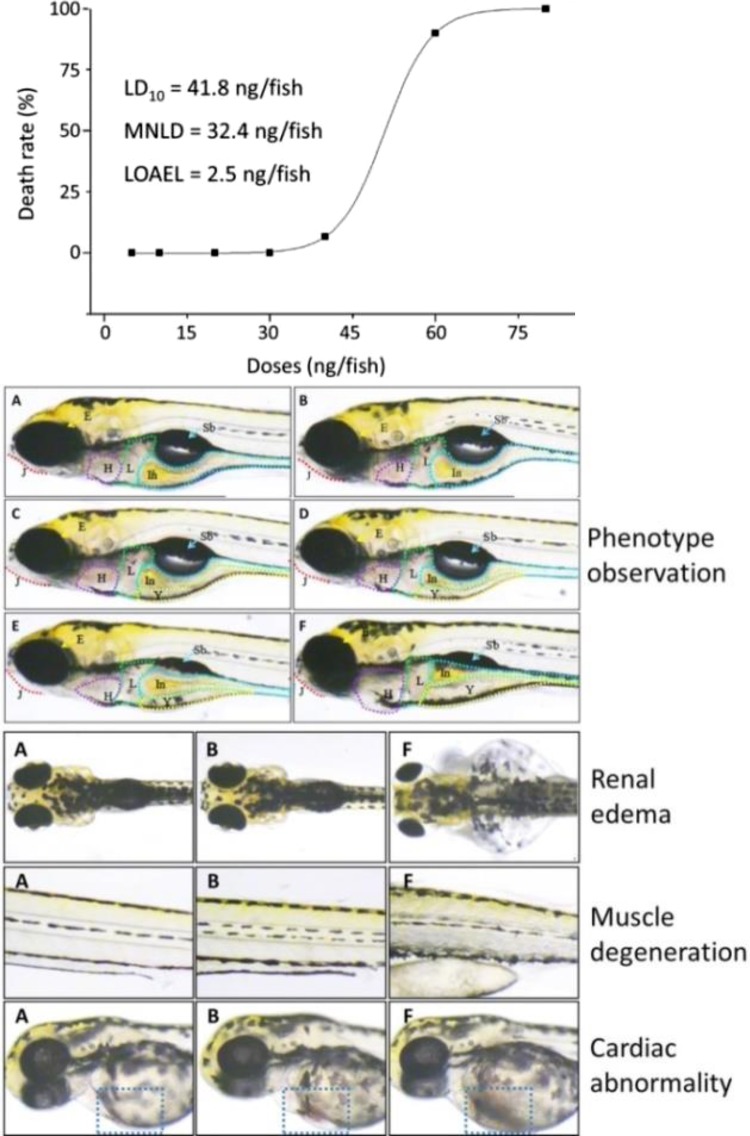
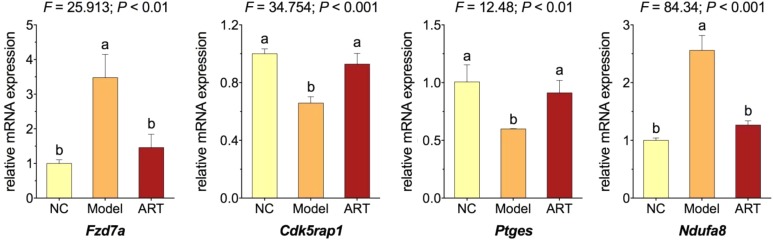
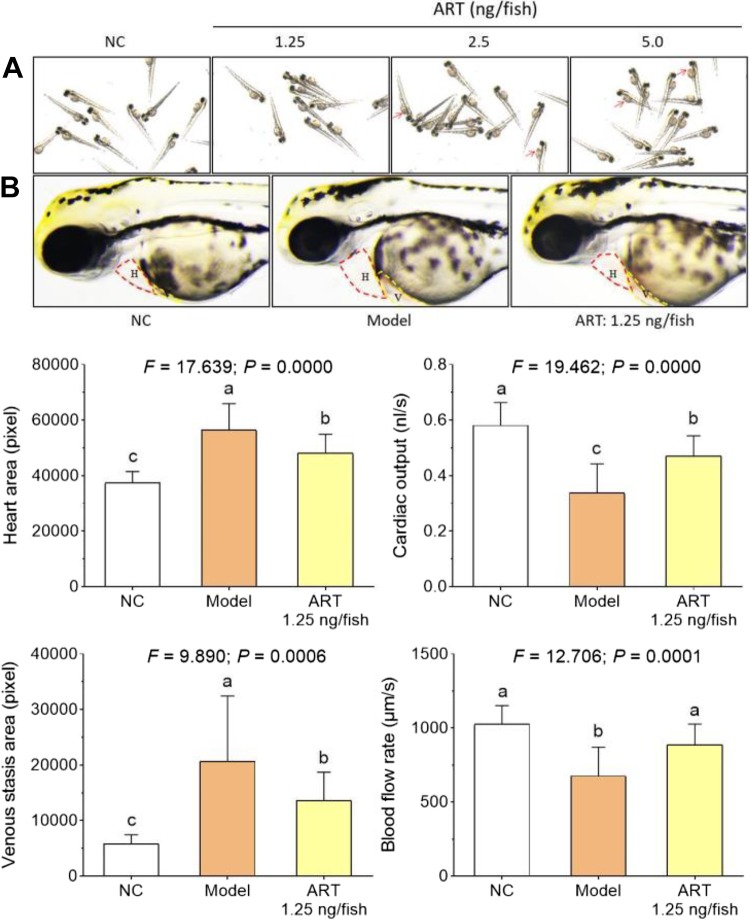
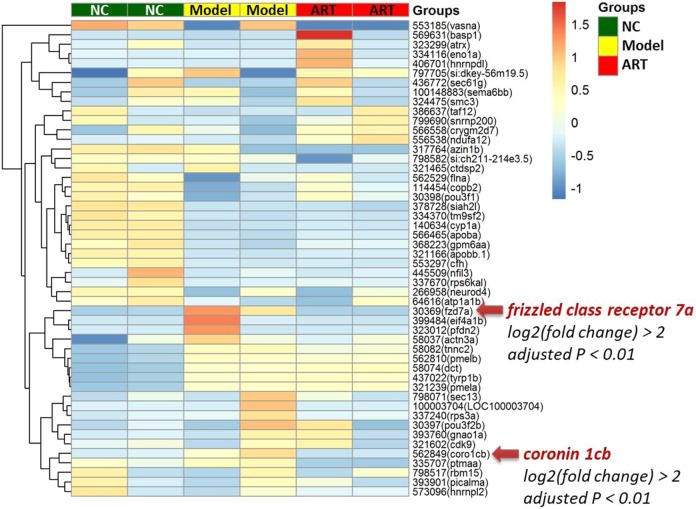
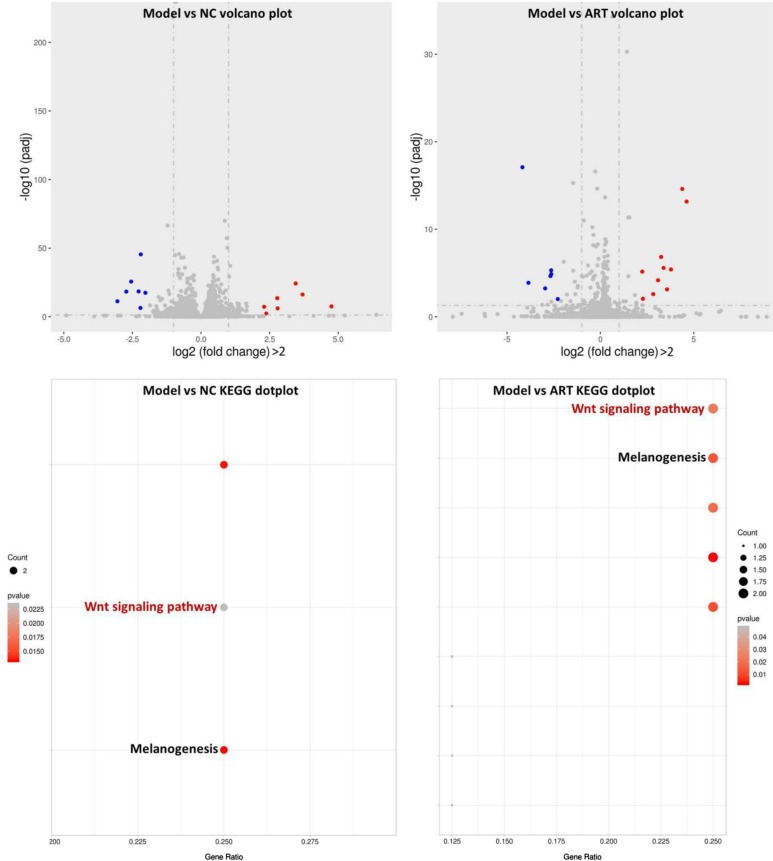
Although artesunate (ART) is generally accepted as a safe and well-tolerated first-line treatment of severe malaria, cases of severe side effects and toxicity of this compound are also documented. This study applied larval zebrafishes to determine the acute toxicity and efficacy of ART and performed RNA-sequencing analyses to unravel the underlying signaling pathways contributing to ART's activities. Results from acute toxicity assay showed that a single-dose intravenous injection of ART from 3.6 ng/fish (1/9 maximum nonlethal concentration) to 41.8 ng/fish (lethal dose 10%) obviously induced pericardial edema, circulation defects, yolk sac absorption delay, renal edema, and swim bladder loss, indicating acute cardiotoxicity, nephrotoxicity, and developmental toxicity of ART. Efficacy assay showed that ART at 1/2 lowest observed adverse effect level (LOAEL) exerted cardioprotective effects on zebrafishes with verapamil-induced heart failure. Artesunate significantly restored cardiac malformation, venous stasis, cardiac output decrease, and blood flow dynamics reduction. No adverse events were observed with this treatment, indicating that ART at doses below LOAEL was effective and safe. These results indicate that ART at low doses was cardioprotective, but revealed cardiotoxicity at high doses. RNA-sequencing analysis showed that gene expression of () was significantly upregulated in zebrafishes with verapamil-induced heart failure and significantly downregulated if ART at 1/2 LOAEL was coadministrated, indicating that -modulated Wnt signaling may mediate the cardioprotective effect of ART. For the first time, this study revealed the biphasic property of ART, providing in-depth knowledge on the pharmacological efficacy-safety profile for its therapeutic and safe applications in clinic.
尽管青蒿琥酯(ART)通常被认为是治疗重症疟疾的一种安全且耐受性良好的一线药物,但该化合物严重副作用和毒性的病例也有记载。本研究应用斑马鱼幼体来确定ART的急性毒性和疗效,并进行RNA测序分析以揭示促成ART活性的潜在信号通路。急性毒性试验结果表明,从3.6纳克/鱼(最大非致死浓度的1/9)到41.8纳克/鱼(10%致死剂量)的单剂量静脉注射ART明显诱导心包水肿、循环缺陷、卵黄囊吸收延迟、肾水肿和鳔缺失,表明ART具有急性心脏毒性、肾毒性和发育毒性。疗效试验表明,处于1/2最低观察到有害作用水平(LOAEL)的ART对维拉帕米诱导的心力衰竭斑马鱼具有心脏保护作用。青蒿琥酯显著恢复了心脏畸形、静脉淤滞、心输出量减少和血流动力学降低。该治疗未观察到不良事件,表明低于LOAEL剂量的ART是有效且安全的。这些结果表明低剂量的ART具有心脏保护作用,但高剂量时显示出心脏毒性。RNA测序分析表明,在维拉帕米诱导的心力衰竭斑马鱼中,()的基因表达显著上调,而如果同时给予1/2 LOAEL的ART则显著下调,表明 - 调节的Wnt信号可能介导ART的心脏保护作用。本研究首次揭示了ART的双相特性,为其在临床治疗和安全应用中的药理疗效 - 安全性概况提供了深入的认识。