Haot J, Hamichi L, Wallez L, Mainguet P
Department of Pathological Anatomy, Université Catholique de Louvain, Brussels, Belgium.
Gut. 1988 Sep;29(9):1258-64. doi: 10.1136/gut.29.9.1258.
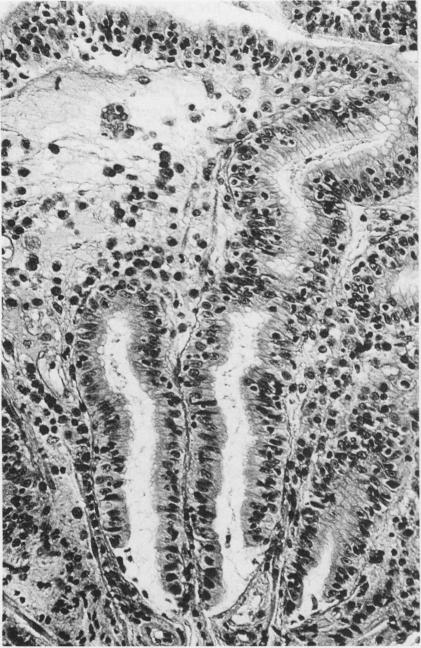
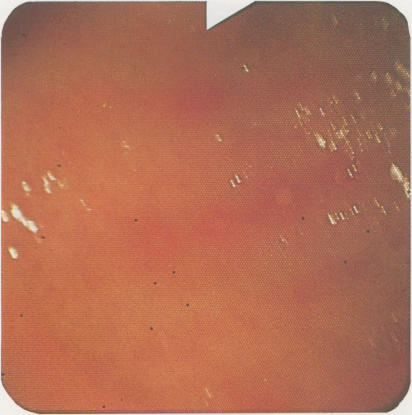
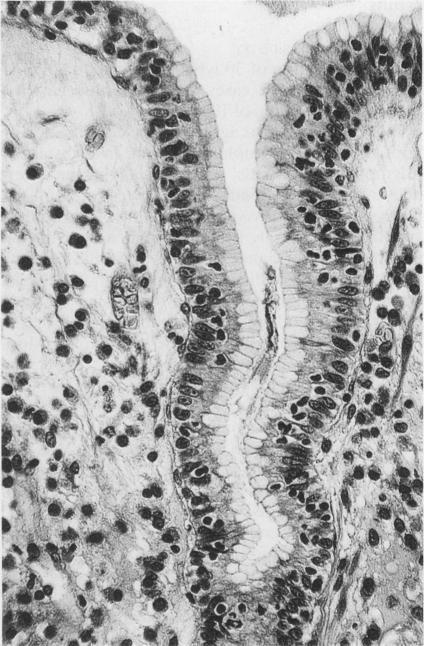
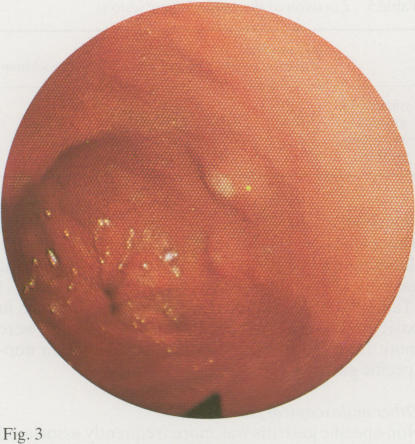
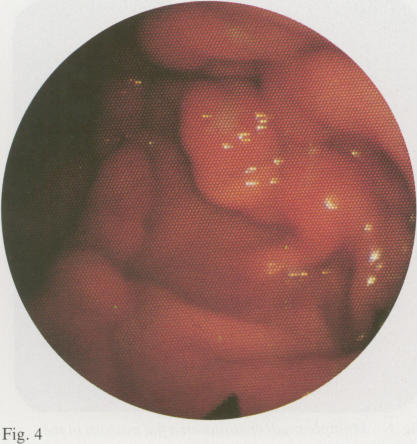
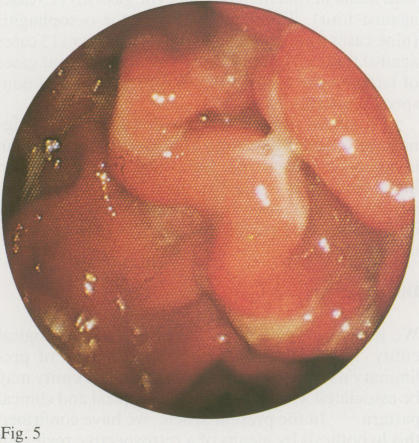
Lymphocytic gastritis is a histopathological entity characterised by the accumulation of small lymphocytes in the surface and foveolar epithelium. In order to investigate the correlation between endoscopy and histology in this condition, 192 observations selected on the basis of a presumed diagnosis of erosive or varioliform gastritis were reviewed. Ninety two instances corresponded to lymphocytic gastritis, while 100 did not show any particular microscopic feature and were labelled non-specific gastritis. There was a good correlation (48 of 58) between the diagnosis of the so-called varioliform gastritis and the histological evidence of lymphocytic gastritis. The correlation was even better when nodules, erosions, and enlarged folds were considered. Lymphocytic gastritis has a typical endoscopical appearance consisting of nodules, erosions, and large folds predominating in the gastric body. This contrasts with non-specific gastritis, which affects the antrum and produces erosions on a flat mucosa.
淋巴细胞性胃炎是一种组织病理学实体,其特征是在表面和小凹上皮中积聚小淋巴细胞。为了研究这种情况下内镜检查与组织学之间的相关性,我们回顾了192例基于糜烂性或痘疮样胃炎的假定诊断而选择的观察病例。92例符合淋巴细胞性胃炎,而100例未显示任何特殊的微观特征,被标记为非特异性胃炎。所谓痘疮样胃炎的诊断与淋巴细胞性胃炎的组织学证据之间存在良好的相关性(58例中有48例)。当考虑结节、糜烂和皱襞增大时,相关性更好。淋巴细胞性胃炎具有典型的内镜表现,包括结节、糜烂和以胃体为主的大皱襞。这与非特异性胃炎形成对比,非特异性胃炎累及胃窦并在平坦的黏膜上产生糜烂。