Department of Cellular Biophysics, Max Planck Institute for Medical Research, Jahnstraße 29, D-69120, Heidelberg, Germany.
Department of Biophysical Chemistry, Institute of Physical Chemistry, Heidelberg University, INF 253, D-69120, Heidelberg, Germany.
Nat Commun. 2020 Jan 24;11(1):472. doi: 10.1038/s41467-020-14390-1.
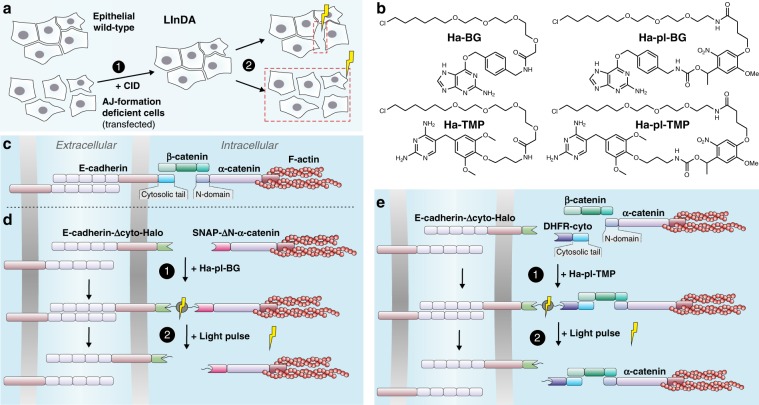
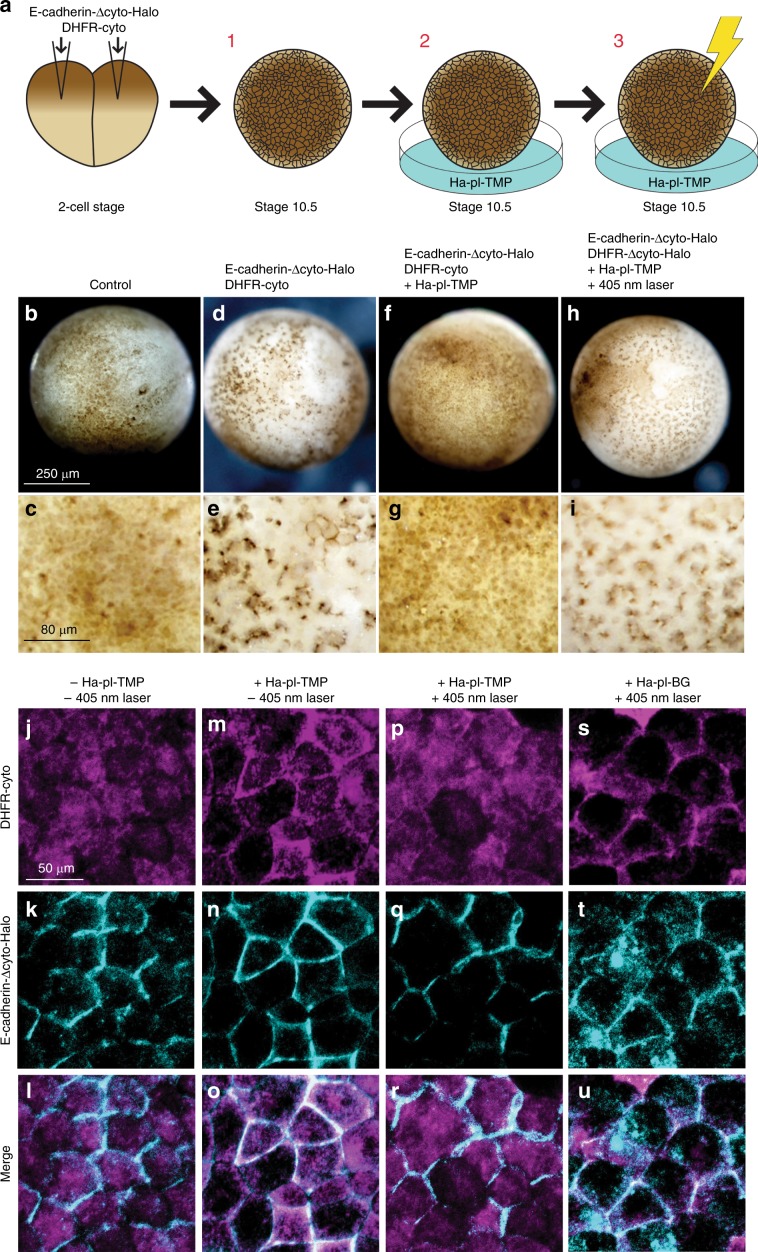
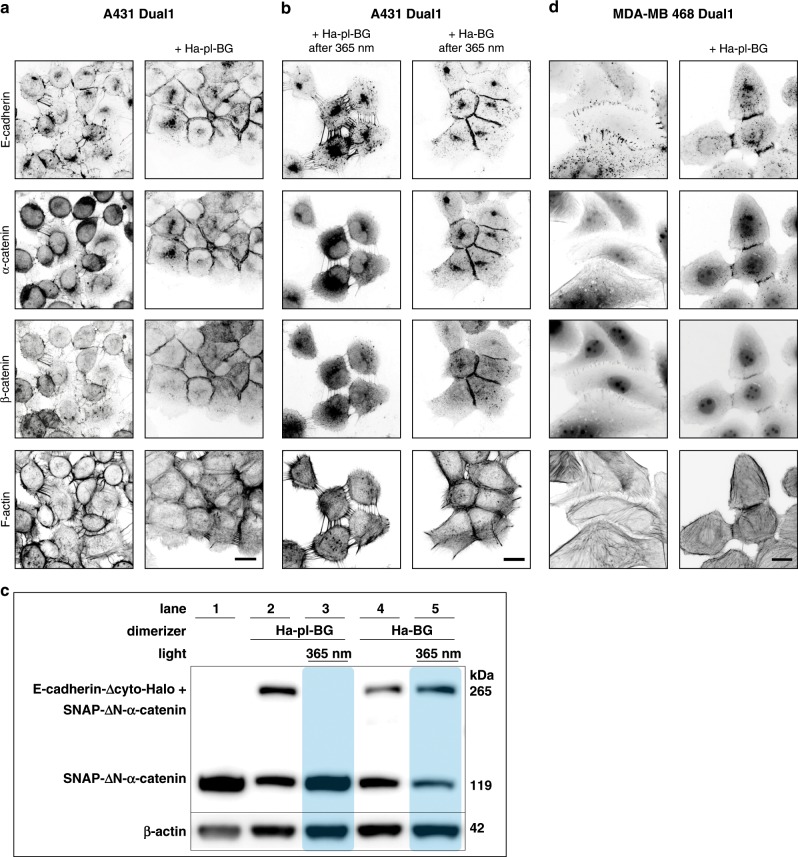
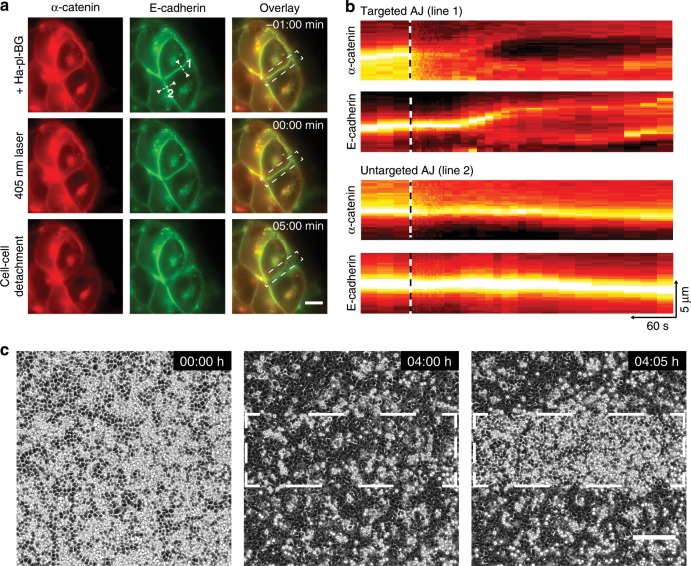
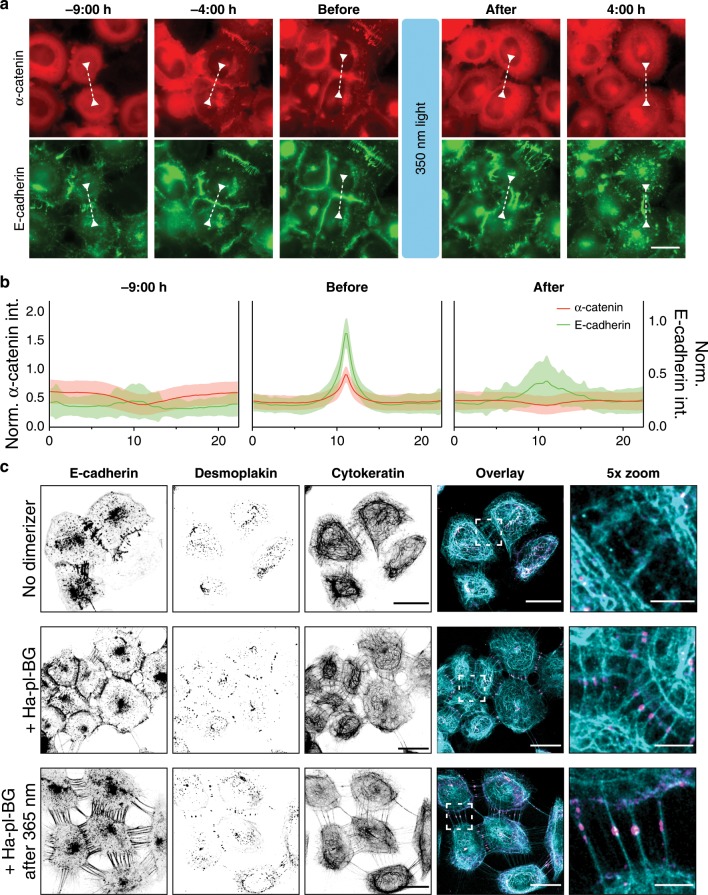
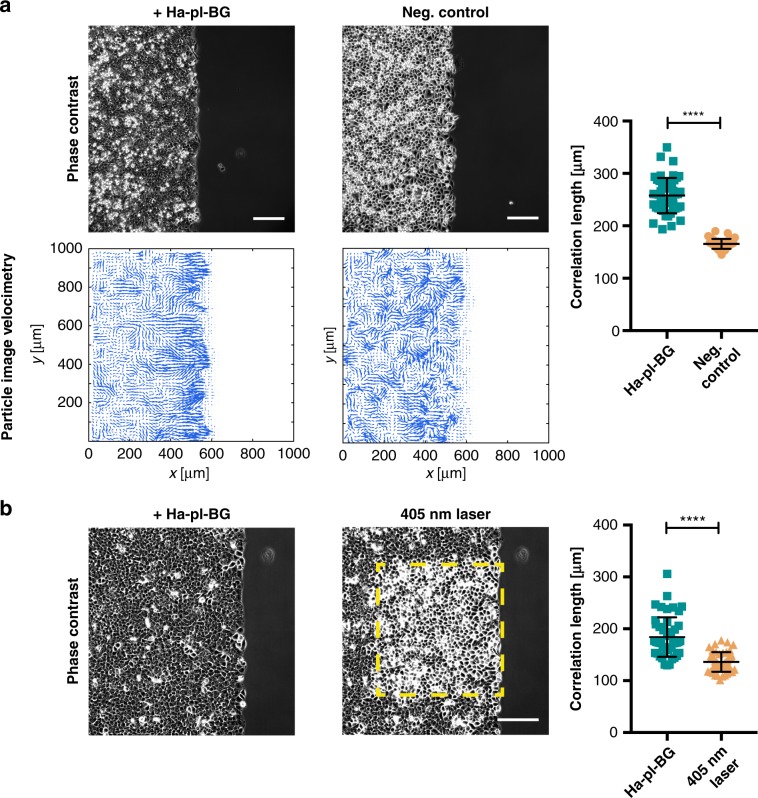
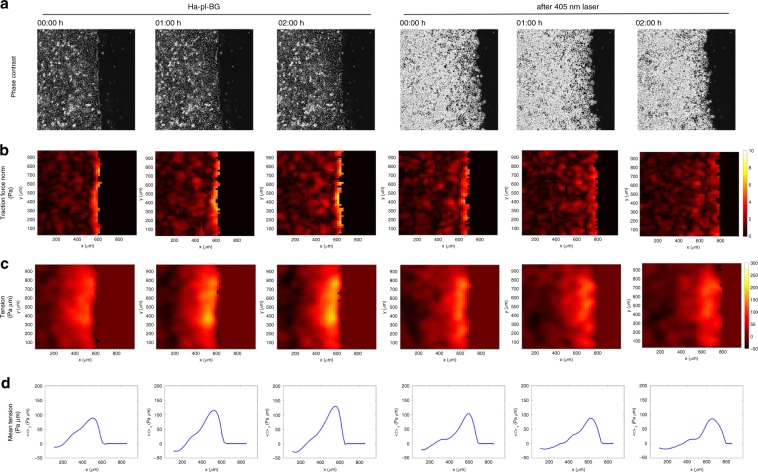
The cadherin-catenin complex at adherens junctions (AJs) is essential for the formation of cell-cell adhesion and epithelium integrity; however, studying the dynamic regulation of AJs at high spatio-temporal resolution remains challenging. Here we present an optochemical tool which allows reconstitution of AJs by chemical dimerization of the force bearing structures and their precise light-induced dissociation. For the dimerization, we reconstitute acto-myosin connection of a tailless E-cadherin by two ways: direct recruitment of α-catenin, and linking its cytosolic tail to the transmembrane domain. Our approach enables a specific ON-OFF switch for mechanical coupling between cells that can be controlled spatially on subcellular or tissue scale via photocleavage. The combination with cell migration analysis and traction force microscopy shows a wide-range of applicability and confirms the mechanical contribution of the reconstituted AJs. Remarkably, in vivo our tool is able to control structural and functional integrity of the epidermal layer in developing Xenopus embryos.
黏着连接(AJs)处的钙黏蛋白-连环蛋白复合物对于细胞-细胞黏附以及上皮完整性的形成至关重要;然而,在高时空分辨率下研究 AJs 的动态调控仍然具有挑战性。在这里,我们提出了一种光化学工具,它可以通过力承载结构的化学二聚化来重建 AJs,并精确地用光诱导其解离。对于二聚化,我们通过两种方式重建无尾 E-钙黏蛋白的肌动球蛋白连接:直接招募连环蛋白α,以及将其胞质尾部连接到跨膜结构域。我们的方法为细胞之间的机械偶联提供了一个特定的 ON-OFF 开关,通过光裂解可以在亚细胞或组织尺度上进行空间控制。结合细胞迁移分析和牵引力显微镜,该方法具有广泛的适用性,并证实了重建的 AJs 的力学贡献。值得注意的是,在体内,我们的工具能够控制发育中的非洲爪蟾胚胎表皮层的结构和功能完整性。