Taniguchi Masateru
The Institute of Scientific and Industrial Research, Osaka University, 8-1 Mihogaoka, Ibaraki, Osaka 567-0047, Japan.
ACS Omega. 2020 Jan 7;5(2):959-964. doi: 10.1021/acsomega.9b03660. eCollection 2020 Jan 21.
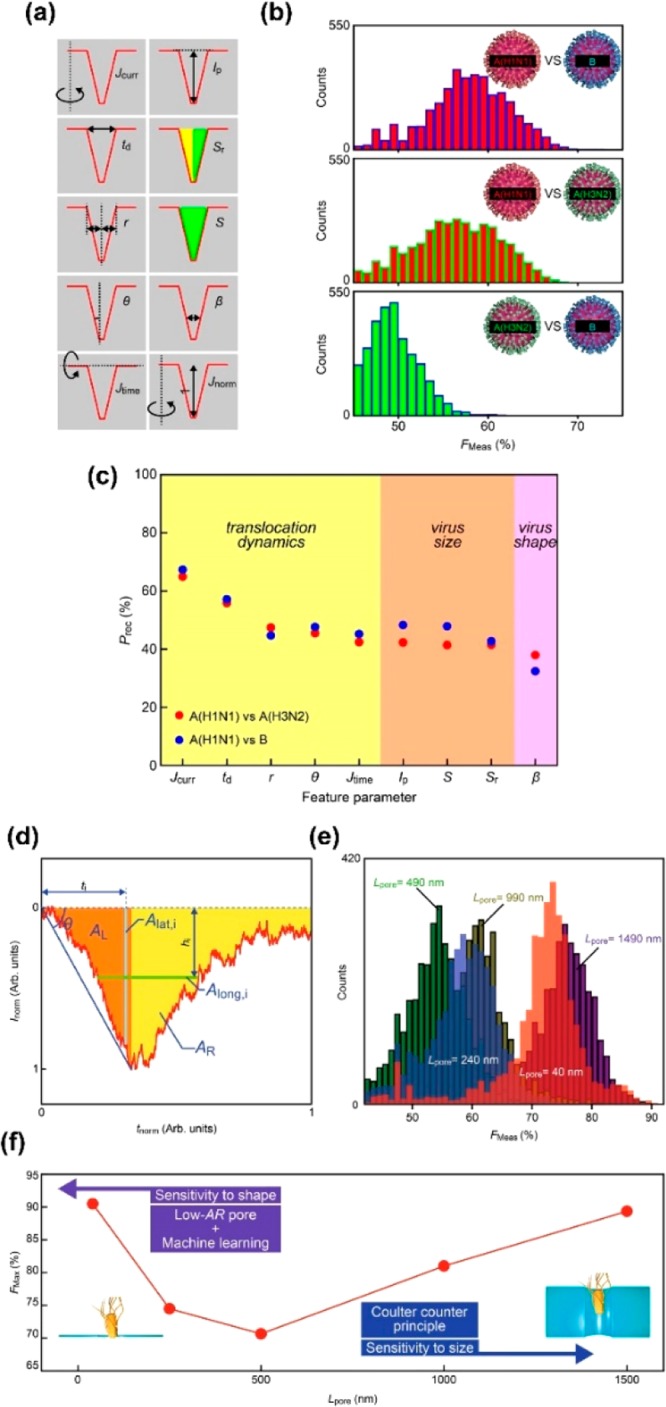
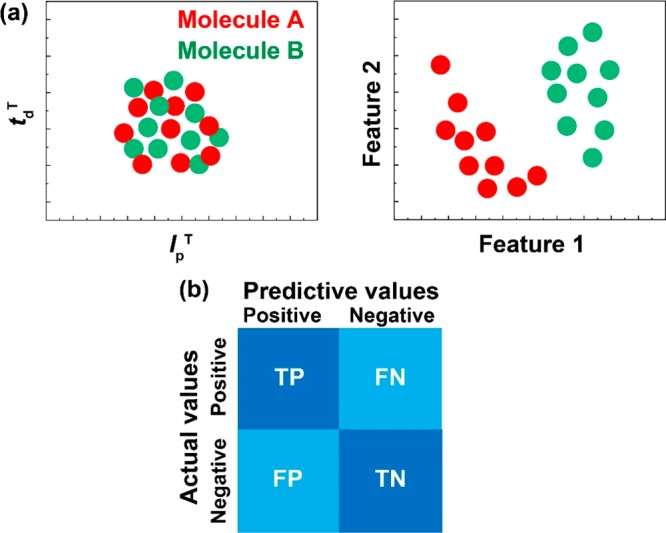
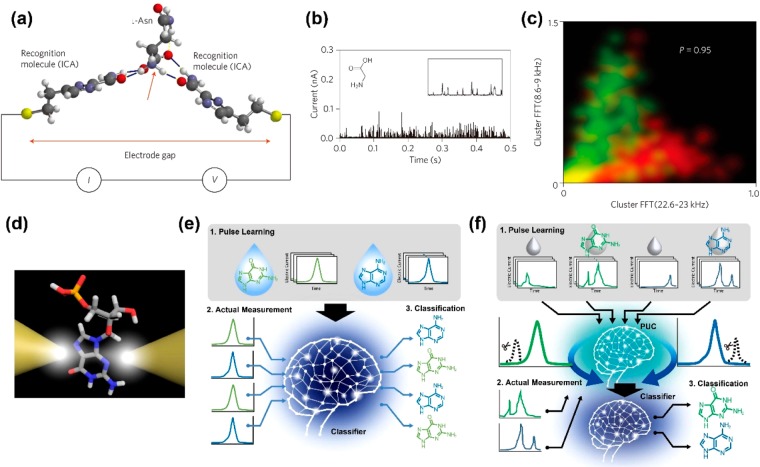
The development of a next-generation DNA sequencer has provided a method for electrically measuring single molecules. Methods for electrically measuring one molecule are roughly divided into methods for measuring tunneling and ion currents. These methods enable identification of a single molecule of DNA, a RNA nucleotide, or a single protein based on current histograms. However, overlapping of current histograms of molecules with similar properties has been a major barrier to identifying single molecules with high accuracy. This barrier was broken by introducing machine learning. Combining single-molecule electrical measurement and machine learning enables high-precision identification of single molecules. Highly accurate discrimination has been demonstrated for DNA nucleotides, RNA nucleotides, amino acids, sugars, viruses, and bacteria. This combination enables quantitative evaluation of molecular recognition ability. Furthermore, a device structure suitable for high-precision identification has been designed. Combining single-molecule electrical measurement with machine learning enables digital analytical chemistry that can count certain types of molecules. Digital analytical chemistry enables comprehensive analysis of chemical reactions. This new analytical method will lead to the discovery of unknown or missed valuable molecules.
下一代DNA测序仪的发展提供了一种电测量单分子的方法。电测量单个分子的方法大致分为测量隧道电流和离子电流的方法。这些方法能够基于电流直方图识别单个DNA分子、RNA核苷酸或单个蛋白质。然而,具有相似性质的分子的电流直方图重叠一直是高精度识别单个分子的主要障碍。通过引入机器学习打破了这一障碍。将单分子电测量与机器学习相结合能够高精度识别单分子。对于DNA核苷酸、RNA核苷酸、氨基酸、糖类、病毒和细菌,已经证明了能够进行高度准确的区分。这种结合能够对分子识别能力进行定量评估。此外,还设计了一种适用于高精度识别的器件结构。将单分子电测量与机器学习相结合能够实现可对特定类型分子进行计数的数字分析化学。数字分析化学能够对化学反应进行全面分析。这种新的分析方法将导致发现未知或遗漏的有价值分子。