Department of Molecular, Cellular, and Developmental Biology, Yale University, New Haven, United States.
Department of Chemistry, Yale University, New Haven, United States.
Elife. 2020 Jan 28;9:e48511. doi: 10.7554/eLife.48511.
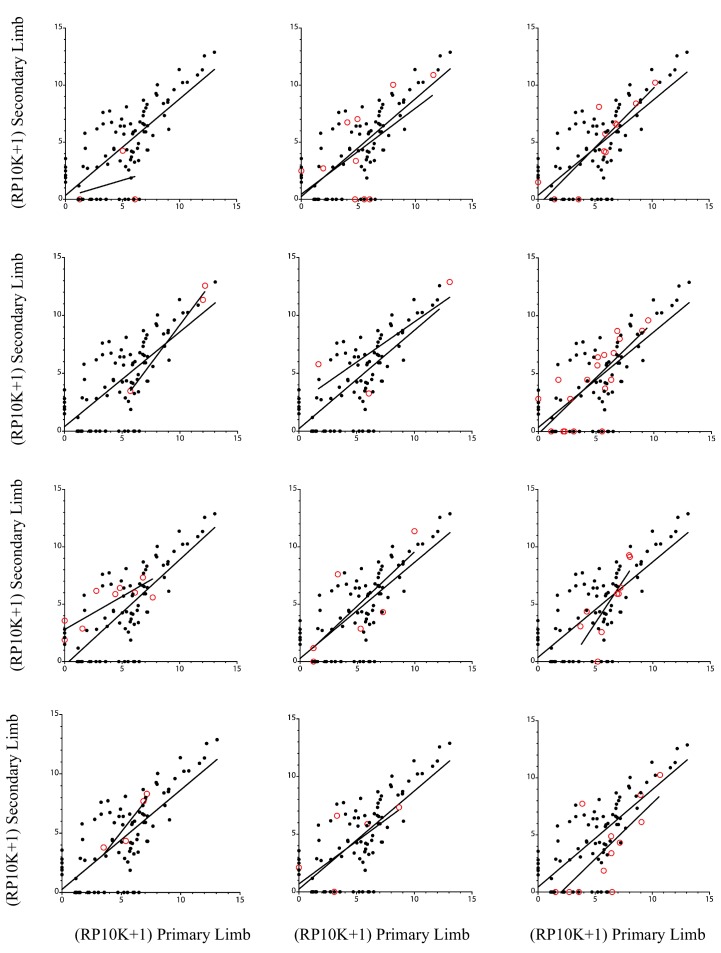
Axolotls and other salamanders can regenerate entire limbs after amputation as adults, and much recent effort has sought to identify the molecular programs controlling this process. While targeted mutagenesis approaches like CRISPR/Cas9 now permit gene-level investigation of these mechanisms, genetic screening in the axolotl requires an extensive commitment of time and space. Previously, we quantified CRISPR/Cas9-generated mutations in the limbs of mosaic mutant axolotls before and after regeneration and found that the regenerated limb is a highfidelity replicate of the original limb (Flowers et al. 2017). Here, we circumvent aforementioned genetic screening limitations and present methods for a multiplex CRISPR/Cas9 haploid screen in chimeric axolotls (MuCHaChA), which is a novel platform for haploid genetic screening in animals to identify genes essential for limb regeneration.
美西螈和其他蝾螈在成年后可以再生完整的肢体,最近有大量研究试图确定控制这一过程的分子程序。虽然像 CRISPR/Cas9 这样的靶向诱变方法现在可以对这些机制进行基因水平的研究,但在美西螈中的遗传筛选需要大量的时间和空间。之前,我们在再生前后对嵌合体突变美西螈的肢体中的 CRISPR/Cas9 产生的突变进行了定量分析,发现再生的肢体是原始肢体的高保真复制品(Flowers 等人,2017 年)。在这里,我们规避了上述遗传筛选的限制,并提出了在嵌合体美西螈(MuCHaChA)中进行多重 CRISPR/Cas9 单倍体筛选的方法,这是一种在动物中进行单倍体遗传筛选以鉴定对肢体再生至关重要的基因的新平台。