School of Media and Communication, RMIT University, Melbourne, Vic, Australia.
School of Design, RMIT University, Melbourne, Vic, Australia.
PLoS One. 2020 Jan 28;15(1):e0215788. doi: 10.1371/journal.pone.0215788. eCollection 2020.
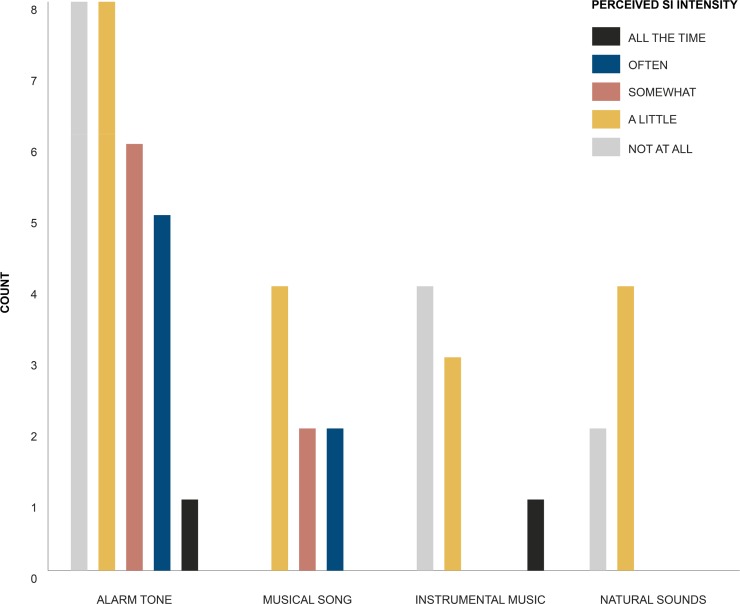
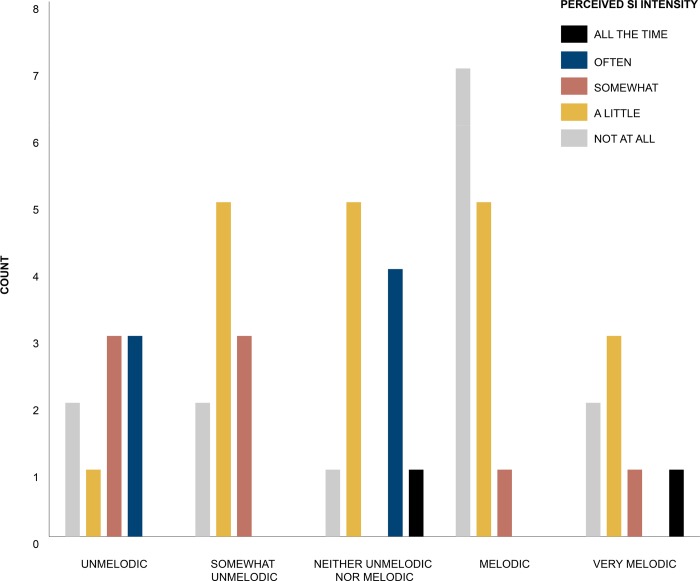
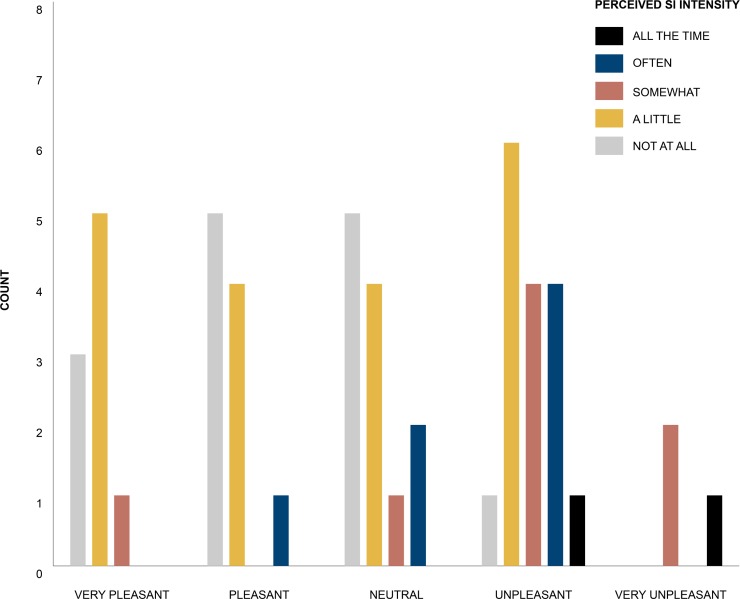
Sleep inertia is a potentially dangerous reduction in human alertness and occurs 0-4 hours after waking. The type of sound people set as their alarm for waking has been shown to reduce the effects of sleep inertia, however, the elemental musical factors that underpin these waking sounds and their relationships remain unclear. The goal of this research is to understand how a particular sound or music chosen to assist waking may counteract sleep inertia, and more specifically, what elements of these sounds may contribute to its reduction. Through an anonymous, self-report online questionnaire, fifty participants (N = 50) reported attributes of their preferred waking sound, their feeling towards the waking sound, and perceived sleep inertia after waking. This data enabled the analysis and comparison between these responses to identify statistically significant relationships. Our results did not return any significant association between sleep inertia and the reported waking sound type, nor the subject's feeling towards their sound. However, the analysis did reveal that a sound which is ranked as melodic by participants shows a significant relationship to reports of reductions in perceived sleep inertia, and in contrast, sound rated as neutral (neither unmelodic nor melodic) returns a significant relationship to the reports of increases in perceived sleep inertia. Additionally, our secondary analysis revealed that a sound rated as melodic is considered to be more rhythmic than a melodically neutral interpretation. Together these findings raise questions regarding the impact melody and rhythm may hold with respect to sleep inertia intensity. Considering that the implementation of auditory assisted awakening is a common occurrence, the musical elements of a chosen waking sound may be an area to further interrogate with respect to counteracting sleep inertia.
睡眠惯性是一种潜在危险的人类警觉度降低现象,通常发生在醒来后 0-4 小时。人们设定的唤醒闹铃类型已被证明可以减轻睡眠惯性的影响,但支持这些唤醒声音的基本音乐因素及其关系仍不清楚。本研究的目的是了解选择用于辅助唤醒的特定声音或音乐如何对抗睡眠惯性,更具体地说,这些声音的哪些元素可能有助于减少睡眠惯性。通过匿名、自我报告的在线问卷,五十名参与者(N=50)报告了他们首选唤醒声音的属性、他们对唤醒声音的感觉以及醒来后感知的睡眠惯性。这些数据使我们能够分析和比较这些反应,以确定具有统计学意义的关系。我们的结果没有返回睡眠惯性与报告的唤醒声音类型之间或主体对其声音的感觉之间存在任何显著关联。然而,分析确实表明,被参与者评为旋律的声音与感知睡眠惯性降低的报告之间存在显著关系,而被评为中性(既不单调也不旋律)的声音与感知睡眠惯性增加的报告之间存在显著关系。此外,我们的二次分析表明,被评为旋律的声音被认为比旋律中性的解释更有节奏感。这些发现共同提出了关于旋律和节奏可能对睡眠惯性强度产生的影响的问题。考虑到听觉辅助唤醒的实施是很常见的,因此选择唤醒声音的音乐元素可能是一个需要进一步研究的领域,以对抗睡眠惯性。