Université Côte d'Azur, CNRS, Inserm, Institut for Research on Cancer and Aging, Nice (IRCAN), Medical School of Nice, Nice, France.
Marseille Medical Genetics (MMG), U1251, Aix Marseille University, Marseille, France.
Aging Cell. 2020 Mar;19(3):e13097. doi: 10.1111/acel.13097. Epub 2020 Jan 28.
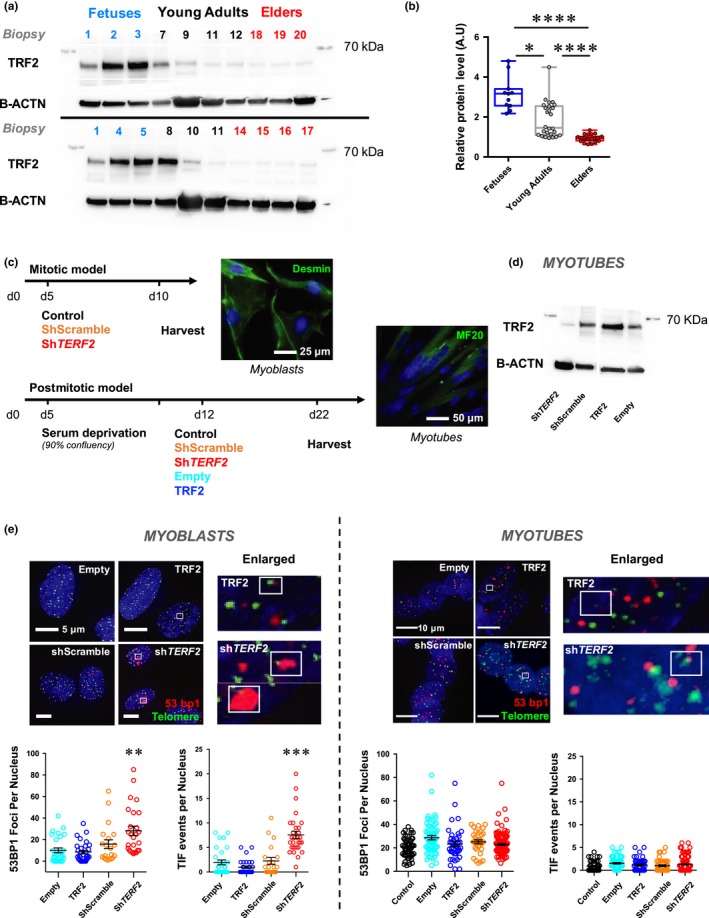
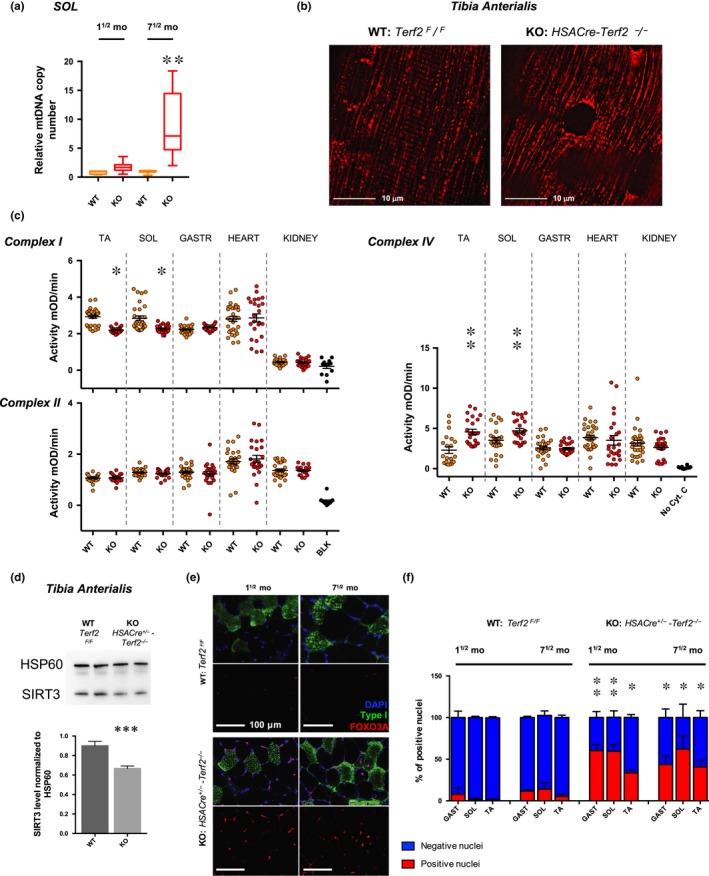
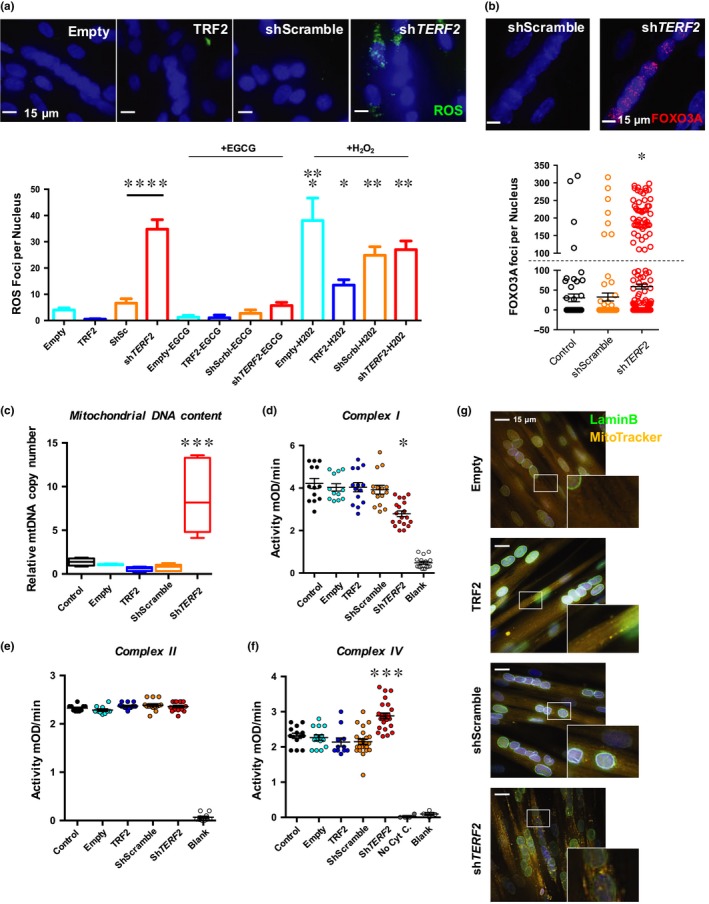
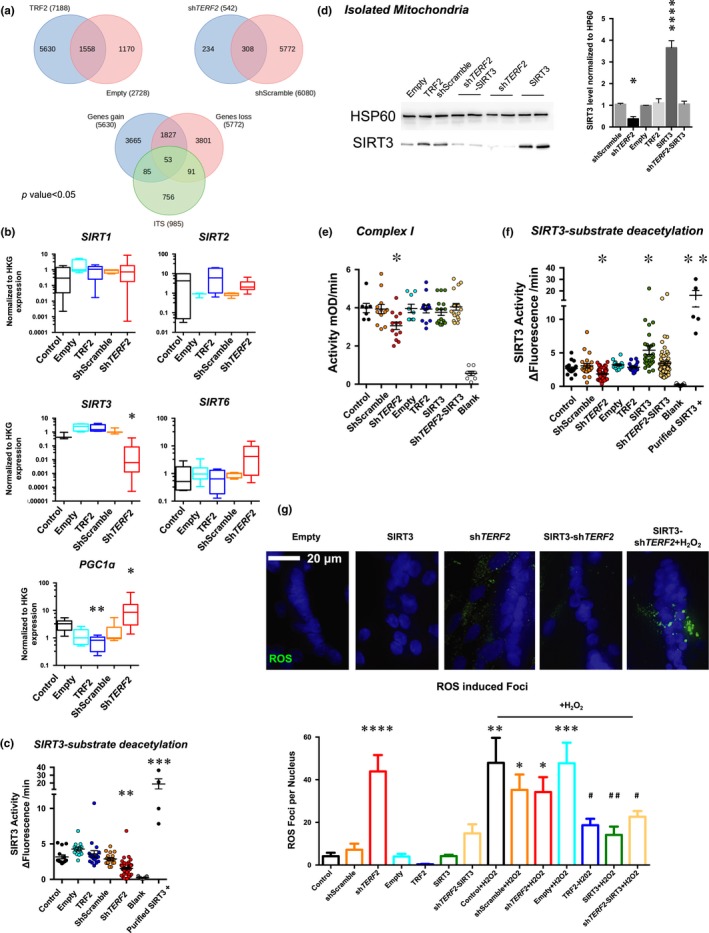
Telomere shortening follows a developmentally regulated process that leads to replicative senescence of dividing cells. However, whether telomere changes are involved in postmitotic cell function and aging remains elusive. In this study, we discovered that the level of the TRF2 protein, a key telomere-capping protein, declines in human skeletal muscle over lifetime. In cultured human myotubes, TRF2 downregulation did not trigger telomere dysfunction, but suppressed expression of the mitochondrial Sirtuin 3 gene (SIRT3) leading to mitochondrial respiration dysfunction and increased levels of reactive oxygen species. Importantly, restoring the Sirt3 level in TRF2-compromised myotubes fully rescued mitochondrial functions. Finally, targeted ablation of the Terf2 gene in mouse skeletal muscle leads to mitochondrial dysfunction and sirt3 downregulation similarly to those of TRF2-compromised human myotubes. Altogether, these results reveal a TRF2-SIRT3 axis controlling muscle mitochondrial function. We propose that this axis connects developmentally regulated telomere changes to muscle redox metabolism.
端粒缩短遵循一个发育调控过程,导致分裂细胞的复制性衰老。然而,端粒变化是否参与有丝分裂后细胞功能和衰老仍然难以捉摸。在这项研究中,我们发现,TRF2 蛋白(一种关键的端粒封端蛋白)的水平在人类骨骼肌中随着寿命的延长而下降。在培养的人类肌管中,TRF2 下调不会引发端粒功能障碍,但会抑制线粒体 Sirtuin 3 基因(SIRT3)的表达,导致线粒体呼吸功能障碍和活性氧水平升高。重要的是,在 TRF2 受损的肌管中恢复 Sirt3 水平可完全挽救线粒体功能。最后,靶向敲除小鼠骨骼肌中的 Terf2 基因,类似于 TRF2 受损的人类肌管,会导致线粒体功能障碍和 sirt3 下调。总之,这些结果揭示了一个 TRF2-SIRT3 轴控制肌肉线粒体功能。我们提出,这个轴将发育调控的端粒变化与肌肉氧化还原代谢联系起来。