Plant Biochemistry Section, Department of Plant and Environmental Sciences, University of Copenhagen, Thorvaldsensvej 40, 1871, Frederiksberg C, Denmark.
Department of Drug Design and Pharmacology, Faculty of Health and Medical Sciences, University of Copenhagen, Universitetsparken 2, 2100, Copenhagen, Denmark.
Microb Cell Fact. 2020 Jan 28;19(1):15. doi: 10.1186/s12934-020-1284-9.
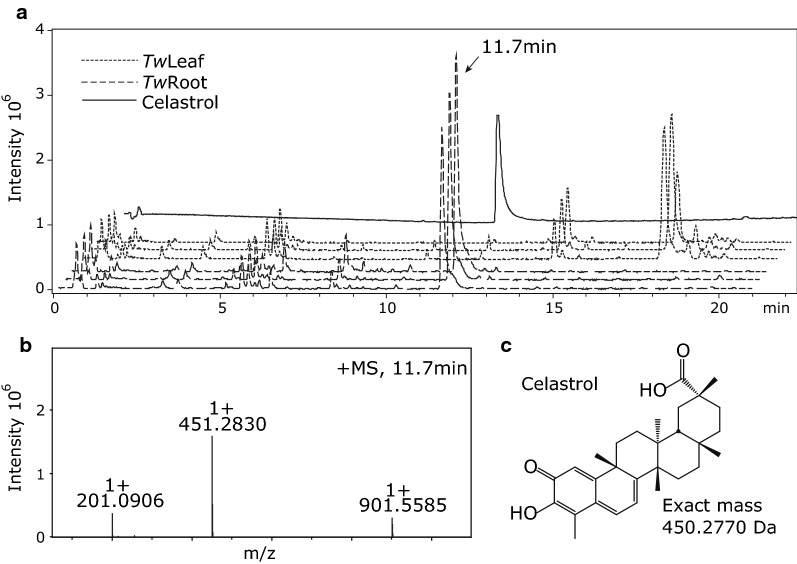
Celastrol is a promising anti-obesity agent that acts as a sensitizer of the protein hormone leptin. Despite its potent activity, a sustainable source of celastrol and celastrol derivatives for further pharmacological studies is lacking.
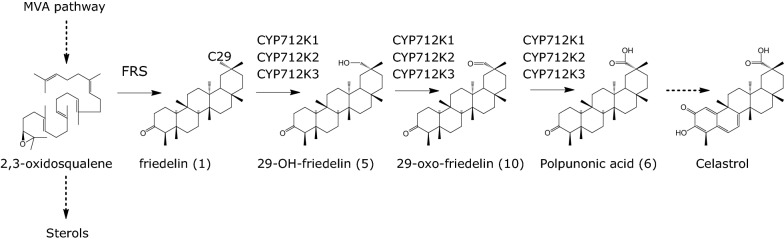
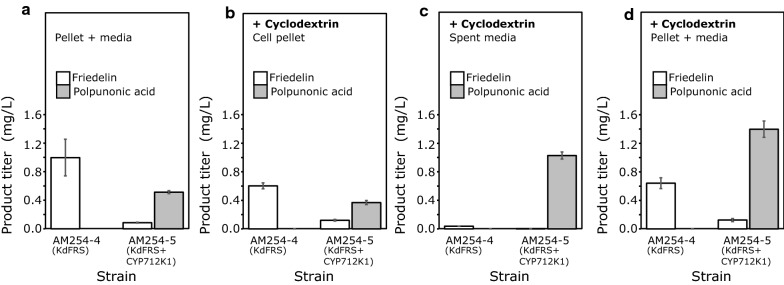
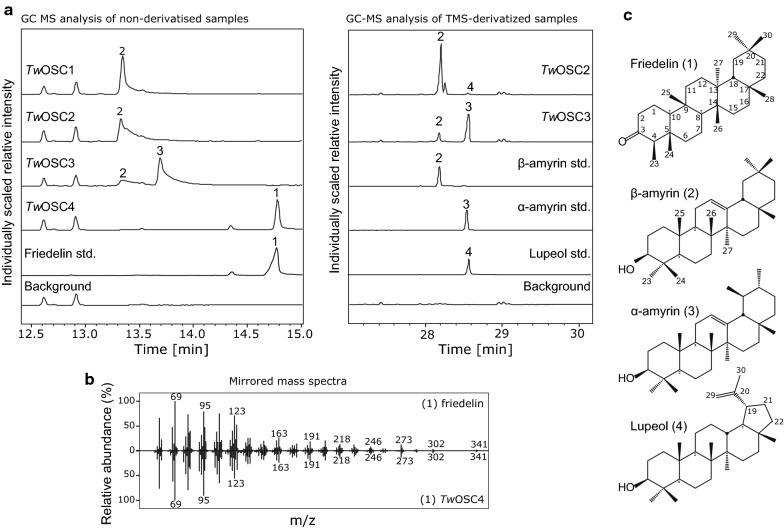
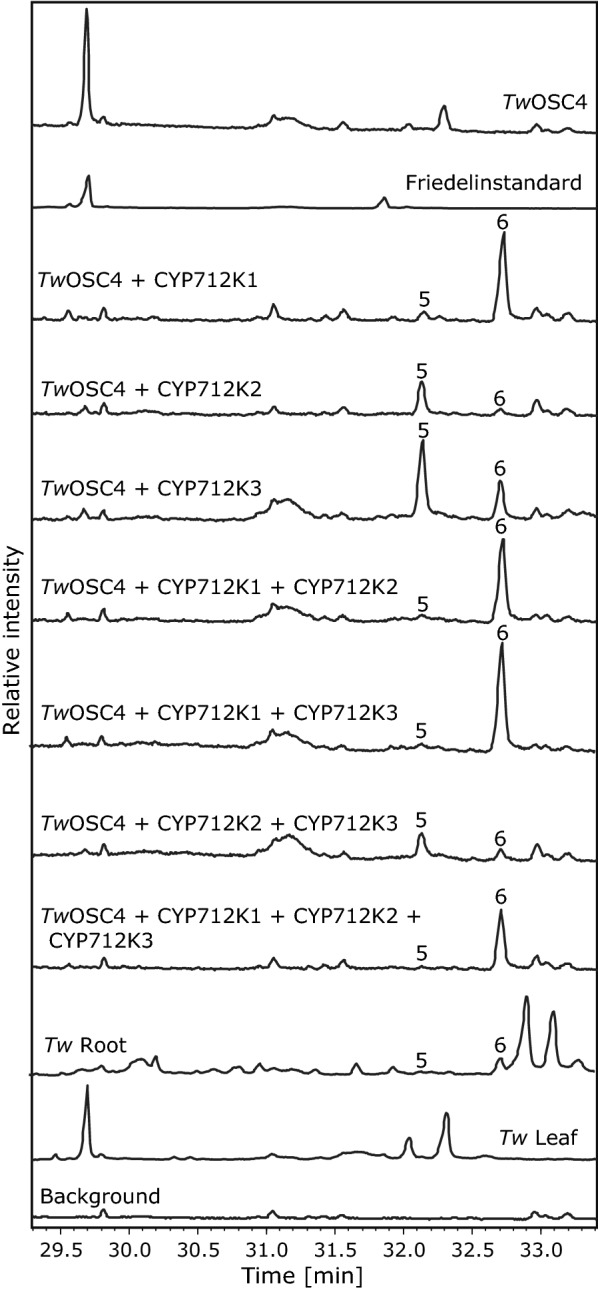
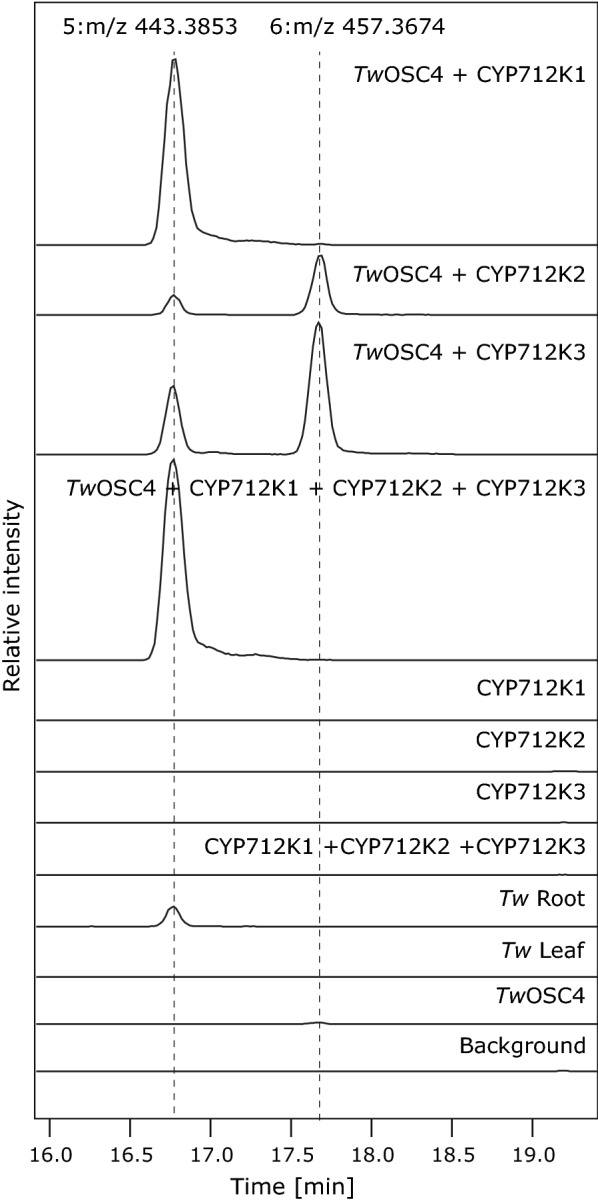
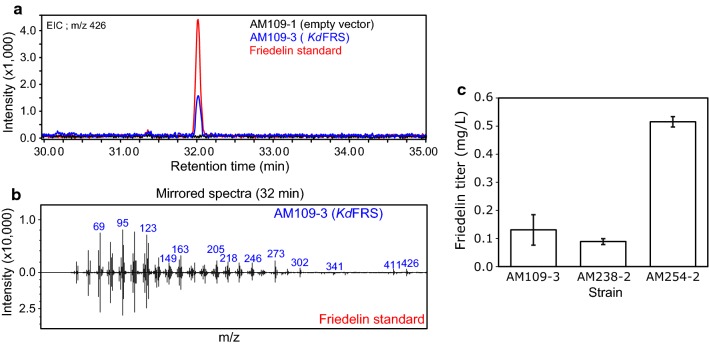
To elucidate the celastrol biosynthetic pathway and reconstruct it in Saccharomyces cerevisiae, we mined a root-transcriptome of Tripterygium wilfordii and identified four oxidosqualene cyclases and 49 cytochrome P450s as candidates to be involved in the early steps of celastrol biosynthesis. Using functional screening of the candidate genes in Nicotiana benthamiana, TwOSC4 was characterized as a novel oxidosqualene cyclase that produces friedelin, the presumed triterpenoid backbone of celastrol. In addition, three P450s (CYP712K1, CYP712K2, and CYP712K3) that act downstream of TwOSC4 were found to effectively oxidize friedelin and form the likely celastrol biosynthesis intermediates 29-hydroxy-friedelin and polpunonic acid. To facilitate production of friedelin, the yeast strain AM254 was constructed by deleting UBC7, which afforded a fivefold increase in friedelin titer. This platform was further expanded with CYP712K1 to produce polpunonic acid and a method for the facile extraction of products from the yeast culture medium, resulting in polpunonic acid titers of 1.4 mg/L.
Our study elucidates the early steps of celastrol biosynthesis and paves the way for future biotechnological production of this pharmacologically promising compound in engineered yeast strains.
雷公藤红素是一种很有前途的抗肥胖剂,它可以作为蛋白激素瘦素的敏化剂。尽管其活性很强,但缺乏可持续的雷公藤红素和雷公藤红素衍生物来源,无法进一步进行药理学研究。
为了阐明雷公藤红素的生物合成途径并在酿酒酵母中重建该途径,我们对三叶鬼臼的根转录组进行了挖掘,并鉴定了四个角鲨烯环氧化酶和 49 个细胞色素 P450 作为参与雷公藤红素生物合成早期步骤的候选物。通过对候选基因在黄花烟中的功能筛选,TwOSC4 被鉴定为一种新型角鲨烯环氧化酶,可产生无羁萜,这是雷公藤红素的假定三萜骨架。此外,还发现了三个位于 TwOSC4 下游的 P450(CYP712K1、CYP712K2 和 CYP712K3),它们可以有效地氧化无羁萜并形成可能的雷公藤红素生物合成中间体 29-羟基无羁萜和波谱酮酸。为了促进无羁萜的生产,通过敲除 UBC7 构建了酵母菌株 AM254,使无羁萜的产量增加了五倍。通过进一步在该平台上表达 CYP712K1 来生产波谱酮酸,并采用一种从酵母培养液中提取产物的简便方法,使波谱酮酸的产量达到 1.4mg/L。
本研究阐明了雷公藤红素生物合成的早期步骤,为未来在工程酵母菌株中生物技术生产这种具有药理前景的化合物铺平了道路。