
沙漠中供营巢于洞穴的蜜蜂和黄蜂栖息的岛屿:下加利福尼亚半岛绿洲的生态、多样性模式及保护
Islands in the desert for cavity-nesting bees and wasps: Ecology, patterns of diversity, and conservation at oases of Baja California Peninsula.
作者信息
Falcón-Brindis Armando, Jiménez Jiménez María Luisa, Rodríguez-Estrella Ricardo
机构信息
Conservation and Environmental Planning Program Centro de Investigaciones Biológicas del Noroeste (CIBNOR) La Paz México.
School of Natural Resources and the Environment University of Arizona Tucson Arizona.
出版信息
Ecol Evol. 2019 Dec 17;10(1):527-542. doi: 10.1002/ece3.5927. eCollection 2020 Jan.
AIMS
The oases of Baja California Peninsula (BCP) have been proposed as important hotspots of biodiversity that hold an exceptional richness in the middle of desert conditions. We tested the effect of habitat and anthropogenic disturbance on communities of cavity-nesting taxa, with specific emphasis on bees, wasps, and their natural enemies.
METHODS
In oases of BCP and desert neighbor environments, trap-nesting taxa were evaluated in response to factors affecting the nest abundance, richness, and community structure. We used statistical models to find correlates of nest abundance and patterns of diversity, as well as ecological analyses to determine the effect of habitat and human disturbance on species diversity and community structure.
RESULTS
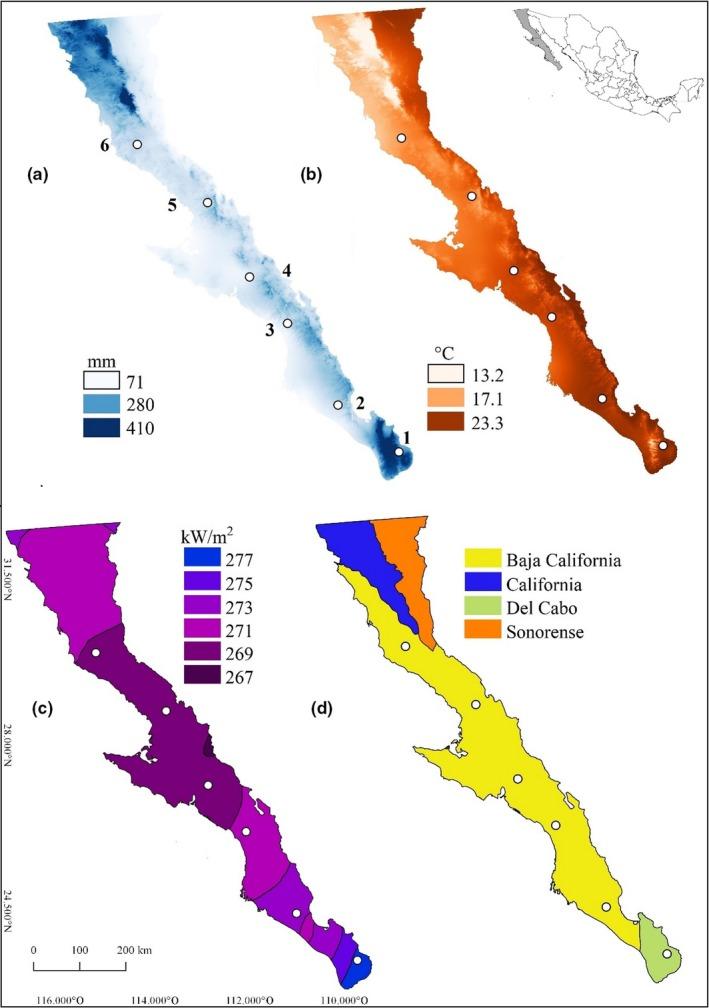
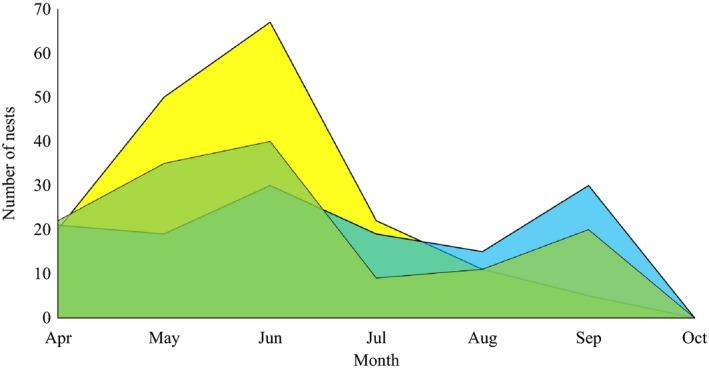
Solar irradiation, distance to a perennial waterbody and relative humidity influenced the presence of nests, number of brood cells, and parasitism. In general, abundance, species richness, and parasitism were higher in oases, especially in those with less human disturbance. Bees did not discriminate between oases and deserts to nest, whereas mud-daubing wasps were more dependent of oases. The degree of anthropogenic disturbance did not affect the occurrence of parasitism, but it had an adverse effect on the parasitism intensity (number of attacked cells). The community structure was more complex and even in oases and low-disturbed sites. The similarity between sites did not exceed 30%, and the proportion of shared species between oases and deserts varied from 2.7% to 26.6%.
MAIN CONCLUSIONS
The oases of Baja California are functioning as mesic islands in the desert, each oasis hosting a unique community of cavity-nesting taxa. About 65% of the nests and 50% of species occurred exclusively in the oasis. Thus, cavity-nesting species that depend on mesic conditions could be threatened if the oases of BCP disappear in the future. Local conditions in the oases and deserts of the BCP are shaping the community structure. However, large-scale factors such as climate can influence the seasonality and occurrence of species within the community of cavity-nesting dwellers. Since habitat loss and fragmentation can degrade the oases' functionality, strategies to maintain the ecosystem services of pollination and biological control should be included in the conservation programs of these fragile habitats.
目标
下加利福尼亚半岛(BCP)的绿洲被认为是生物多样性的重要热点地区,在沙漠环境中拥有异常丰富的生物种类。我们测试了栖息地和人为干扰对洞穴筑巢类群群落的影响,特别关注蜜蜂、黄蜂及其天敌。
方法
在BCP的绿洲和邻近沙漠环境中,评估诱捕式筑巢类群对影响巢穴丰度、丰富度和群落结构的因素的响应。我们使用统计模型来寻找巢穴丰度的相关因素和多样性模式,以及进行生态分析以确定栖息地和人类干扰对物种多样性和群落结构的影响。
结果
太阳辐射、与常年水体的距离和相对湿度影响巢穴的存在、育雏室数量和寄生情况。总体而言,绿洲中的丰度、物种丰富度和寄生率更高,尤其是在人类干扰较少的绿洲。蜜蜂在选择筑巢地点时对绿洲和沙漠没有偏好,而泥瓦蜂则更依赖绿洲。人为干扰的程度并不影响寄生现象的发生,但对寄生强度(被攻击的巢室数量)有不利影响。绿洲和低干扰地区的群落结构更复杂且更均匀。不同地点之间的相似度不超过30%,绿洲和沙漠之间共享物种的比例在2.7%至26.6%之间。
主要结论
下加利福尼亚的绿洲在沙漠中起着中生岛屿的作用,每个绿洲都拥有独特的洞穴筑巢类群群落。约65%的巢穴和50%的物种仅出现在绿洲中。因此,如果未来BCP的绿洲消失,依赖中生环境的洞穴筑巢物种可能会受到威胁。BCP绿洲和沙漠的当地条件正在塑造群落结构。然而,诸如气候等大规模因素会影响洞穴筑巢生物群落中物种的季节性和出现情况。由于栖息地丧失和破碎化会降低绿洲的功能,在这些脆弱栖息地的保护计划中应纳入维持授粉和生物控制等生态系统服务的策略。






 Zotero 插件