Mirzapour Aliyar, Badirzadeh Alireza, Ashrafmansouri Marzieh, Behniafar Hamed, Norouzi Maryam, Azizi Hakim, Behravan Mahmoodreza, Seyyed Tabaei Seyyed Javad
Department of Medical Parasitology and Mycology, School of Medicine, Mashhad Branch, Islamic Azad University, Mashhad, Iran.
Department of Parasitology and Mycology, School of Medicine, Iran University of Medical Sciences, Tehran, Iran.
Iran J Public Health. 2019 Dec;48(12):2285-2292.
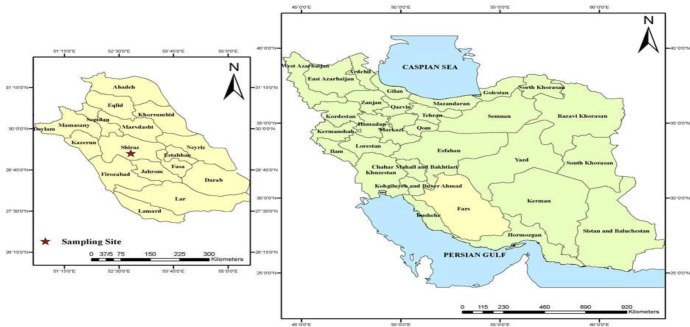
The aims of the current study were to determined present status of CL in Shiraz City, identify the causative species of and conduct phylogenetic evaluations in detected parasites.
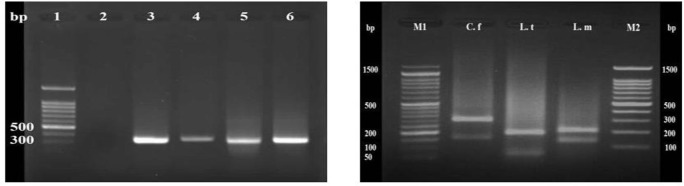
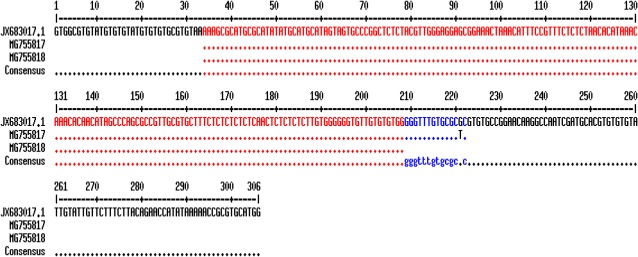
This study was conducted on 70 individuals with suspected CL that referred to the major health centers of Shiraz (Valfajr), Fars province, Iran, from Sep 2016 to Jul 2017. DNA was extracted from cultured promastigotes and PCR-RFLP were performed using ITS1-rDNA gene.
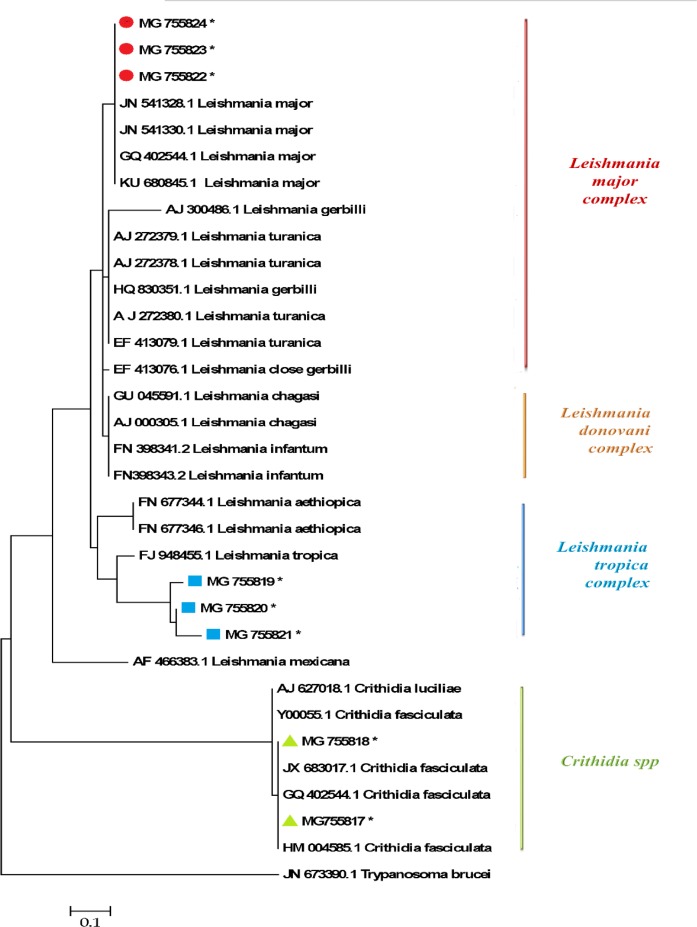
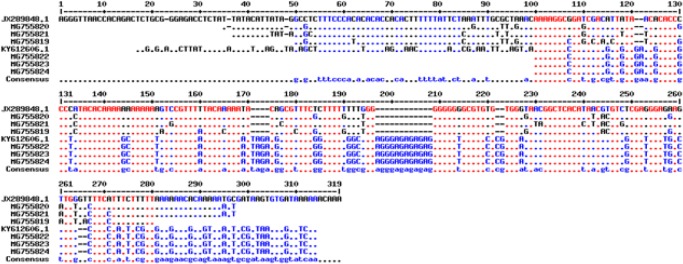
Overall, 39 male (55.70%) and 31 (44.30%) female were found to be positive microscopically. All of direct examined positive samples were confirmed to be positive for spp. DNA. Based upon the PCRRFLP patterns and phylogenetic analysis, 46 (65.72%), 17 (24.28%) and 7 (10%) isolates were clearly identified as , and , respectively.
The dominat detected species in Shiraz City was and , respectively. CL has high prevalence in Shiraz City; therefore, more studies on leishmaniasis in the natural vectors and also reservoirs infection in this region is exceedingly recommended. Skin leisons due to , was described for the first time in Iran (Shiraz City).
本研究的目的是确定设拉子市皮肤利什曼病的现状,鉴定病原体种类,并对检测到的寄生虫进行系统发育评估。
本研究对2016年9月至2017年7月转诊至伊朗法尔斯省设拉子市(瓦尔法吉尔)主要健康中心的70例疑似皮肤利什曼病患者进行。从培养的前鞭毛体中提取DNA,并使用ITS1-rDNA基因进行PCR-RFLP分析。
总体而言,显微镜检查发现39名男性(55.70%)和31名女性(44.30%)呈阳性。所有直接检查呈阳性的样本均被确认为杜氏利什曼原虫属DNA阳性。根据PCR-RFLP模式和系统发育分析,46株(65.72%)、17株(24.28%)和7株(10%)分离株分别被明确鉴定为婴儿利什曼原虫、热带利什曼原虫和硕大利什曼原虫。
设拉子市检测到的主要物种分别是婴儿利什曼原虫和热带利什曼原虫。皮肤利什曼病在设拉子市患病率很高;因此,强烈建议对该地区自然传播媒介中的利什曼病以及储存宿主感染进行更多研究。由硕大利什曼原虫引起的皮肤病变在伊朗(设拉子市)首次被描述。