Nanda Sanjeev, Hurt Ryan T, Croghan Ivana T, Mundi Manpreet S, Gifford Sarah L, Schroeder Darrell R, Fischer Karen M, Bonnes Sara L
Division of General Internal Medicine, Department of Medicine, Mayo Clinic, Rochester, MN.
Division of Community Internal Medicine and Clinical Research Office, Department of Medicine, and Division of Epidemiology, Health Science Research, Mayo Clinic, Rochester, MN.
Mayo Clin Proc Innov Qual Outcomes. 2019 Oct 16;3(4):495-505. doi: 10.1016/j.mayocpiqo.2019.07.002. eCollection 2019 Dec.
To evaluate the use of a wearable activity tracker and brief feedback in the workplace to motivate employees to improve activity.
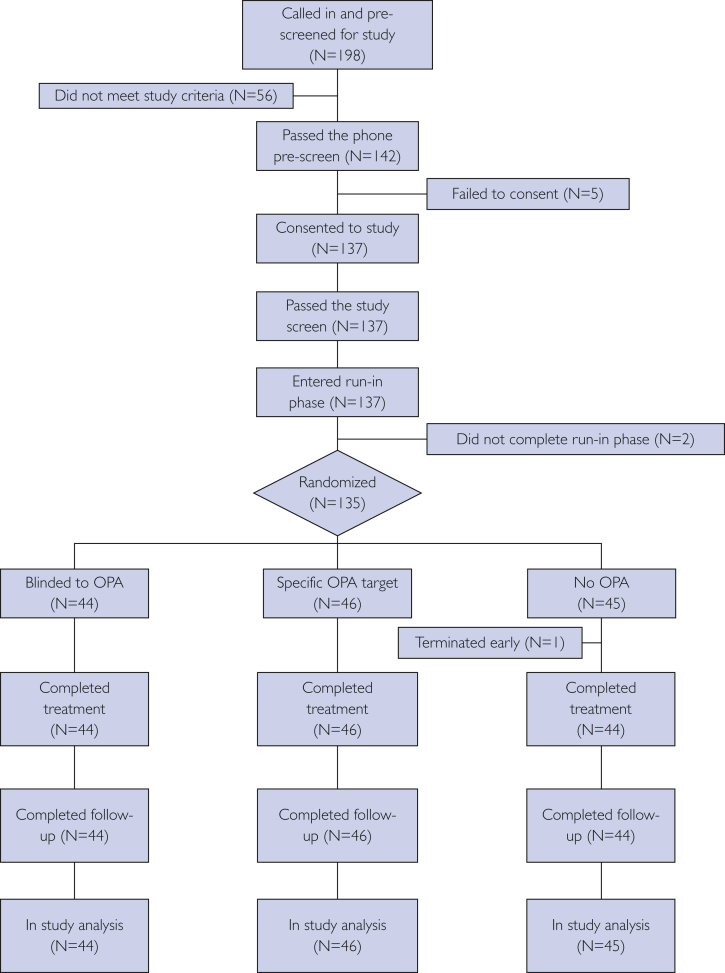
A total of 135 adult participants were randomized to 1 of 3 groups: control group (blinded to their step activity), intervention group (received counseling based on their step count), or no step-tracking device group. Participants were recruited from June 27, 2016, through February 21, 2018.
Most of the 135 participants were women (84%), with a mean ± SD age of 42.6±10.1 years. Most participants (96%) completed 11 of the 12 weeks of step counts. Comparing treatment groups at week 12 (end of treatment), the intervention group (vs the control group) had significantly more steps (644.8; <.01), had an 11.1% increase in step count from baseline (<.01), was more likely to achieve goal (odds ratio=1.73; =.02), increased distance traveled per week (0.46 miles; <.01) and calories burned (90.6; <.01), and had a decrease in some bioelectrical impedance measurements over time, including a greater loss in body fat mass (-0.90 kg; =.01), percentage fat (-0.96; <.01), and visceral fat level (-0.60; <.01). Finally, the intervention group indicated significantly greater satisfaction with their assigned randomization (89% vs 77%; =.01) and greater confidence in the effectiveness of their activity tracker (<.01).
Brief counseling accompanied by use of a step-counting device can improve workplace activity, which, in turn, can increase steps and decrease body fat, including visceral fat.
clinicaltrials.gov Identifier: NCT02794727.
评估在工作场所使用可穿戴活动追踪器及简短反馈,以激励员工增加活动量。
共135名成年参与者被随机分为3组中的1组:对照组(对其步数活动不知情)、干预组(根据步数接受咨询)或无步数追踪设备组。参与者于2016年6月27日至2018年2月21日招募。
135名参与者中大多数为女性(84%),平均年龄±标准差为42.6±10.1岁。大多数参与者(96%)完成了12周步数记录中的11周。在第12周(治疗结束时)比较各治疗组,干预组(与对照组相比)步数显著更多(644.8;P<.01),步数较基线增加了11.1%(P<.01),更有可能达到目标(优势比=1.73;P=.02),每周行走距离增加(0.46英里;P<.01),消耗热量增加(90.6;P<.01),并且随着时间推移,一些生物电阻抗测量值有所下降,包括体脂量减少更多(-0.90千克;P=.01)、体脂百分比下降(-0.96;P<.01)和内脏脂肪水平下降(-0.60;P<.01)。最后,干预组对其分配的随机分组表示出显著更高的满意度(89%对77%;P=.01),对其活动追踪器的有效性更有信心(P<.01)。
使用计步设备并辅以简短咨询可改善工作场所的活动,进而增加步数并减少体脂,包括内脏脂肪。
clinicaltrials.gov标识符:NCT02794727。