Division of Cardiac Prevention and Rehabilitation, University of Ottawa Heart Institute, 40 Ruskin Street, Ottawa, Ontario, K1Y 4W7, Canada.
Centre for Surveillance and Applied Research, Public Health Agency of Canada, Ottawa, Canada.
Int J Behav Nutr Phys Act. 2019 Apr 2;16(1):30. doi: 10.1186/s12966-019-0790-9.
With approximately 8 hours of one's waking day spent at work, occupational tasks and environments are important influencers on an individual's physical activity (PA) and sedentary behaviours. Little research has compared device-measured physical activity, sedentary behaviour and cardiometabolic outcomes between occupational groups.
To compare device-measured movement (sedentary time [ST], light intensity physical activity [LPA], moderate-to-vigorous intensity physical activity [MVPA], and steps) across occupations. The secondary objective was to examine whether cardiometabolic and fitness outcomes differed by occupation.
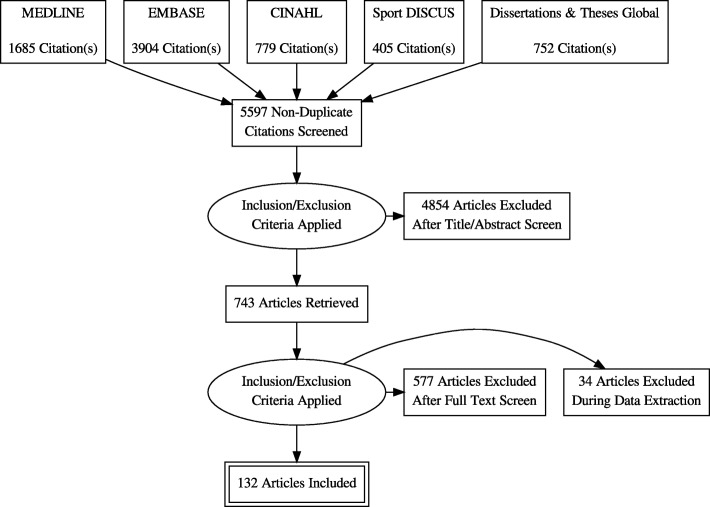
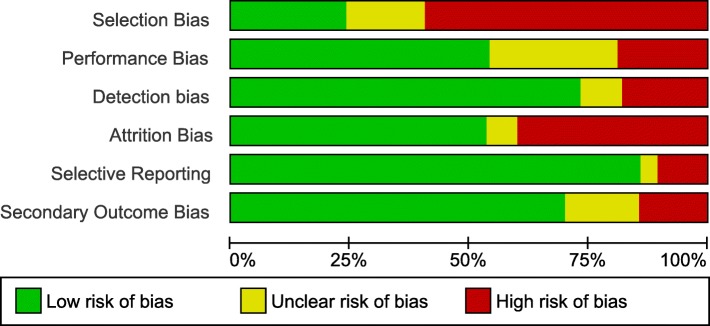
Five bibliographic databases were searched to identify all studies which included working age, employed adults from high-income countries, and reported on device-measured movement within occupations. Risk of bias within and across studies was assessed. Results were synthesized using meta-analyses and narrative syntheses.
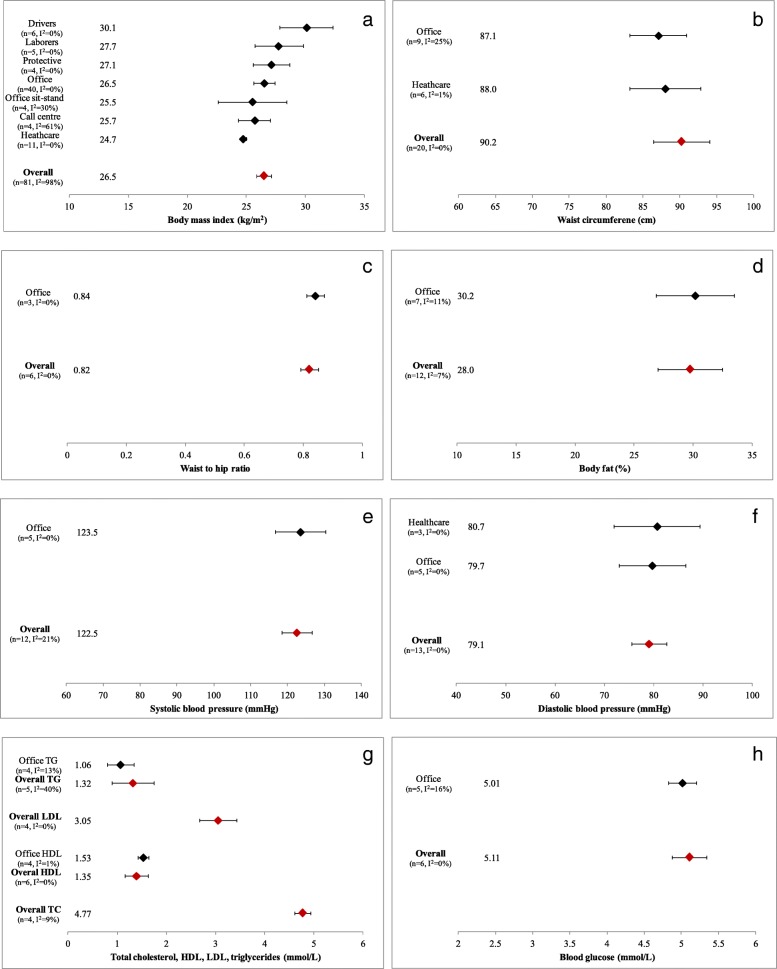
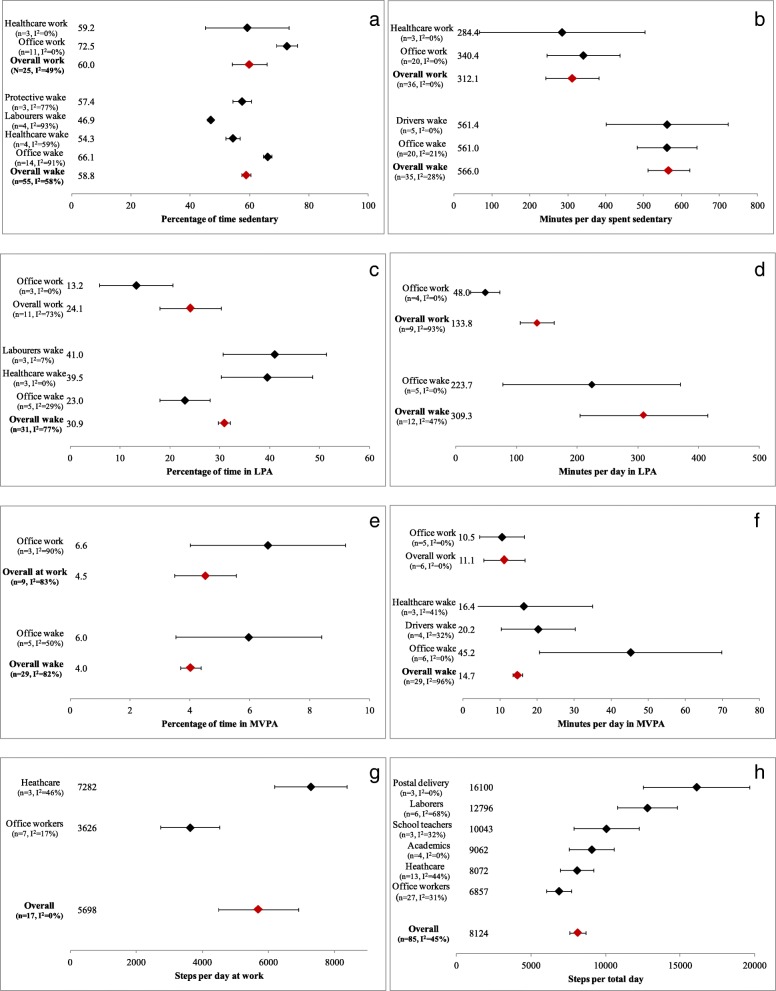
The review includes 132 unique studies with data from 15,619 participants. Working adults spent ~ 60% of their working and waking time engaged in sedentary behaviour; a very small proportion (~ 4%) of the day included MVPA. On average, workers accumulated 8124 steps/day. Office and call center workers' steps/day were among the lowest, while those of postal delivery workers were highest. Office workers had the greatest ST and the lowest time in LPA both at work and during wakeful time. However, office workers had the greatest minutes sent in MVPA during wakeful hours. Laborers had the lowest ST and spent a significantly greater proportion of their work time in LPA and MVPA. Healthcare and protective services workers had higher levels of LPA at work compared to other occupations. Workers in driving-based occupations tended to have a higher body mass index and blood pressure.
This review identifies that occupational and wakeful time PA and ST differed between occupations. Future studies are needed to assess whether patterns differ by age and sex, describe leisure-time movement and movement patterns, and the relationship with cardiometabolic health.
PROSPERO CRD42017070448 .
人们每天大约有 8 个小时的清醒时间在工作,职业任务和工作环境是影响个体体力活动(PA)和久坐行为的重要因素。很少有研究比较过职业群体之间设备测量的体力活动、久坐行为和心血管代谢结果。
比较不同职业之间设备测量的运动(久坐时间[ST]、低强度体力活动[LPA]、中等到剧烈强度体力活动[MVPA]和步数)。次要目的是检查心血管代谢和健康相关体能是否因职业而异。
五个文献数据库被搜索,以确定所有包括工作年龄、高收入国家的在职成年人以及报告职业内设备测量运动的研究。对每个研究内和研究间的偏倚风险进行了评估。结果使用荟萃分析和叙述性综述进行综合。
该综述包括 132 项具有 15619 名参与者数据的独特研究。成年工作者在工作和清醒时间中约有 60%的时间处于久坐行为状态;一天中只有很小的比例(约 4%)包括 MVPA。平均而言,工人们每天要走 8124 步。办公室和呼叫中心工作人员的步数/天是最低的,而邮政投递员的步数/天是最高的。办公室工作人员在工作和清醒时间的 ST 最长,而 LPA 时间最短。然而,办公室工作人员在清醒时间的 MVPA 分钟数最多。体力劳动者的 ST 最短,在工作和清醒时间中 LPA 和 MVPA 的比例显著较高。医疗保健和保护服务工作者在工作时的 LPA 水平高于其他职业。驾驶相关职业的工人往往体重指数和血压较高。
本综述确定了职业和清醒时间 PA 和 ST 因职业而异。未来的研究需要评估这些模式是否因年龄和性别而异,描述闲暇时间的运动和运动模式,以及与心血管代谢健康的关系。
PROSPERO CRD42017070448 。