Gudin Jeffrey, Fudin Jeffrey
Department of Anesthesiology, Englewood Hospital and Medical Center, 350 Engle St, Englewood, NJ, 07631, USA.
Department of Anesthesia and Perioperative Care, Rutgers New Jersey Medical School, 185 S Orange Ave, Newark, NJ, 07103, USA.
Pain Ther. 2020 Jun;9(1):41-54. doi: 10.1007/s40122-019-00143-6. Epub 2020 Jan 28.
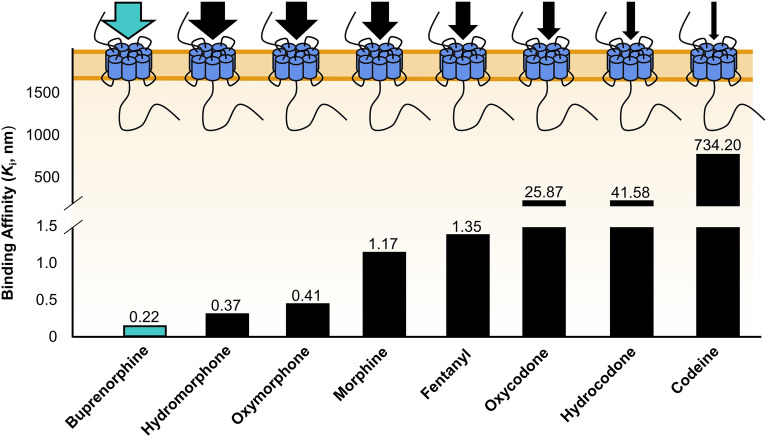
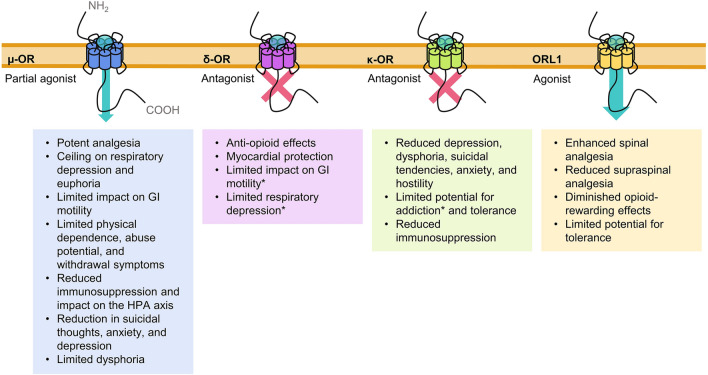
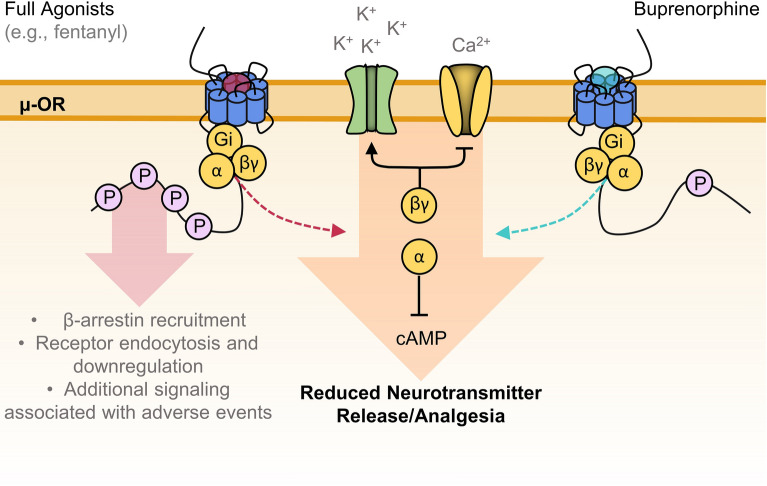
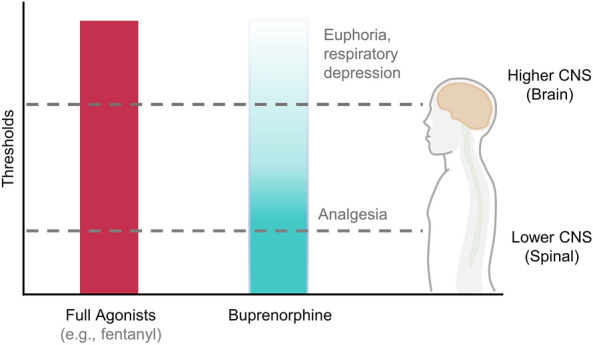
Buprenorphine is a Schedule III opioid analgesic with unique pharmacodynamic and pharmacokinetic properties that may be preferable to those of Schedule II full μ-opioid receptor agonists. The structure of buprenorphine allows for multimechanistic interactions with opioid receptors μ, δ, κ, and opioid receptor-like 1. Buprenorphine is considered a partial agonist with very high binding affinity for the μ-opioid receptor, an antagonist with high binding affinity for the δ- and κ-opioid receptors, and an agonist with low binding affinity for the opioid receptor-like 1 receptor. Partial agonism at the μ-opioid receptor does not provide partial analgesia, but rather analgesia equivalent to that of full μ-opioid receptor agonists. In addition, unlike full μ-opioid receptor agonists, buprenorphine may have a unique role in mediating analgesic signaling at spinal opioid receptors while having less of an effect on brain receptors, potentially limiting classic opioid-related adverse events such as euphoria, addiction, or respiratory depression. The pharmacokinetic properties of buprenorphine are also advantageous in a clinical setting, where metabolic and excretory pathways allow for use in patients requiring concomitant medications, the elderly, and those with renal or hepatic impairment. The unique pharmacodynamic and pharmacokinetic properties of buprenorphine translate to an effective analgesic with a potentially favorable safety profile compared with that of full μ-opioid receptor agonists for the treatment of chronic pain.
丁丙诺啡是一种III类阿片类镇痛药,具有独特的药效学和药代动力学特性,可能优于II类完全μ-阿片受体激动剂。丁丙诺啡的结构使其能够与μ、δ、κ阿片受体以及阿片受体样1进行多机制相互作用。丁丙诺啡被认为是一种对μ-阿片受体具有非常高结合亲和力的部分激动剂,对δ-和κ-阿片受体具有高结合亲和力的拮抗剂,以及对阿片受体样1受体具有低结合亲和力的激动剂。μ-阿片受体的部分激动作用并不提供部分镇痛效果,而是提供与完全μ-阿片受体激动剂相当的镇痛效果。此外,与完全μ-阿片受体激动剂不同,丁丙诺啡在介导脊髓阿片受体的镇痛信号传导方面可能具有独特作用,而对脑受体的影响较小,这可能会限制诸如欣快感、成瘾或呼吸抑制等典型的阿片类药物相关不良事件。丁丙诺啡的药代动力学特性在临床环境中也具有优势,其代谢和排泄途径允许在需要同时使用其他药物的患者、老年人以及患有肾或肝功能损害的患者中使用。与完全μ-阿片受体激动剂相比,丁丙诺啡独特的药效学和药代动力学特性使其成为一种有效的镇痛药,在治疗慢性疼痛方面可能具有良好的安全性。