Department of Psychiatry, The Second Xiangya Hospital, Central South University, Changsha, Hunan, China.
Chinese National Clinical Research Center on Mental Disorders (Xiangya), Changsha, Hunan, China.
Int J Neuropsychopharmacol. 2020 Apr 21;23(3):135-145. doi: 10.1093/ijnp/pyz069.
Stimulant use and sexual behaviors have been linked in behavioral and epidemiological studies. Although methamphetamine-related neurofunctional differences have been investigated, few studies have examined neural responses to drug and sexual cues with respect to shorter or longer term methamphetamine abstinence in individuals with methamphetamine dependence.
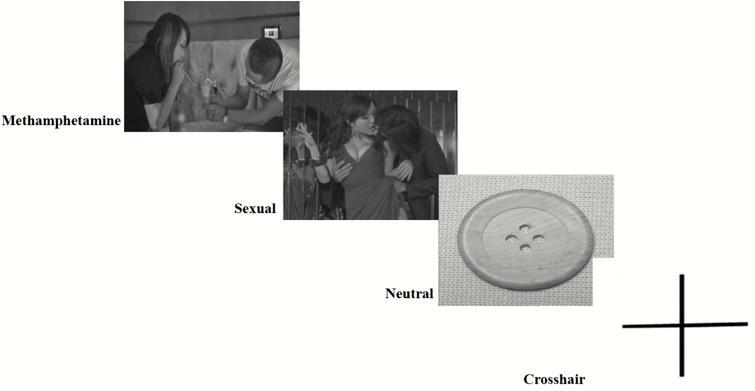
Forty-nine men with shorter term methamphetamine abstinence, 50 men with longer term methamphetamine abstinence, and 47 non-drug-using healthy comparison men completed a functional magnetic resonance imaging cue-reactivity task consisting of methamphetamine, sexual, and neutral visual cues.
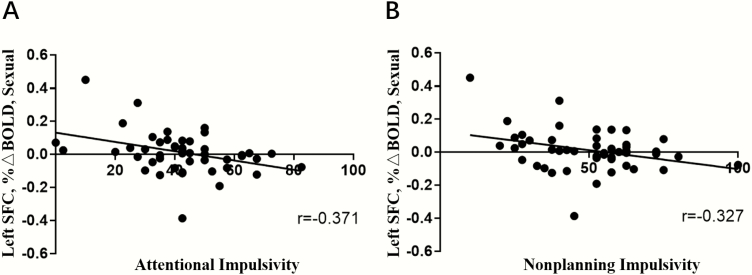
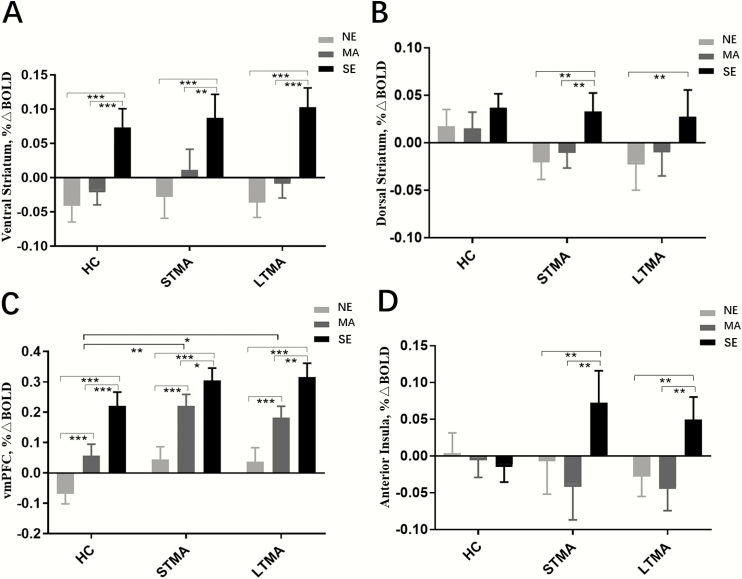
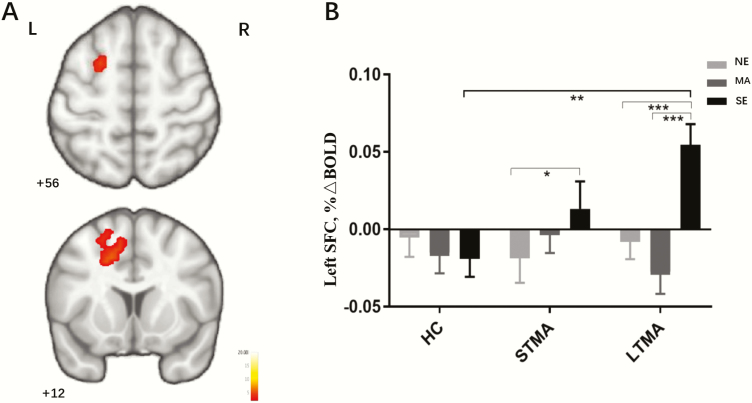
Region-of-interest analyses revealed greater methamphetamine cue-related activation in shorter term methamphetamine abstinence and longer term methamphetamine abstinence individuals relative to healthy comparison men in the ventromedial prefrontal cortex. A significant interaction of group and condition in the anterior insula was found. Relative to healthy comparison participants, both shorter term methamphetamine abstinence and longer term methamphetamine abstinence groups displayed greater sexual cue-related anterior insula activation relative to methamphetamine cues and neutral cues, but there were no differences between shorter term methamphetamine abstinence and longer term methamphetamine abstinence groups in anterior insula responses. Subsequent whole-brain analyses indicated a group-by-condition interaction with longer term methamphetamine abstinence participants showing greater sexual-related activation in the left superior frontal cortex relative to healthy comparison men. Shorter term methamphetamine abstinence participants showed greater superior frontal cortex activation to sexual relative to neutral cues, and longer term methamphetamine abstinence participants showed greater superior frontal cortex activation to sexual relative to neutral and methamphetamine cues.
The findings suggest that abstinence from methamphetamine may alter how individuals respond to drug and sexual cues and thus may influence drug use and sexual behaviors. Given the use of methamphetamine for sexual purposes and responses to natural vs drug rewards for addiction recovery, the findings may have particular clinical relevance.
兴奋剂的使用和性行为在行为和流行病学研究中已经被联系起来。尽管已经研究了与甲基苯丙胺相关的神经功能差异,但很少有研究在有甲基苯丙胺依赖的个体中,检查对药物和性线索的神经反应与较短或较长时间的甲基苯丙胺戒断之间的关系。
49 名短期甲基苯丙胺戒断的男性、50 名长期甲基苯丙胺戒断的男性和 47 名未使用药物的健康男性对照者完成了一项功能磁共振成像线索反应任务,该任务包括甲基苯丙胺、性和中性视觉线索。
感兴趣区域分析显示,与健康对照组相比,短期和长期甲基苯丙胺戒断个体在腹内侧前额叶中对甲基苯丙胺线索相关的激活更大。在前脑岛发现了组和条件的显著相互作用。与健康对照组相比,短期和长期甲基苯丙胺戒断组在性线索相关的前脑岛中显示出更大的激活,而不是甲基苯丙胺线索和中性线索,但在前脑岛反应中,短期和长期甲基苯丙胺戒断组之间没有差异。随后的全脑分析表明,与健康对照组相比,长期甲基苯丙胺戒断组在左侧额上回中显示出更大的与性相关的激活。短期甲基苯丙胺戒断者对性的额上回激活大于对中性的激活,而长期甲基苯丙胺戒断者对性的额上回激活大于对中性和甲基苯丙胺的激活。
研究结果表明,戒断甲基苯丙胺可能会改变个体对药物和性线索的反应方式,从而可能影响药物使用和性行为。鉴于甲基苯丙胺被用于性行为目的以及对自然奖励和药物奖励的反应对成瘾康复的影响,这些发现可能具有特殊的临床意义。