Department of Neuroscience, Brown University, Providence, RI 02912, USA; Robert J. and Nancy D. Carney Institute for Brain Science, Providence, RI 02912, USA.
Department of Neuroscience, Brown University, Providence, RI 02912, USA.
Cell Rep. 2020 Jan 28;30(4):1164-1177.e7. doi: 10.1016/j.celrep.2019.12.085.
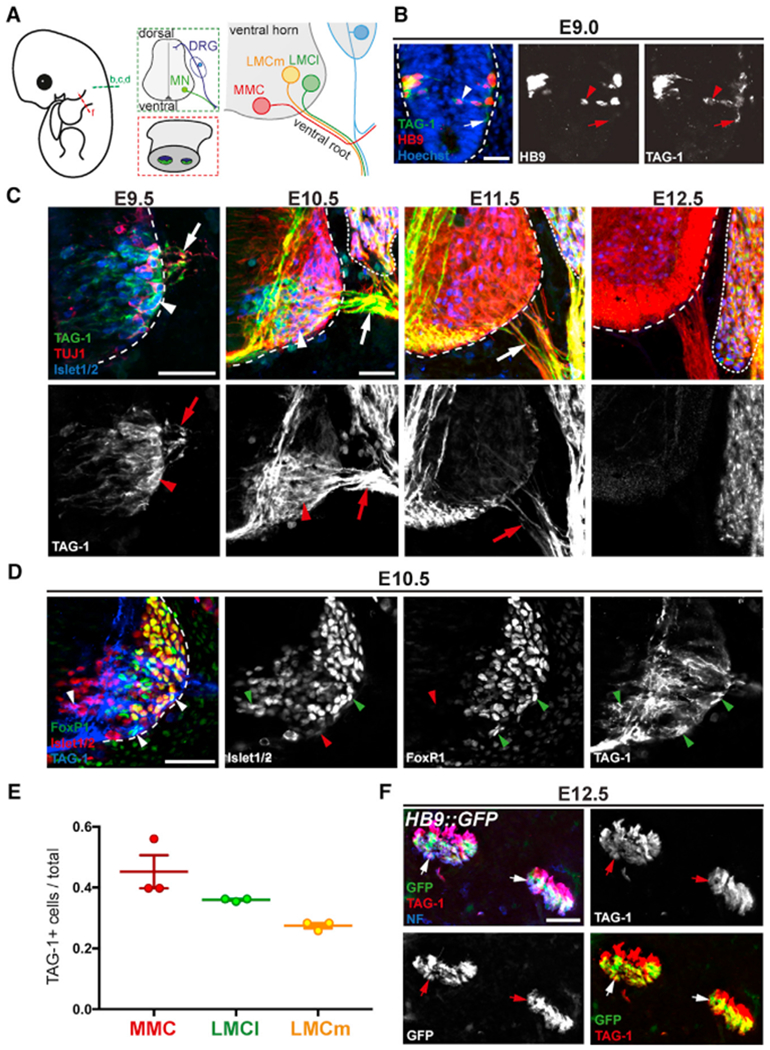
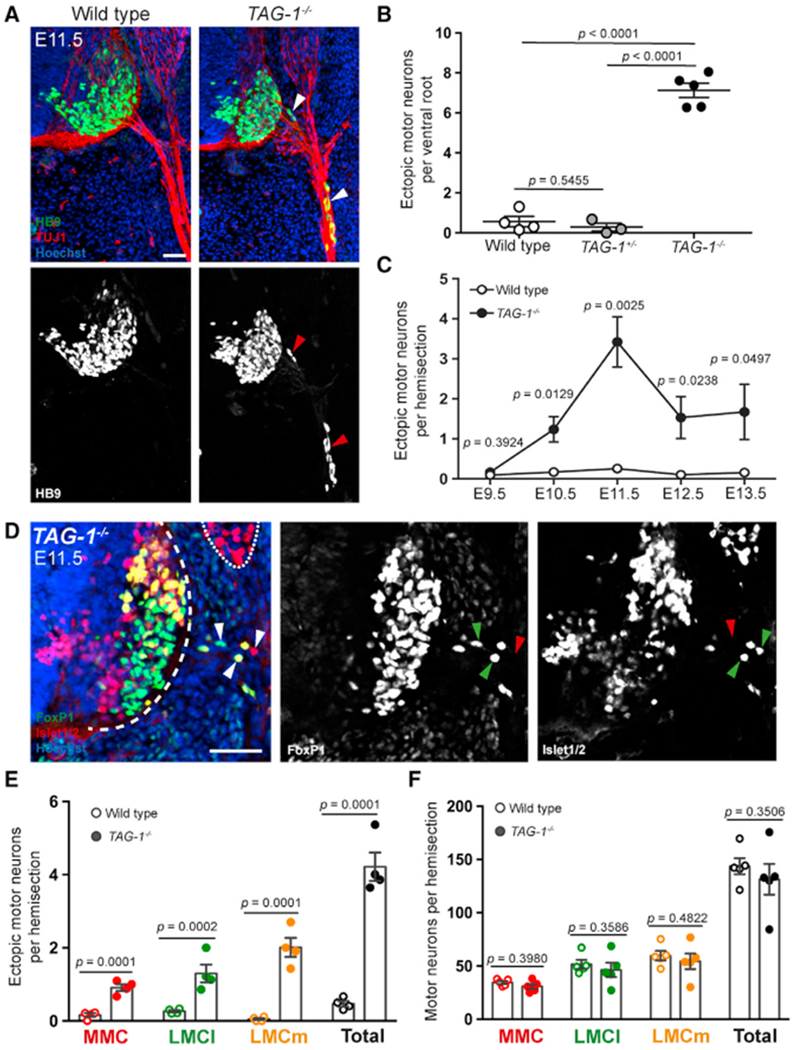
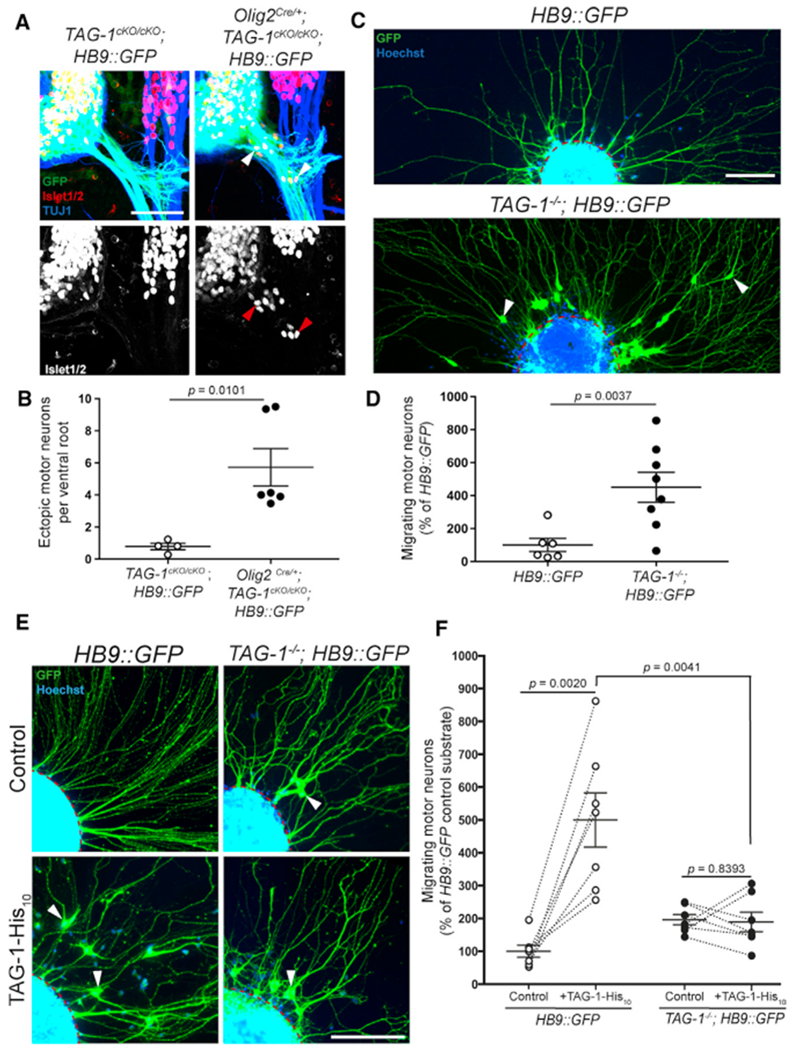
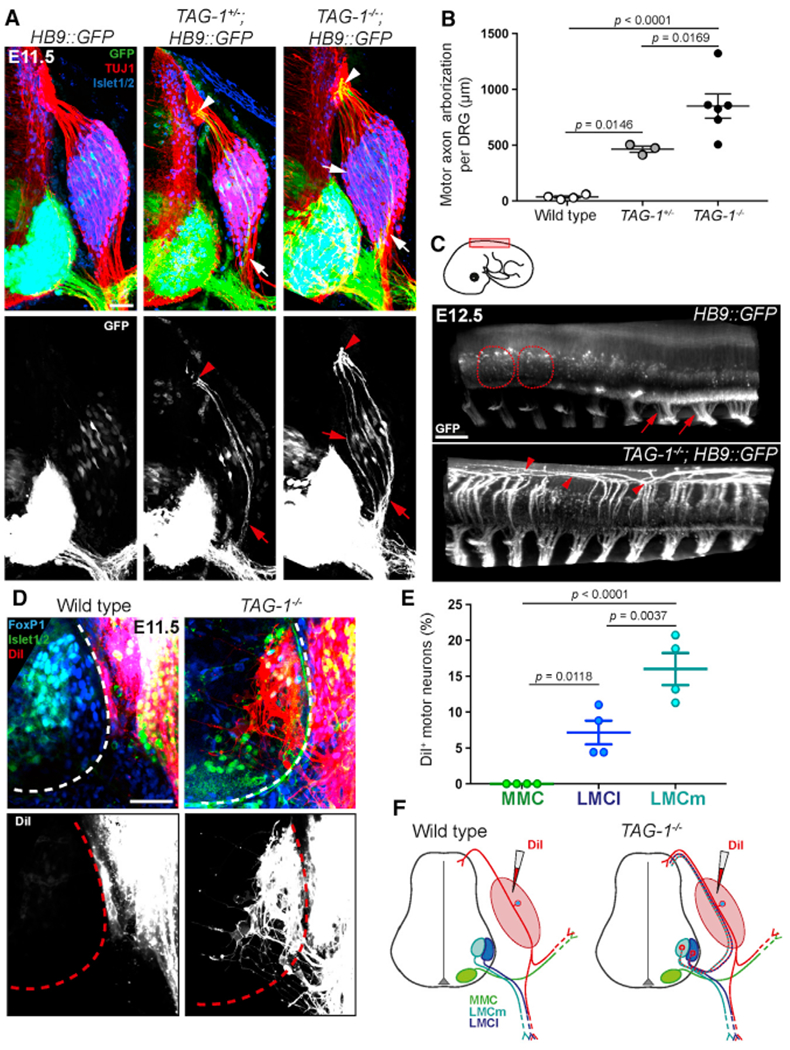
Neuronal migration, axon fasciculation, and axon guidance need to be closely coordinated for neural circuit assembly. Spinal motor neurons (MNs) face unique challenges during development because their cell bodies reside within the central nervous system (CNS) and their axons project to various targets in the body periphery. The molecular mechanisms that contain MN somata within the spinal cord while allowing their axons to exit the CNS and navigate to their final destinations remain incompletely understood. We find that the MN cell surface protein TAG-1 anchors MN cell bodies in the spinal cord to prevent their emigration, mediates motor axon fasciculation during CNS exit, and guides motor axons past dorsal root ganglia. TAG-1 executes these varied functions in MN development independently of one another. Our results identify TAG-1 as a key multifunctional regulator of MN wiring that coordinates neuronal migration, axon fasciculation, and axon guidance.
神经元迁移、轴突聚集和轴突导向对于神经回路组装需要密切协调。脊髓运动神经元 (MNs) 在发育过程中面临独特的挑战,因为它们的细胞体位于中枢神经系统 (CNS) 内,而它们的轴突投射到身体外围的各种靶标。包含 MN 细胞体在脊髓内,同时允许其轴突离开 CNS 并导航到最终目的地的分子机制仍不完全清楚。我们发现 MN 细胞表面蛋白 TAG-1 将 MN 细胞体锚定在脊髓内以防止其迁移,在 CNS 出口期间介导运动轴突聚集,并引导运动轴突通过背根神经节。TAG-1 在 MN 发育中独立地执行这些不同的功能。我们的结果表明,TAG-1 是 MN 布线的关键多功能调节剂,可协调神经元迁移、轴突聚集和轴突导向。