Department of Pediatrics, The Affiliated Hospital of Qingdao University, Qingdao, China.
Department of Emergency Surgery, Qingdao Hiser Medical Center, Qingdao, China.
Clin Appl Thromb Hemost. 2020 Jan-Dec;26:1076029619892683. doi: 10.1177/1076029619892683.
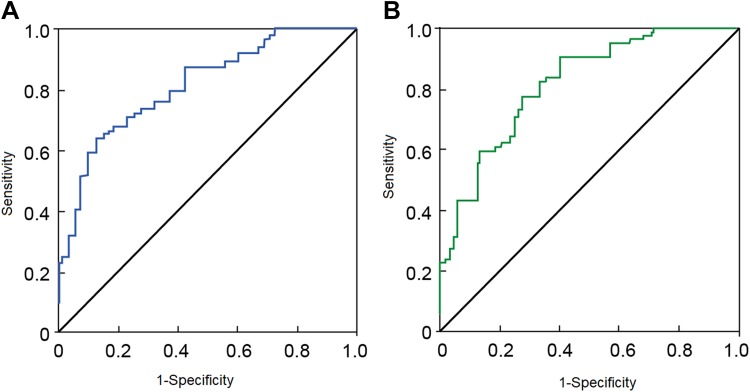
This study was conducted to assess the levels of inflammatory factors and angiogenic factors in patients with severe hemophilia A and evaluate their diagnostic values for acute joint bleeding. This study included a total of 144 patients with severe hemophilia A. Of them, 66 had acute joint bleeding. Ninety healthy volunteers were recruited as control. The levels of leukocytes, monocytes, platelets, hemoglobin, phagocyte migration inhibitory factor (MIF), plasminogen, fibrin/fibrinogen degradation products, d-dimer, and α2 antifibrinolytic enzyme were measured using hematology analyzer. Thrombomodulin, endostatin, intercellular adhesion molecule 1, and vascular endothelial growth factor (VEGF) were assessed using enzyme-linked immunosorbent assay. Logistic regression analysis was performed to analyze the factors affecting acute joint bleeding. Compared with healthy volunteers, the levels of leukocytes, C-reactive protein (CRP), MIF, and VEGF were significantly ( < .05) elevated in the patients with severe hemophilia A and were significantly higher in patients with joint bleeding than in patients with nonbleeding ( < .05). Multivariate analysis showed that CRP and VEGF were independent risk factors for acute joint bleeding ( < .05). The area under the curve, sensitivity, and specificity of CRP for the diagnosis of acute joint bleeding were 0.829, 88.43%, and 67.87%, respectively, and those of VEGF were 0.758, 82.8%, and 68.3%, respectively. The levels of inflammatory factors and angiogenesis factors are elevated in patients with severe hemophilia A and both CRP and VEGF are closely related to acute joint bleeding and may be used as potential biomarkers for predicting acute joint bleeding in patients with severe hemophilia A.
本研究旨在评估重型血友病 A 患者炎症因子和血管生成因子水平,并评估其对急性关节出血的诊断价值。该研究共纳入 144 例重型血友病 A 患者,其中 66 例发生急性关节出血。招募 90 名健康志愿者作为对照。使用血液分析仪检测白细胞、单核细胞、血小板、血红蛋白、吞噬细胞迁移抑制因子(MIF)、纤溶酶原、纤维蛋白/纤维蛋白原降解产物、D-二聚体和α2 抗纤溶酶的水平。采用酶联免疫吸附试验检测血栓调节蛋白、内皮抑素、细胞间黏附分子 1 和血管内皮生长因子(VEGF)的水平。采用 logistic 回归分析影响急性关节出血的因素。与健康志愿者相比,重型血友病 A 患者白细胞、C 反应蛋白(CRP)、MIF 和 VEGF 水平显著升高(<0.05),且关节出血患者显著高于非出血患者(<0.05)。多因素分析显示,CRP 和 VEGF 是急性关节出血的独立危险因素(<0.05)。CRP 对急性关节出血的诊断曲线下面积、敏感度和特异度分别为 0.829、88.43%和 67.87%,VEGF 分别为 0.758、82.8%和 68.3%。重型血友病 A 患者炎症因子和血管生成因子水平升高,CRP 和 VEGF 均与急性关节出血密切相关,可作为预测重型血友病 A 患者急性关节出血的潜在生物标志物。