State Key Laboratory of Veterinary Etiological Biology, Lanzhou Veterinary Research Institute, Chinese Academy of Agricultural Sciences, Lanzhou, Gansu, China.
OIE/National Foot and Mouth Disease Reference Laboratory, Lanzhou Veterinary Research Institute, Chinese Academy of Agricultural Sciences, Lanzhou, Gansu, China.
J Virol. 2020 Mar 31;94(8). doi: 10.1128/JVI.02086-19.
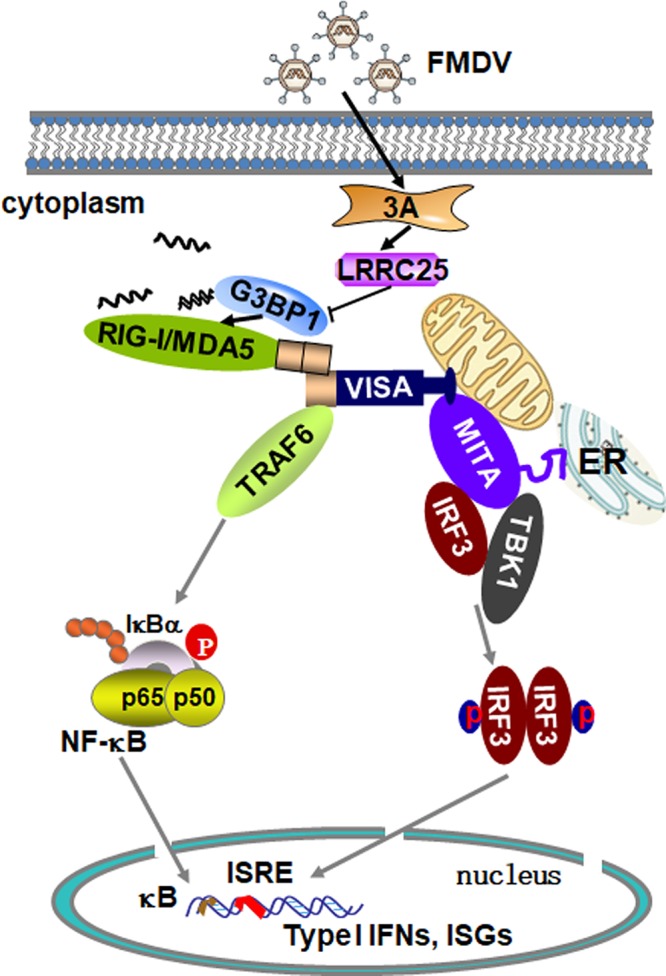
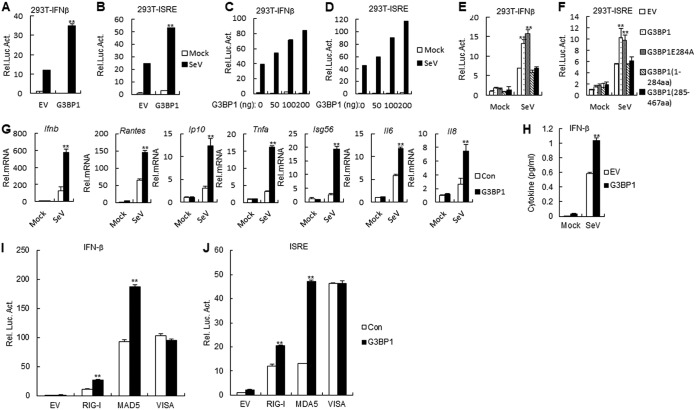
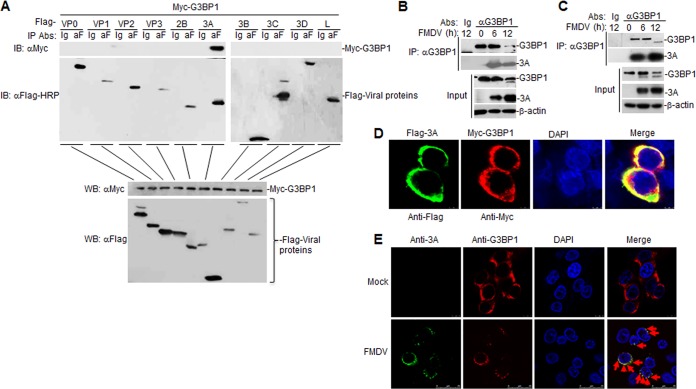
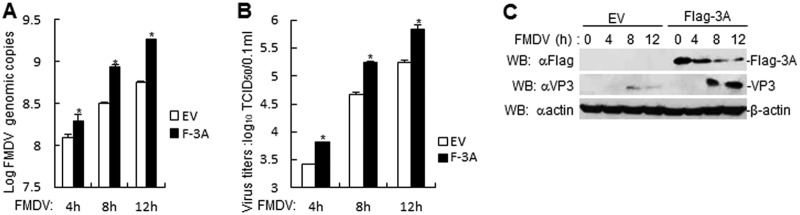
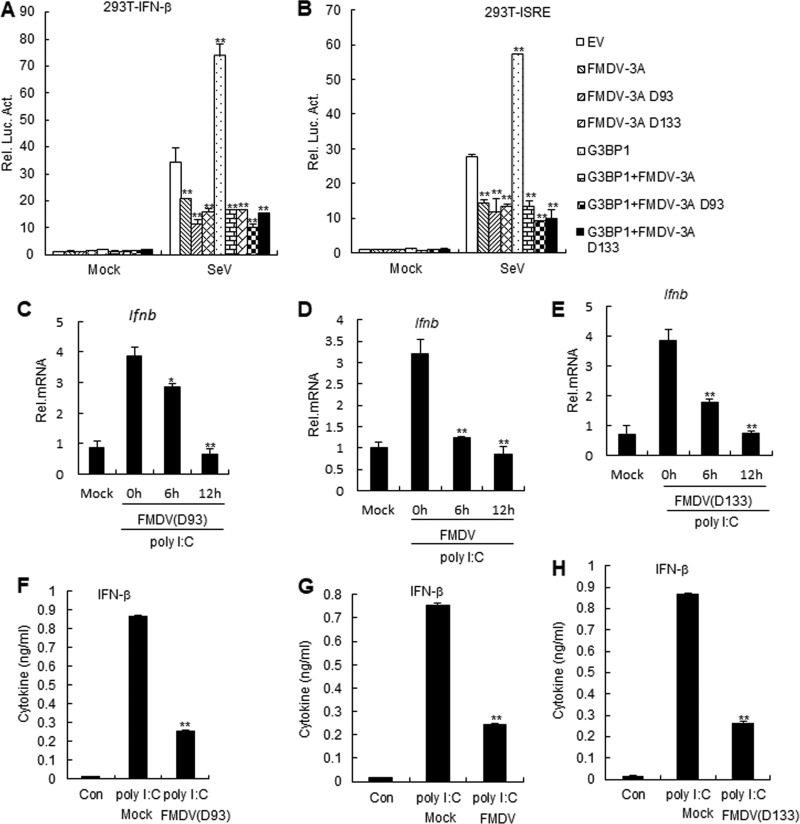
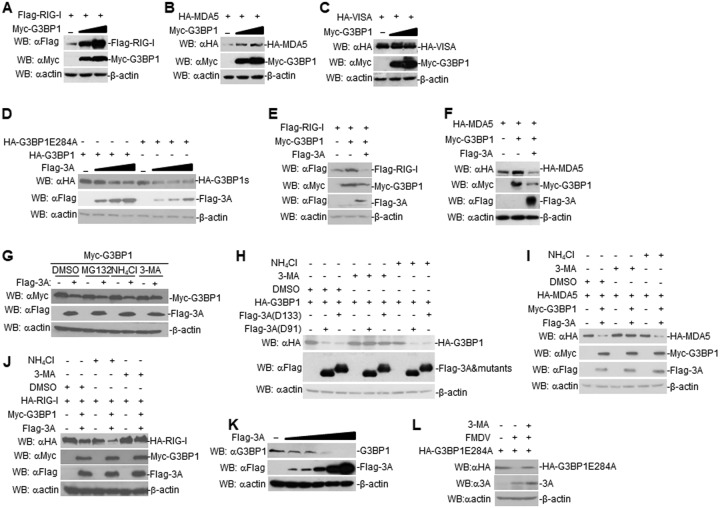
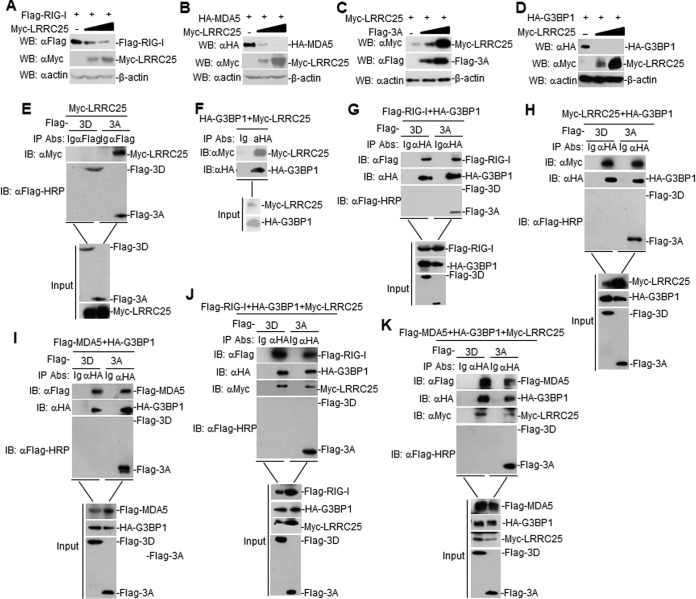
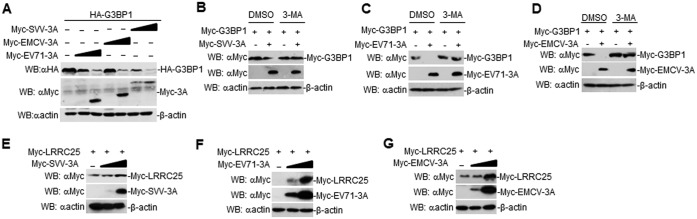
Foot-and-mouth disease virus (FMDV) is one of the most notorious pathogens in the global livestock industry. To establish an infection, FMDV needs to counteract host antiviral responses. Several studies have shown how FMDV suppresses the type I interferon (IFN) response; however, whether FMDV modulates the integrated autophagy and innate immunity remains largely unknown. Here, the porcine Ras-GAP SH3-binding protein 1 (G3BP1) was shown to promote the retinoic acid-inducible gene I (RIG-I)-like helicase (RLH) signaling by upregulating the expression of RIG-I and melanoma differentiation-associated gene 5 (MDA5). FMDV nonstructural protein 3A interacted with G3BP1 to inhibit G3BP1 expression and G3BP1-mediated RLH signaling by upregulating the expression of autophagy-related protein LRRC25. In addition, 3A proteins of other picornaviruses, including Seneca Valley virus (SVV) 3A, enterovirus 71 (EV71) 3A, and encephalomyocarditis virus (EMCV) 3A, also showed similar actions. Taking the data together, we elucidated, for the first time, a novel mechanism by which FMDV has evolved to inhibit IFN signaling and counteract host innate antiviral responses by autophagy. We show that foot-and-mouth disease virus (FMDV) 3A inhibits retinoic acid-inducible gene I (RIG-I)-like helicase signaling by degrading G3BP1 protein. Furthermore, FMDV 3A reduces G3BP1 by upregulating the expression of autophagy-related protein LRRC25. Additionally, other picornavirus 3A proteins, such as Seneca Valley virus (SVV) 3A, enterovirus 71 (EV71) 3A, and encephalomyocarditis virus (EMCV) 3A, also degrade G3BP1 by upregulating LRRC25 expression. This study will help us improve the design of current vaccines and aid the development of novel control strategies to combat FMD.
口蹄疫病毒(FMDV)是全球畜牧业中最臭名昭著的病原体之一。为了建立感染,FMDV 需要对抗宿主抗病毒反应。几项研究表明了 FMDV 如何抑制 I 型干扰素(IFN)反应;然而,FMDV 是否调节整合的自噬和先天免疫在很大程度上仍然未知。在这里,猪 Ras-GAP SH3 结合蛋白 1(G3BP1)被证明通过上调 RIG-I 和黑色素瘤分化相关基因 5(MDA5)的表达来促进视黄酸诱导基因 I(RLH)信号。FMDV 非结构蛋白 3A 与 G3BP1 相互作用,通过上调自噬相关蛋白 LRRC25 的表达来抑制 G3BP1 的表达和 G3BP1 介导的 RLH 信号。此外,其他小核糖核酸病毒,包括塞尼卡谷病毒(SVV)3A、肠道病毒 71(EV71)3A 和心肌炎病毒(EMCV)3A 的 3A 蛋白也表现出类似的作用。综合这些数据,我们首次阐明了 FMDV 通过自噬进化而来的一种新机制,该机制抑制 IFN 信号并对抗宿主先天抗病毒反应。我们表明,口蹄疫病毒(FMDV)3A 通过降解 G3BP1 蛋白来抑制视黄酸诱导基因 I(RIG-I)样螺旋酶信号。此外,FMDV 3A 通过上调自噬相关蛋白 LRRC25 的表达来减少 G3BP1。此外,其他小核糖核酸病毒 3A 蛋白,如塞尼卡谷病毒(SVV)3A、肠道病毒 71(EV71)3A 和心肌炎病毒(EMCV)3A,也通过上调 LRRC25 表达来降解 G3BP1。这项研究将有助于我们改进当前疫苗的设计,并有助于开发新的控制策略来对抗口蹄疫。