Department of Biodiversity Studies, Didactics and Bioeducation, Faculty of Biology and Environmental Protection, University of Łódź, Łódź, Poland.
Department of Ecology and Vertebrate Zoology, Faculty of Biology and Environmental Protection, University of Łódź, Łódź, Poland.
Sci Rep. 2020 Jan 29;10(1):1424. doi: 10.1038/s41598-020-57426-8.
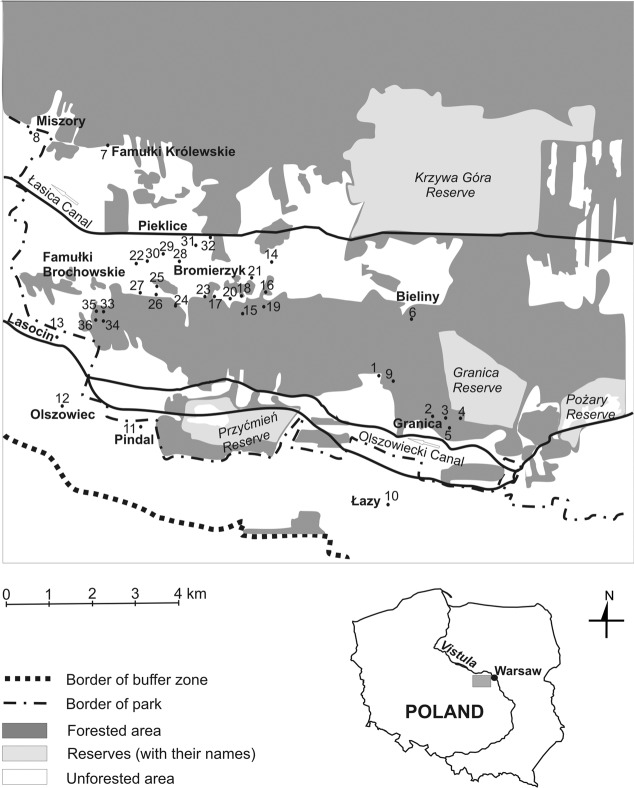
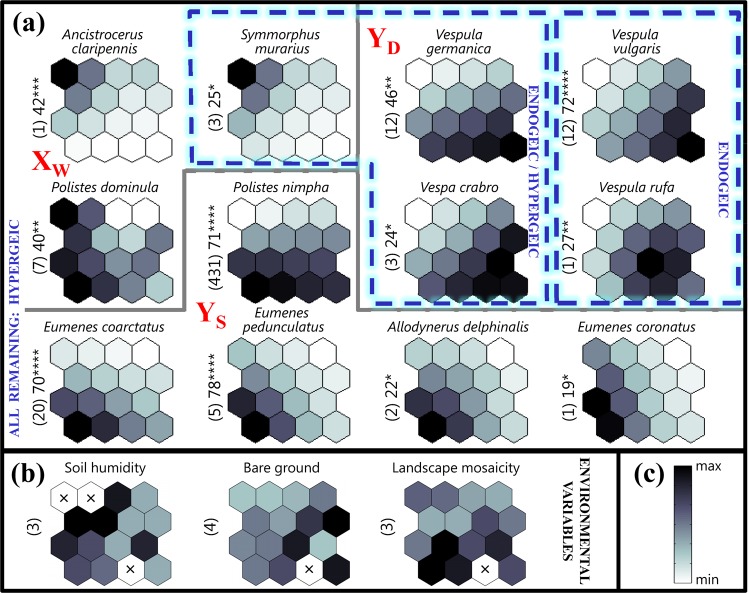
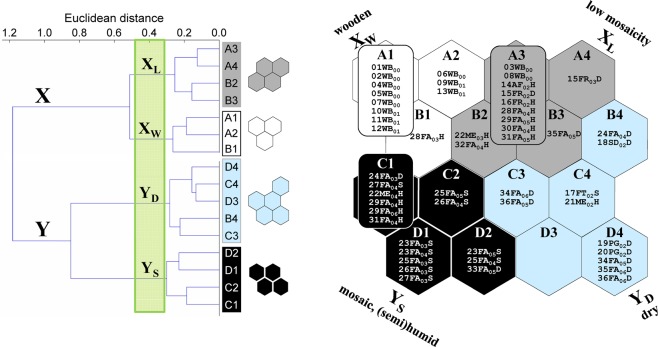
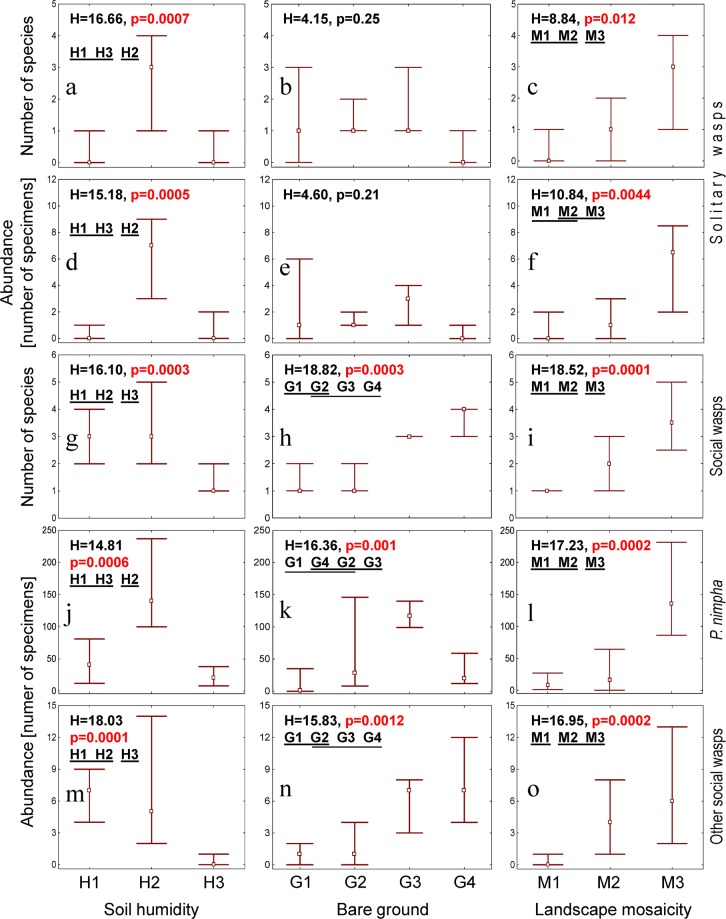
The landscape of the Kampinos National Park (KPN), a UNESCO Biosphere Reserve in Poland, is a mosaic of habitats created by natural processes and human activities. However, ongoing abandonment of traditional management has led to the development of forest communities in formerly open areas. The aim of the study was to identify the local habitat conditions promoting the abundance and diversity of wasp species (Vespidae) in the post-agricultural landscape of KPN. A total of 52 samples of Vespidae caught per unit effort (CPUE) were collected across various habitats with different levels of soil humidity, bare ground and mosaicity. The highest numbers and greatest species richness of vespids were recorded in open habitats on semihydrogenic and dry soil, which provided nesting sites for hypergeic (nesting above the ground) and endogeic (ground nesting) wasps. Many solitary species that are hypergeic were significantly associated with old, abandoned wooden buildings. As vespids need resources to build and provision the nest, their communities were shaped not only by the nature of the habitat sampled but also by the mosaicity of the surrounding area. The highest abundance and species richness were recorded in samples from a heterogenous landscape, which provided a wider range of available resources in the vicinity of the nest. Our findings have significant implications for the management of park landscapes: afforestation of open habitats, both human-induced and resulting from natural succession, and the removal of old abandoned wooden buildings may limit landscape mosaicity and thus decrease hymenopteran diversity.
坎皮诺斯国家公园(KPN)位于波兰,是一处拥有联合国教科文组织生物圈保护区地位的景观,它的地貌是由自然过程和人类活动共同塑造的。然而,传统管理方式的持续废弃,导致原本开阔的地区出现了森林群落。本研究旨在确定当地生境条件,以促进 KPN 后农业景观中黄蜂物种(Vespidae)的丰富度和多样性。在不同土壤湿度、裸地和镶嵌度水平的各种生境中,共采集了 52 个黄蜂单位努力捕获样本(CPUE)。在半水生和干燥土壤上的开阔生境中,记录到了黄蜂数量最多和物种最丰富,这些生境为超地栖(在地面上方筑巢)和内栖(在地面筑巢)黄蜂提供了筑巢地点。许多超地栖的独居物种与废弃的旧木制建筑有显著关联。由于黄蜂需要资源来建造和提供巢穴,因此它们的群落不仅受到所采样生境性质的影响,还受到周围地区镶嵌度的影响。在异质景观中记录到了最高的丰度和物种丰富度,该景观在巢穴附近提供了更广泛的可用资源。我们的研究结果对公园景观管理具有重要意义:开阔生境的造林,无论是人为引起的还是自然演替的结果,以及废弃的旧木制建筑的清除,可能会限制景观镶嵌度,从而降低膜翅目昆虫的多样性。