Mo Yun, Sun Yin-Yi, Liu Kang-Yong
Department of Neurology, Guizhou Medical University, Guiyang, Guizhou Province, China.
Department of Neurology, Shanghai Sixth People's Hospital, Shanghai Jiao Tong University School of Medicine, Shanghai, China.
Neural Regen Res. 2020 Aug;15(8):1388-1396. doi: 10.4103/1673-5374.274331.
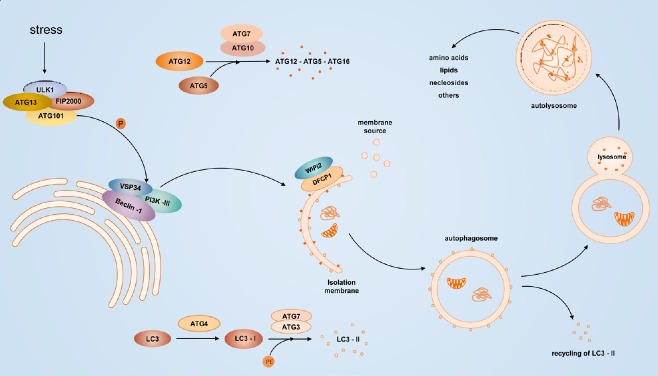
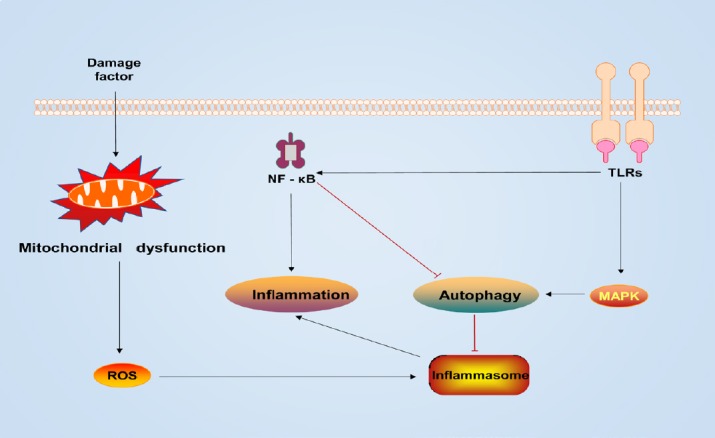
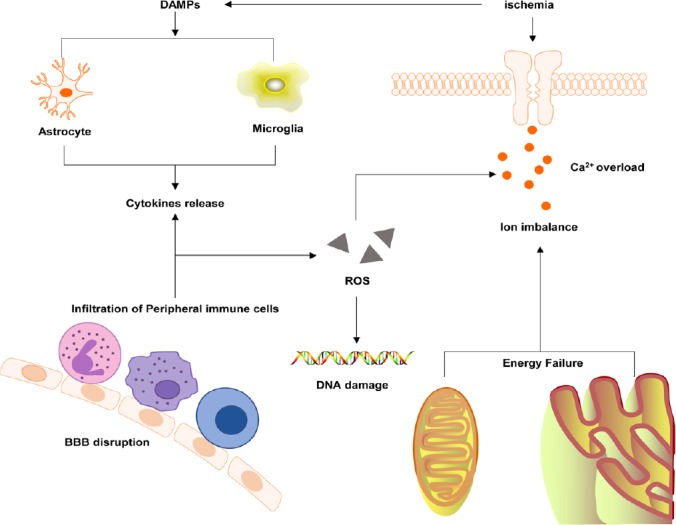
Appropriate autophagy has protective effects on ischemic nerve tissue, while excessive autophagy may cause cell death. The inflammatory response plays an important role in the survival of nerve cells and the recovery of neural tissue after ischemia. Many studies have found an interaction between autophagy and inflammation in the pathogenesis of ischemic stroke. This study outlines recent advances regarding the role of autophagy in the post-stroke inflammatory response as follows. (1) Autophagy inhibits inflammatory responses caused by ischemic stimulation through mTOR, the AMPK pathway, and inhibition of inflammasome activation. (2) Activation of inflammation triggers the formation of autophagosomes, and the upregulation of autophagy levels is marked by a significant increase in the autophagy-forming markers LC3-II and Beclin-1. Lipopolysaccharide stimulates microglia and inhibits ULK1 activity by direct phosphorylation of p38 MAPK, reducing the flux and autophagy level, thereby inducing inflammatory activity. (3) By blocking the activation of autophagy, the activation of inflammasomes can alleviate cerebral ischemic injury. Autophagy can also regulate the phenotypic alternation of microglia through the nuclear factor-κB pathway, which is beneficial to the recovery of neural tissue after ischemia. Studies have shown that some drugs such as resveratrol can exert neuroprotective effects by regulating the autophagy-inflammatory pathway. These studies suggest that the autophagy-inflammatory pathway may provide a new direction for the treatment of ischemic stroke.
适度的自噬对缺血性神经组织具有保护作用,而过度自噬可能导致细胞死亡。炎症反应在神经细胞存活及缺血后神经组织的恢复中起重要作用。许多研究发现自噬与炎症在缺血性脑卒中发病机制中存在相互作用。本研究概述了自噬在脑卒中后炎症反应中作用的最新进展如下。(1)自噬通过mTOR、AMPK途径及抑制炎性小体激活来抑制缺血刺激引起的炎症反应。(2)炎症激活触发自噬体形成,自噬水平上调以自噬形成标志物LC3-II和Beclin-1显著增加为标志。脂多糖刺激小胶质细胞并通过直接磷酸化p38 MAPK抑制ULK1活性,降低自噬通量和自噬水平,从而诱导炎症活性。(3)通过阻断自噬激活,炎性小体的激活可减轻脑缺血损伤。自噬还可通过核因子-κB途径调节小胶质细胞的表型转变,这有利于缺血后神经组织的恢复。研究表明,白藜芦醇等一些药物可通过调节自噬-炎症途径发挥神经保护作用。这些研究提示自噬-炎症途径可能为缺血性脑卒中的治疗提供新方向。