Wang Jin-Feng, Mei Zhi-Gang, Fu Yang, Yang Song-Bai, Zhang Shi-Zhong, Huang Wei-Feng, Xiong Li, Zhou Hua-Jun, Tao Wei, Feng Zhi-Tao
Third-Grade Pharmacological Laboratory on Chinese Medicine Approved by State Administration of Traditional Chinese Medicine, Medical College of China Three Gorges University, Yichang, Hubei Province, China.
Xiangyang Hospital of Traditional Chinese Medicine, Xiangyang, Hubei Province, China.
Neural Regen Res. 2018 Jun;13(6):989-998. doi: 10.4103/1673-5374.233441.
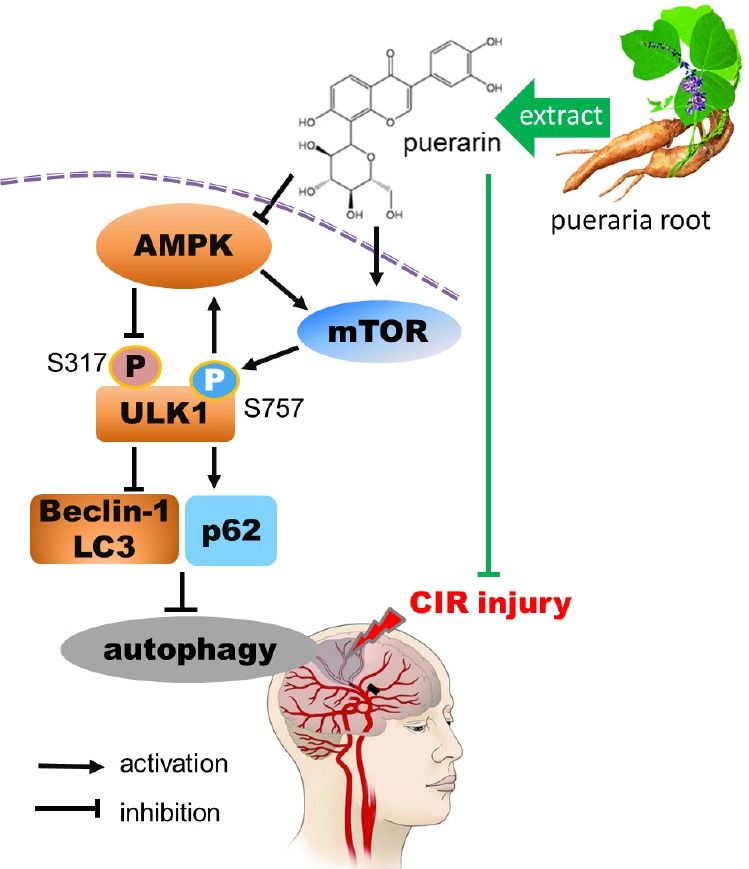
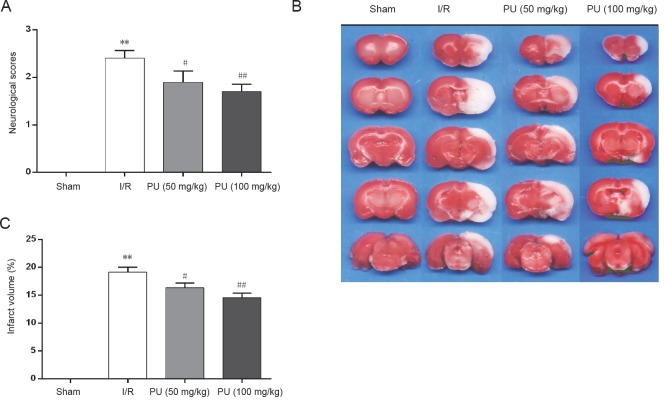
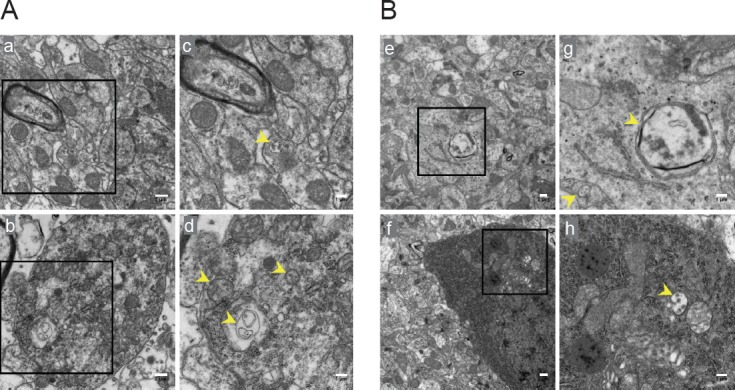
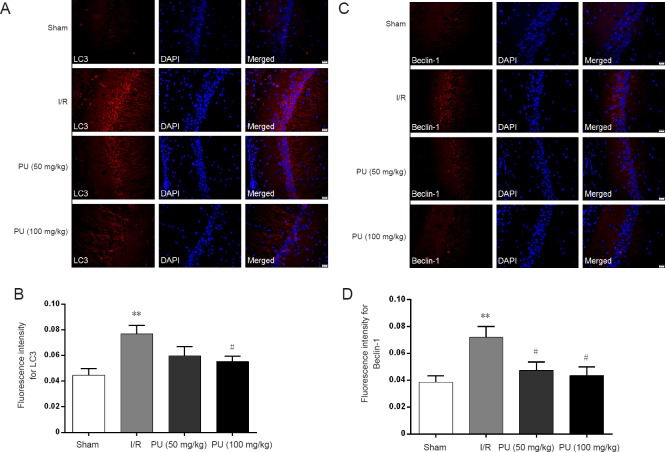
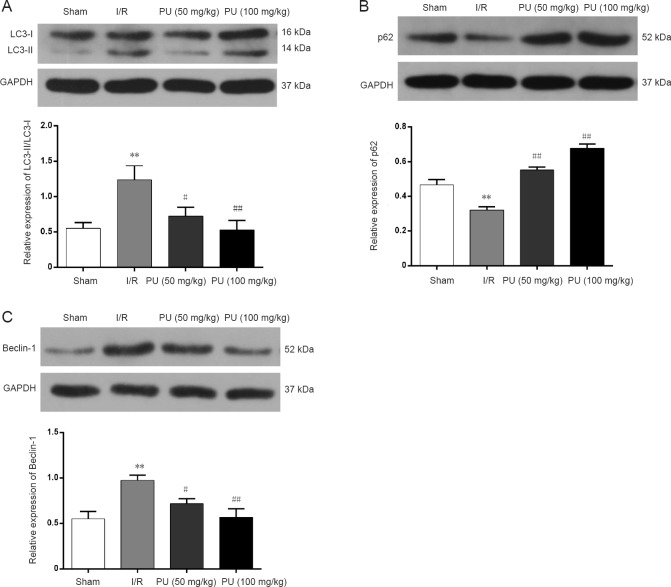
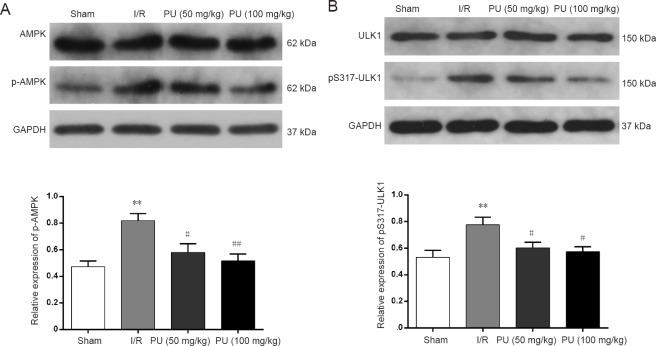
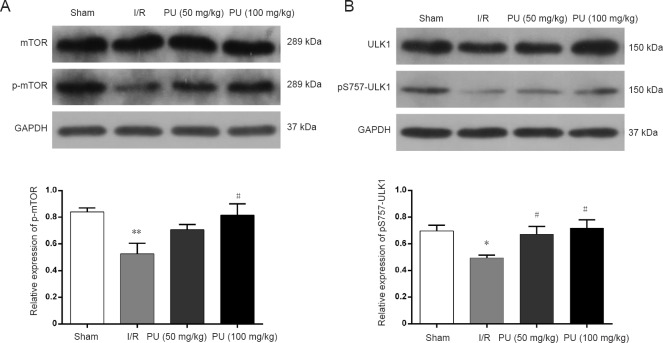
Puerarin suppresses autophagy to alleviate cerebral ischemia/reperfusion injury, and accumulating evidence indicates that the AMPK-mTOR signaling pathway regulates the activation of the autophagy pathway through the coordinated phosphorylation of ULK1. In this study, we investigated the mechanisms underlying the neuroprotective effect of puerarin and its role in modulating autophagy via the AMPK-mTOR-ULK1 signaling pathway in the rat middle cerebral artery occlusion model of cerebral ischemia/reperfusion injury. Rats were intraperitoneally injected with puerarin, 50 or 100 mg/kg, daily for 7 days. Then, 30 minutes after the final administration, rats were subjected to transient middle cerebral artery occlusion for 90 minutes. Then, after 24 hours of reperfusion, the Longa score and infarct volume were evaluated in each group. Autophagosome formation was observed by transmission electron microscopy. LC3, Beclin-1 p62, AMPK, mTOR and ULK1 protein expression levels were examined by immunofluorescence and western blot assay. Puerarin substantially reduced the Longa score and infarct volume, and it lessened autophagosome formation in the hippocampal CA1 area following cerebral ischemia/reperfusion injury in a dose-dependent manner. Pretreatment with puerarin (50 or 100 mg/kg) reduced Beclin-1 expression and the LC3-II/LC3-I ratio, as well as p-AMPK and pS317-ULK1 levels. In comparison, it increased p62 expression. Furthermore, puerarin at 100 mg/kg dramatically increased the levels of p-mTOR and pS757-ULK1 in the hippocampus on the ischemic side. Our findings suggest that puerarin alleviates autophagy by activating the APMK-mTOR-ULK1 signaling pathway. Thus, puerarin might have therapeutic potential for treating cerebral ischemia/reperfusion injury.
葛根素通过抑制自噬减轻脑缺血/再灌注损伤,越来越多的证据表明,AMPK-mTOR信号通路通过ULK1的协同磷酸化调节自噬途径的激活。在本研究中,我们在大鼠大脑中动脉闭塞脑缺血/再灌注损伤模型中,研究了葛根素神经保护作用的潜在机制及其通过AMPK-mTOR-ULK1信号通路调节自噬的作用。大鼠每天腹腔注射50或100mg/kg葛根素,连续7天。然后,在最后一次给药30分钟后,大鼠进行短暂性大脑中动脉闭塞90分钟。再灌注24小时后,评估每组的Longa评分和梗死体积。通过透射电子显微镜观察自噬体形成。通过免疫荧光和蛋白质印迹法检测LC3、Beclin-1、p62、AMPK、mTOR和ULK1蛋白表达水平。葛根素显著降低Longa评分和梗死体积,并以剂量依赖性方式减少脑缺血/再灌注损伤后海马CA1区的自噬体形成。用葛根素(50或100mg/kg)预处理可降低Beclin-1表达以及LC3-II/LC3-I比值,以及p-AMPK和pS317-ULK1水平。相比之下,它增加了p62表达。此外,100mg/kg的葛根素显著增加了缺血侧海马中p-mTOR和pS757-ULK1的水平。我们的研究结果表明,葛根素通过激活APMK-mTOR-ULK1信号通路减轻自噬。因此,葛根素可能具有治疗脑缺血/再灌注损伤的潜力。