Hu Di, Dolganov Aleksei, Ma Mingchan, Bhattacharya Biyash, Bishop Matthew T, Chen George Z
1Department of Chemical and Environmental Engineering, Energy Engineering Research Group, Faculty of Science and Engineering, University of Nottingham Ningbo China, Ningbo, 315100 China.
2International Doctoral Innovation Centre, University of Nottingham Ningbo China, Ningbo, 315100 China.
JOM (1989). 2018;70(2):129-137. doi: 10.1007/s11837-017-2664-4. Epub 2017 Dec 1.
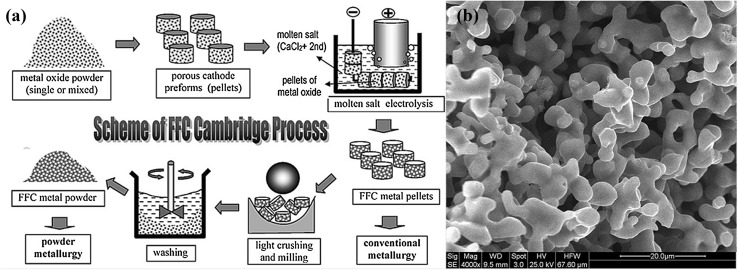
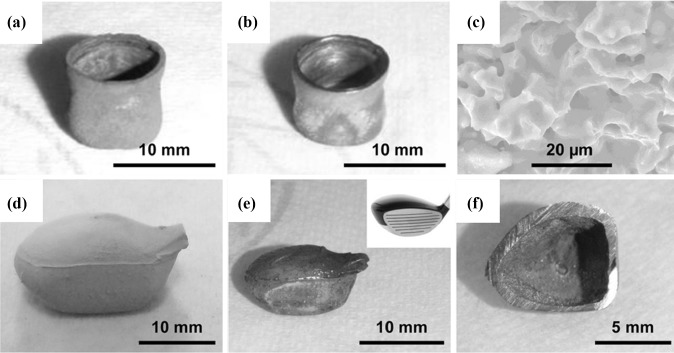
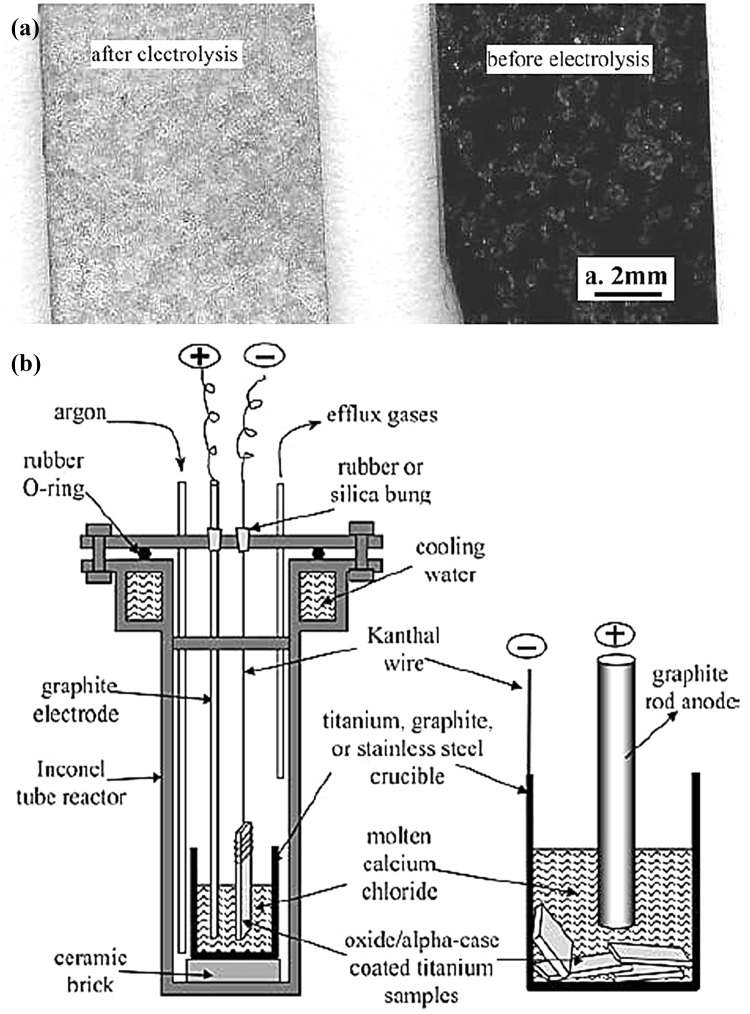
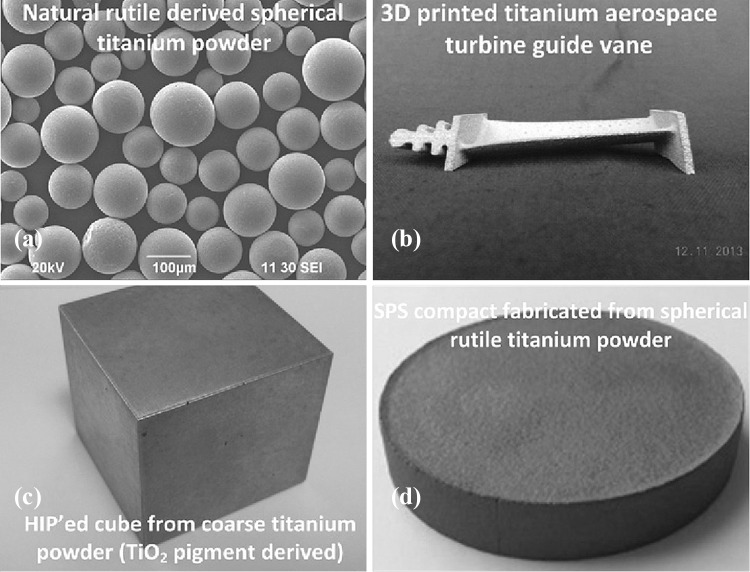
The Kroll process has been employed for titanium extraction since the 1950s. It is a labour and energy intensive multi-step semi-batch process. The post-extraction processes for making the raw titanium into alloys and products are also excessive, including multiple remelting steps. Invented in the late 1990s, the Fray-Farthing-Chen (FFC) Cambridge process extracts titanium from solid oxides at lower energy consumption via electrochemical reduction in molten salts. Its ability to produce alloys and powders, while retaining the cathode shape also promises energy and material efficient manufacturing. Focusing on titanium and its alloys, this article reviews the recent development of the FFC-Cambridge process in two aspects, (1) resource and process sustainability and (2) advanced post-extraction processing.
自20世纪50年代以来,克劳尔法一直用于钛的提取。它是一个劳动和能源密集型的多步骤半间歇过程。将粗钛制成合金和产品的后提取过程也很繁琐,包括多个重熔步骤。20世纪90年代末发明的弗雷-法辛-陈(FFC)剑桥法通过熔盐中的电化学还原,以较低的能耗从固体氧化物中提取钛。它生产合金和粉末的能力,同时保持阴极形状,也有望实现能源和材料高效制造。本文聚焦于钛及其合金,从两个方面综述了FFC剑桥法的最新进展:(1)资源和过程可持续性;(2)先进的后提取加工。