Alqahtani Ali S, Noman Omar M, Rehman Md Tabish, Siddiqui Nasir A, Alajmi Mohamed F, Nasr Fahd A, Shahat Abdelaaty A, Alam Perwez
Department of Pharmacognosy, College of Pharmacy, King Saud University, Riyadh, Saudi Arabia.
Medicinal, Aromatic and Poisonous Plants Research Center, College of Pharmacy, King Saud University, Riyadh, Saudi Arabia.
Saudi Pharm J. 2019 Nov;27(7):981-989. doi: 10.1016/j.jsps.2019.07.007. Epub 2019 Jul 25.
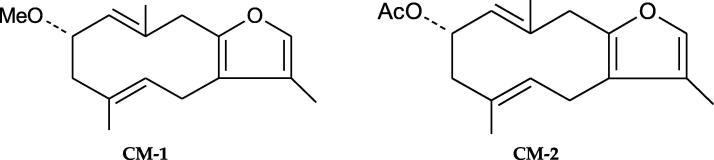
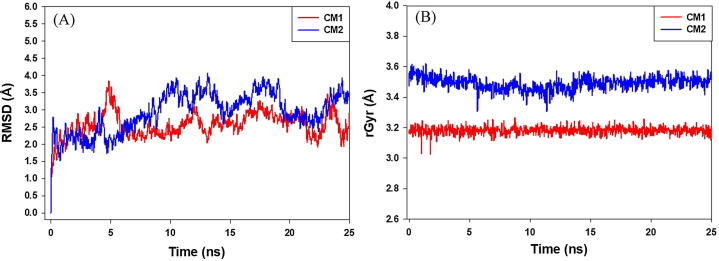
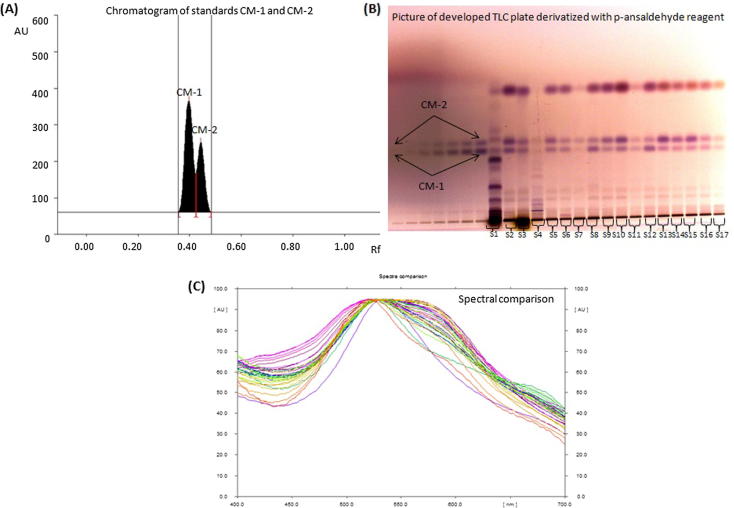
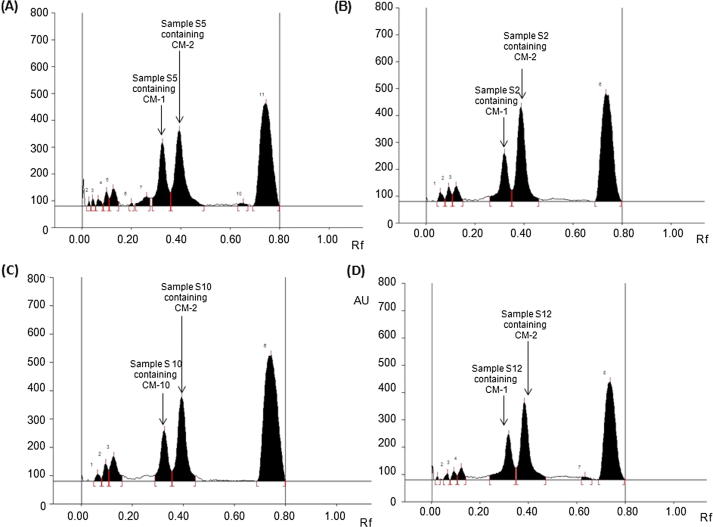
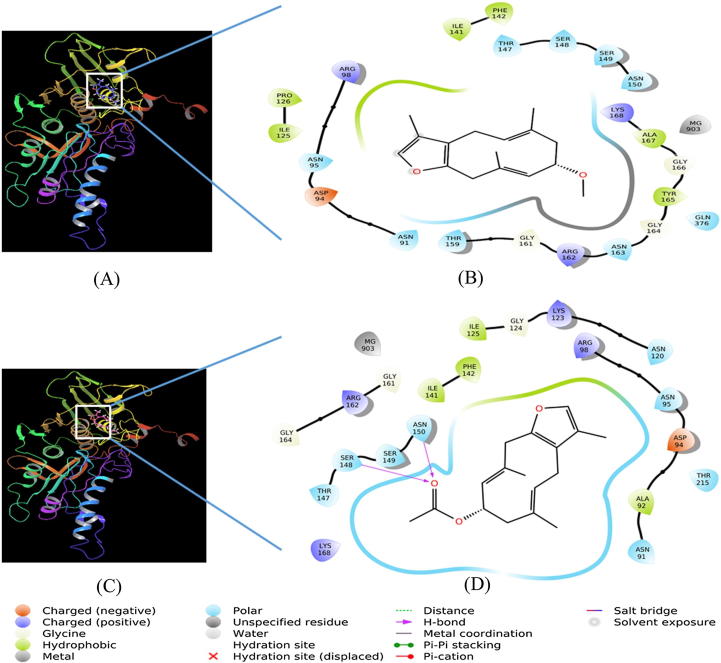
Myrrh is an oleo-gum-resin produced in the stem of (Burseraceae) and used for centuries for different medicinal purposes. The present work was designed to evaluate the cytotoxic and antioxidant properties of seventeen myrrh samples (S1-S17) obtained from different retail markets of Saudi Arabia and Yemen regions, along with two furanosesquiterpenoids (CM-1 and CM-2). The cytotoxicity assay was carried out on HepG2, MCF-7 and HUVEC cell lines. S2, S5, S10, S12, CM-1, CM-2 exhibited significant cytotoxicity against HepG2/MCF-7 cell lines [IC50 (μg/mL): 13.8/10, 14/10, 14.5/11.3, 18/13.2, 9.5/12.5, 10/15.8, respectively) compare to vinblastin (IC (μg/mL): 2/2.5) whereas the remaining samples were found as mild active or inactive. The antioxidant properties of the samples were tested by β-carotene-bleaching and DPPH free radical scavenging methods where the samples S8 (1000 μg/mL) exhibited the highest β-carotene bleaching (76.2%) and free radical scavenging activity (79.8%). The HPTLC analysis was performed on NP-HPTLC plate using toluene, chloroform and glacial acetic acid as mobile phase in ratio of 7:2.9:0.1 (V/V/V). The validated HPTLC method furnished sharp, intense and compact peaks of CM-1 and CM-2 at Rf = 0.39 and 0.44, respectively. The highest/lowest content of CM-1 and CM-2 were found in S12/S5 and S5/S17, respectively. The molecular docking studies of CM-1 and CM-2 with human DNA topoisomerase IIα have shown that both the compounds were bound the active sites of the respective enzymes. Molecular dynamics simulation studies further confirmed that the interactions of CM-1 and CM-2 with topoisomerase were stable in nature. This study will help us in selection of appropriate myrrh sample for the greater benefits of the population in the Middle East region.
没药是一种从没药属植物(橄榄科)树干中提取的油胶树脂,几个世纪以来一直用于不同的药用目的。本研究旨在评估从沙特阿拉伯和也门地区不同零售市场获得的17种没药样品(S1 - S17)以及两种呋喃倍半萜(CM - 1和CM - 2)的细胞毒性和抗氧化特性。细胞毒性试验在HepG2、MCF - 7和HUVEC细胞系上进行。S2、S5、S10、S12、CM - 1、CM - 2对HepG2/MCF - 7细胞系表现出显著的细胞毒性[IC50(μg/mL):分别为13.8/10、14/10、14.5/11.3、18/13.2、9.5/12.5、10/15.8],与长春碱(IC50(μg/mL):2/2.5)相比,而其余样品被发现活性较弱或无活性。通过β - 胡萝卜素漂白和DPPH自由基清除方法测试样品的抗氧化特性,其中样品S8(1000μg/mL)表现出最高的β - 胡萝卜素漂白率(76.2%)和自由基清除活性(79.8%)。在NP - HPTLC板上进行HPTLC分析,使用甲苯、氯仿和冰醋酸作为流动相,比例为7:2.9:0.1(V/V/V)。经过验证的HPTLC方法在Rf = 0.39和0.44处分别给出了CM - 1和CM - 2尖锐、强烈且紧密的峰。CM - 1和CM - 2的最高/最低含量分别在S12/S5和S5/S17中发现。CM - 1和CM - 2与人DNA拓扑异构酶IIα的分子对接研究表明,这两种化合物都与各自酶的活性位点结合。分子动力学模拟研究进一步证实,CM - 1和CM - 2与拓扑异构酶的相互作用本质上是稳定的。这项研究将有助于我们为中东地区的人群选择合适的没药样品以获得更大益处。