Pozo-Rico Teresa, Sandoval Ivan
Department of Developmental Psychology and Didactics, University of Alicante, Alicante, Spain.
Departamento de Formación Básica, Escuela Politécnica Nacional, Quito, Ecuador.
Front Psychol. 2020 Jan 10;10:2976. doi: 10.3389/fpsyg.2019.02976. eCollection 2019.
The primary aim of the current study was to develop a multi-methodological teacher training program based on emotional intelligence (EI) as a key competency in order to improve student academic achievement based on two methods: face-to-face instruction and game-based e-learning instruction.
Seventy-four primary education teachers and their 2069 students were randomly assigned to three groups. The first group of teachers ( = 23) were trained to use a face-to-face method. The objective of the training was that the teachers would be able to implement EI into their teaching to improve academic achievement in their students ( = 645) using face-to-face instruction. For the second group ( = 28), the teachers were trained to use an e-learning gamification method. Similar to the first group, the objective of the training was that the teachers would be able to implement EI into their teaching to improve academic achievement in their students ( = 758) using e-learning gamification instruction. The third group of teachers ( = 23) served as the controls and did not receive any special training, nor did they implement EI into their teaching ( = 666).
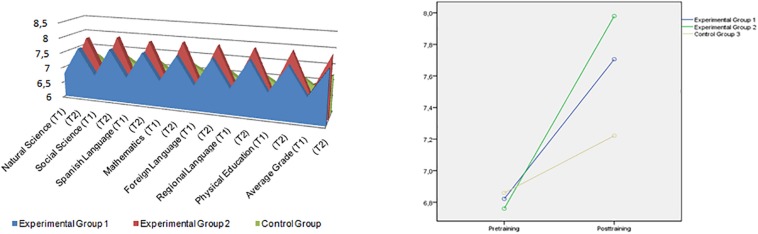
Implementation of EI into classroom teaching effectively improved academic achievement in primary school students using both methods. However, there was a greater increase in academic achievement and higher teacher satisfaction in the game-based e-learning group. No significant differences in student achievement were observed in the control group.
Emotional intelligence as a key academic competency.
本研究的主要目的是开发一个基于情商(EI)作为关键能力的多方法教师培训项目,以便通过两种方法提高学生的学业成绩:面对面教学和基于游戏的电子学习教学。
74名小学教师及其2069名学生被随机分为三组。第一组教师(n = 23)接受面对面教学方法的培训。培训的目标是教师能够在教学中运用情商,通过面对面教学提高其学生(n = 645)的学业成绩。对于第二组(n = 28),教师接受电子学习游戏化方法的培训。与第一组类似,培训的目标是教师能够在教学中运用情商,通过电子学习游戏化教学提高其学生(n = 758)的学业成绩。第三组教师(n = 23)作为对照组,未接受任何特殊培训,也未在教学中运用情商(n = 666)。
在两种教学方法中,将情商融入课堂教学均有效提高了小学生的学业成绩。然而,基于游戏的电子学习组的学业成绩提高幅度更大,教师满意度更高。对照组学生成绩未观察到显著差异。
情商是一项关键的学业能力。