Keller Beat, Matsubara Shizue, Rascher Uwe, Pieruschka Roland, Steier Angelina, Kraska Thorsten, Muller Onno
IBG-2: Plant Sciences, Institute of Bio- and Geosciences, Forschungszentrum Jülich GmbH, Jülich, Germany.
Field Lab Campus Klein-Altendorf, University of Bonn, Rheinbach, Germany.
Front Plant Sci. 2019 Nov 20;10:1482. doi: 10.3389/fpls.2019.01482. eCollection 2019.
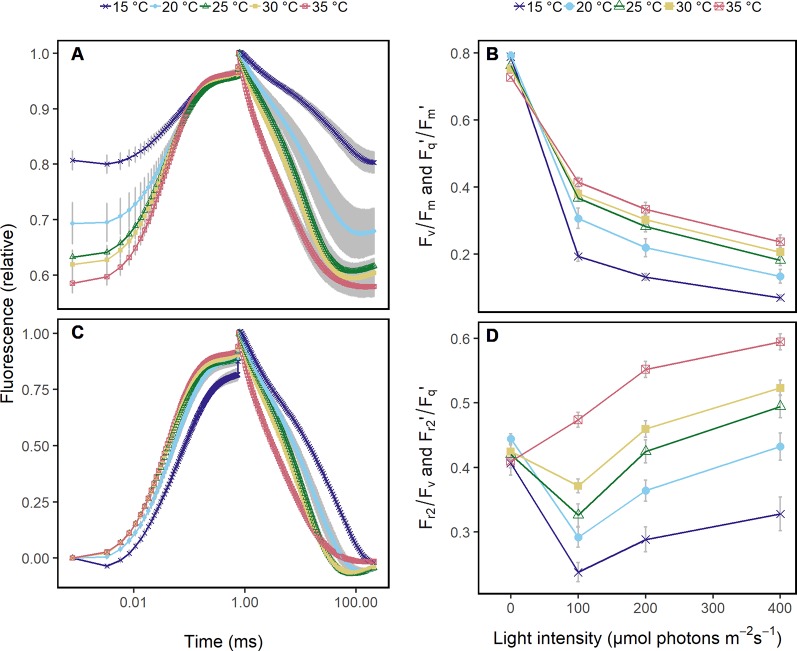
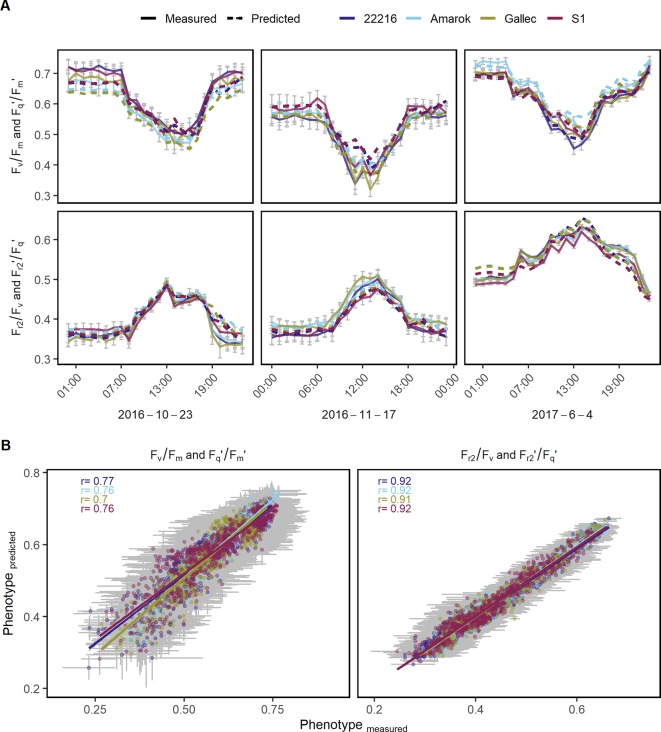
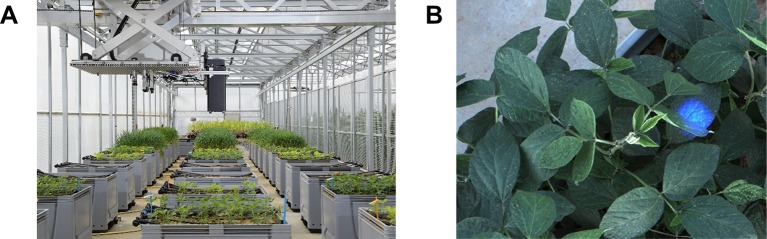
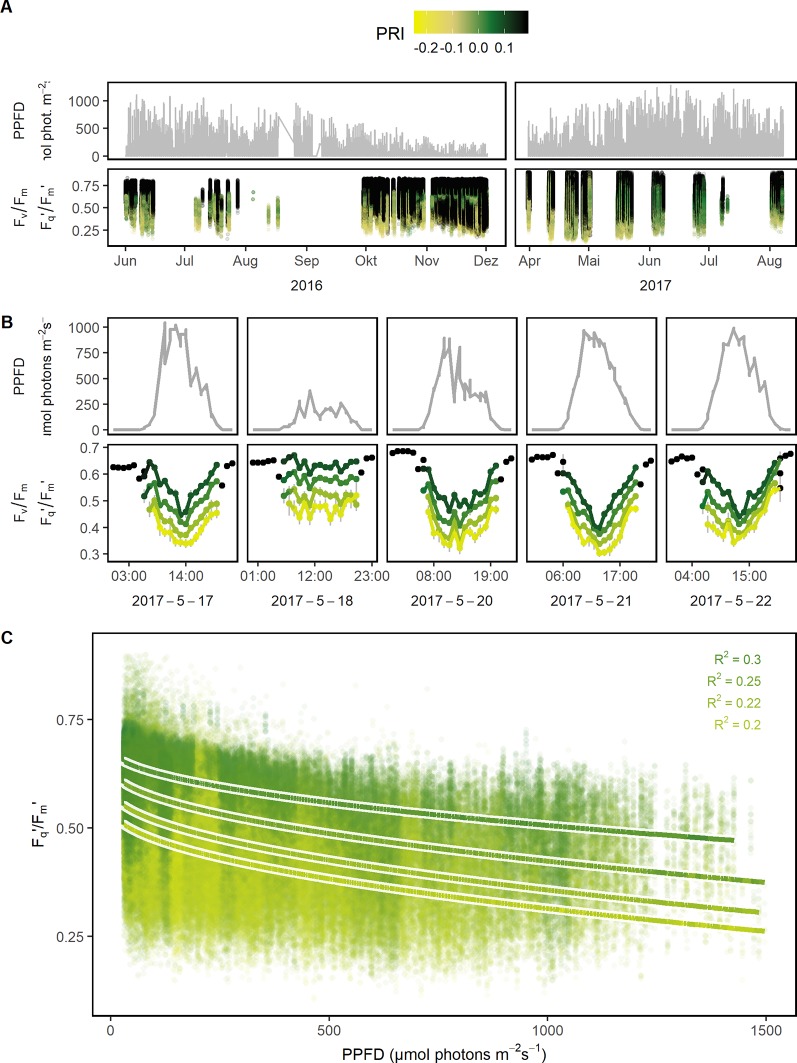
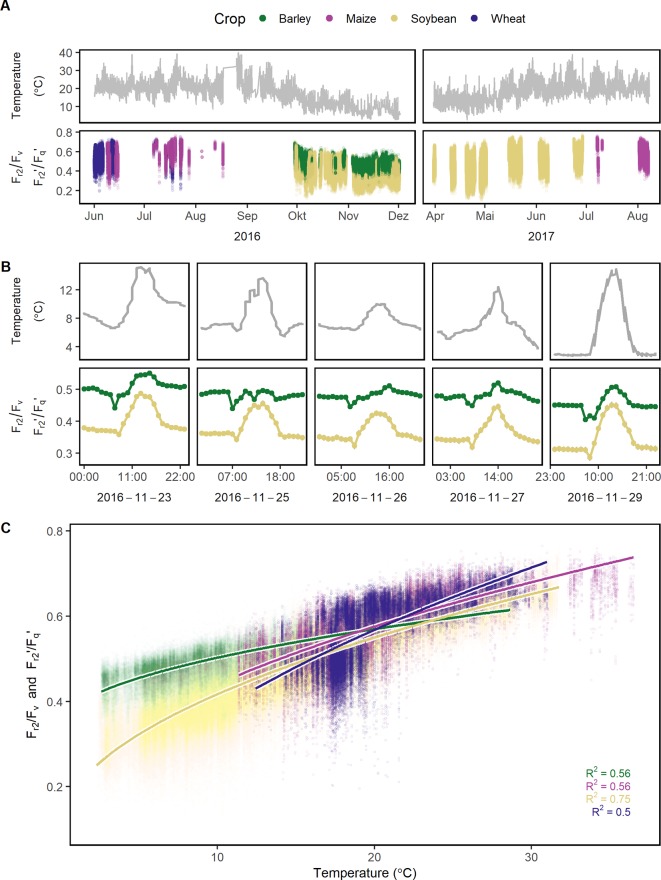
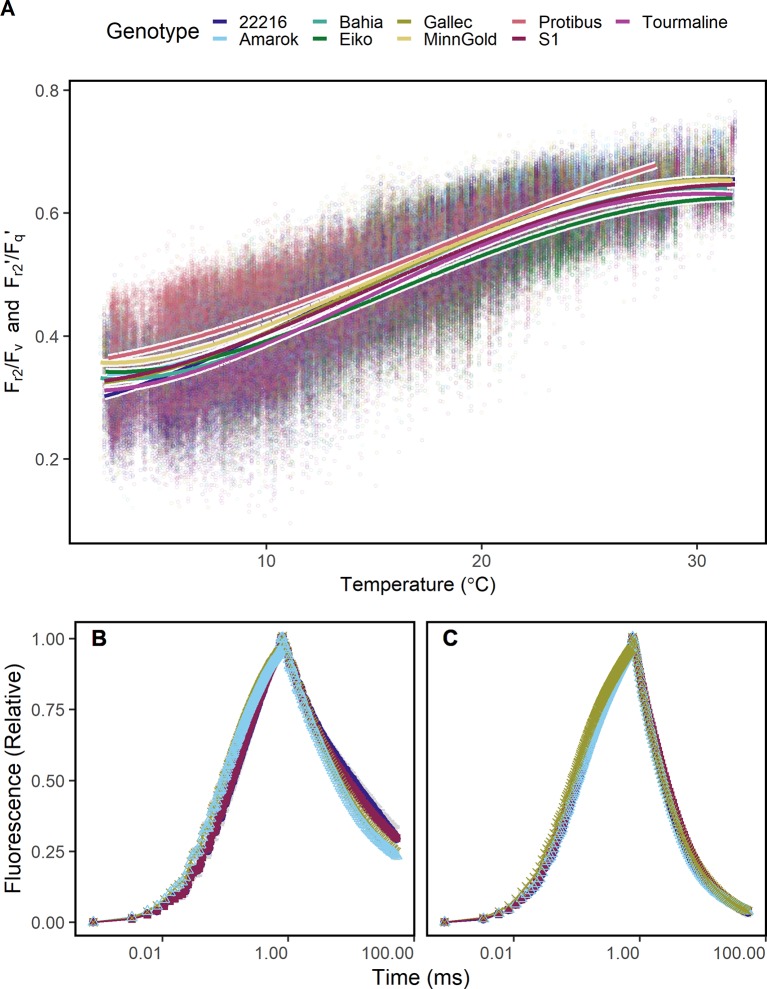
Photosynthesis reacts dynamic and in different time scales to changing conditions. Light and temperature acclimation balance photosynthetic processes in a complex interplay with the fluctuating environment. However, due to limitations in the measurements techniques, these acclimations are often described under steady-state conditions leading to inaccurate photosynthesis estimates in the field. Here we analyze the photosynthetic interaction with the fluctuating environment and canopy architecture over two seasons using a fully automated phenotyping system. We acquired over 700,000 chlorophyll fluorescence transients and spectral measurements under semi-field conditions in four crop species including 28 genotypes. As expected, the quantum efficiency of the photosystem II (F/F in the dark and F'/F' in the light) was determined by light intensity. It was further significantly affected by spectral indices representing canopy structure effects. In contrast, a newly established parameter, monitoring the efficiency of electron transport (F/F in the dark respective F'/F' in the light), was highly responsive to temperature (R up to 0.75). This parameter decreased with temperature and enabled the detection of cold tolerant species and genotypes. We demonstrated the ability to capture and model the dynamic photosynthesis response to the environment over entire growth seasons. The improved linkage of photosynthetic performance to canopy structure, temperature and cold tolerance offers great potential for plant breeding and crop growth modeling.
光合作用在不同的时间尺度上对变化的条件做出动态反应。光照和温度适应在与波动环境的复杂相互作用中平衡光合过程。然而,由于测量技术的限制,这些适应通常是在稳态条件下描述的,导致田间光合作用估计不准确。在这里,我们使用全自动表型系统分析了两个季节中光合作用与波动环境和冠层结构的相互作用。我们在半田间条件下对包括28个基因型的四种作物品种进行了超过700,000次叶绿素荧光瞬变和光谱测量。正如预期的那样,光系统II的量子效率(黑暗中的F/F和光照下的F'/F')由光强决定。它还受到代表冠层结构效应的光谱指数的显著影响。相比之下,一个新建立的监测电子传递效率的参数(黑暗中的F/F和光照下的F'/F')对温度高度敏感(R高达0.75)。该参数随温度降低,能够检测耐寒品种和基因型。我们展示了在整个生长季节捕获和模拟光合作用对环境动态响应的能力。光合性能与冠层结构、温度和耐寒性之间的改进联系为植物育种和作物生长建模提供了巨大潜力。