Huang Shao-Jie, Mu Fei, Li Fei, Wang Wen-Jun, Zhang Wei, Lei Lu, Ma Yang, Wang Jing-Wen
Department of Pharmacy, Xijing Hospital, Fourth Military Medical University, Xi'an 710032, China.
Evid Based Complement Alternat Med. 2020 Jan 7;2020:6219432. doi: 10.1155/2020/6219432. eCollection 2020.
The purpose of this work was to investigate the bioactive compounds, core genes, and pharmacological mechanisms and to provide a further research orientation of Erzhi pill (EZP) on drug-induced liver injury (DILI).
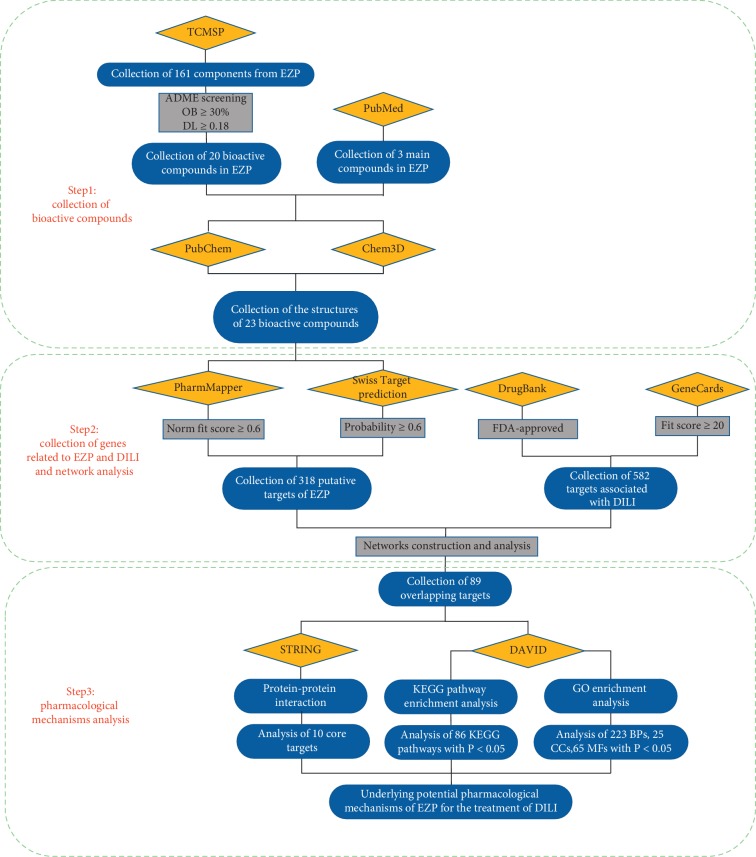
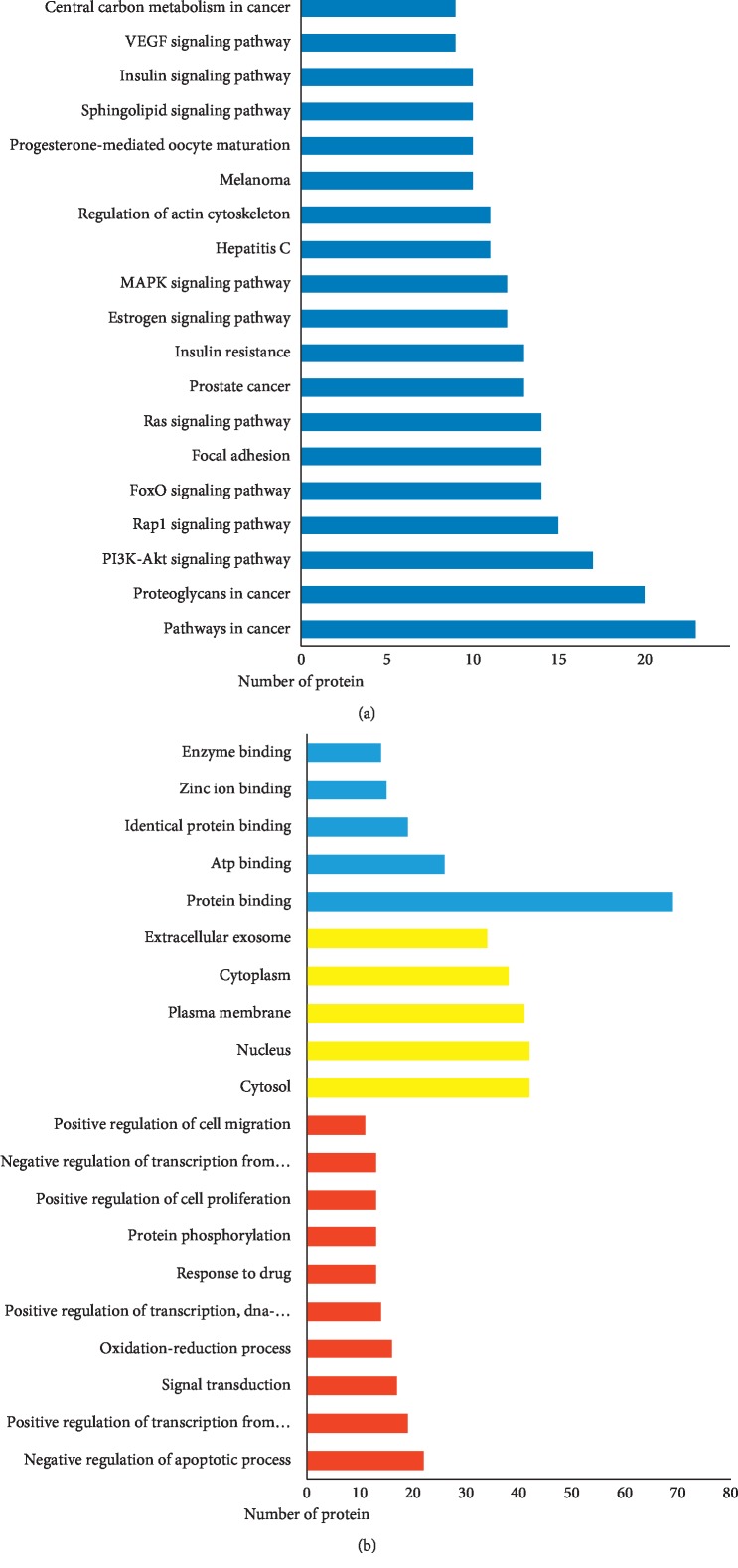
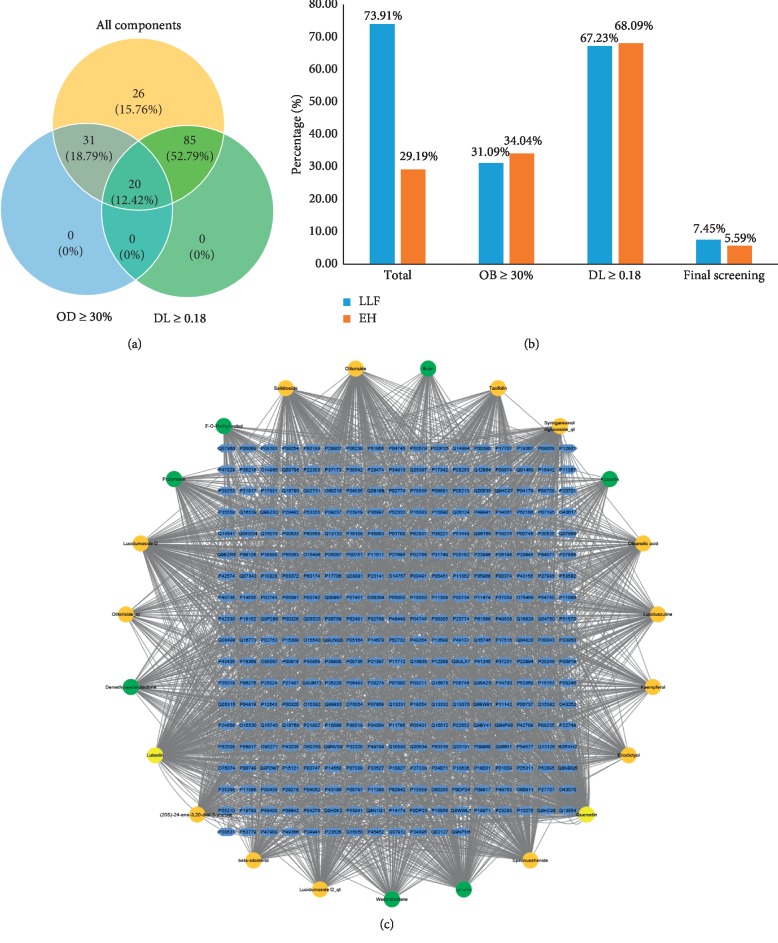
At first, we collected information of bioactive compounds of EZP from Traditional Chinese Medicine Systems Pharmacology Database and Analysis Platform (TCMSP) and previous studies. And then, the targets related to bioactive compounds and DILI were obtained from 4 public databases. At last, Cytoscape was used to establish a visual network. Moreover, Gene Ontology (GO) and Kyoto Encyclopedia of Genes and Genomes (KEGG) pathway analyses and network analysis were performed to investigate potential mechanism of EZP against DILI.
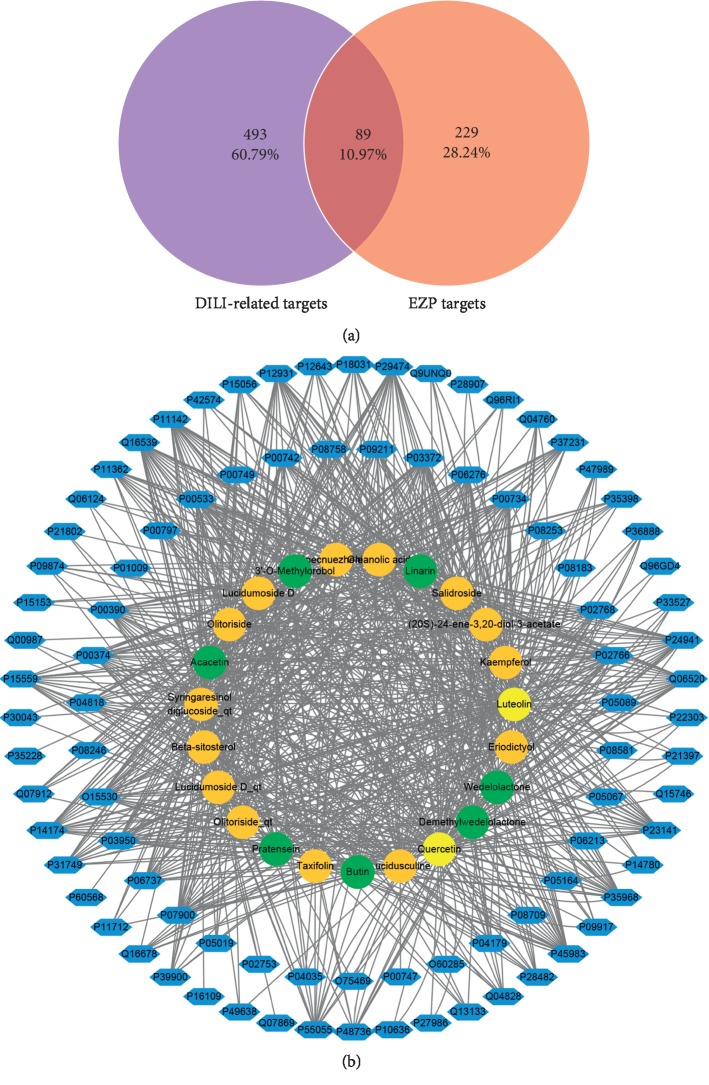
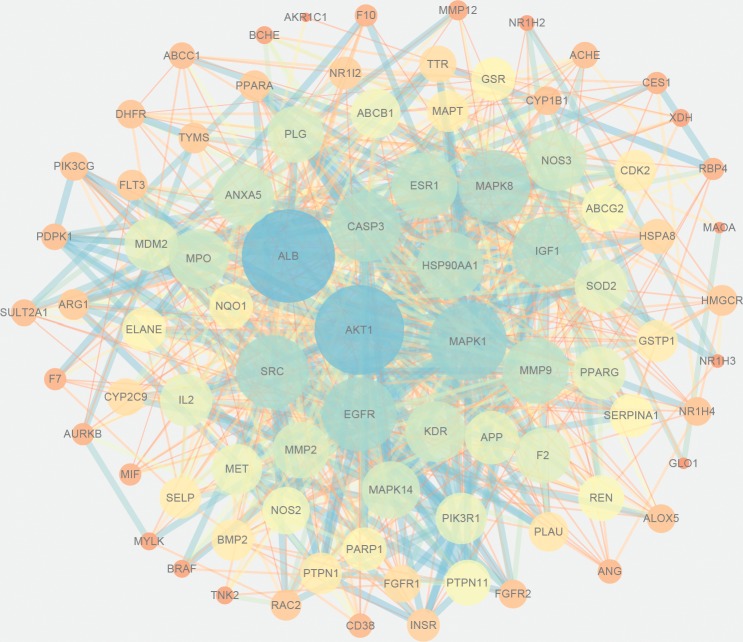
A total of 23 bioactive compounds and 89 major proteins of EZP were screened out as potential players against DILI. Association for bioactive compounds, core targets, and related pathways was analyzed, implying that core targets related to these pathways are ALB, AKT1, MAPK1, EGFR, SRC, MAPK8, IGF1, CASP3, HSP90AA1, and MMP9, and potential mechanisms of EZP acting on DILI are closely related to negative regulation of apoptosis process, improvement of lipid metabolism, and positive regulation of liver regeneration process.
This study demonstrated the multicompound, multitarget, and multichannel characteristics of EZP, which provided a novel approach for further research the mechanism of EZP in the treatment of DILI.
本研究旨在探讨二至丸(EZP)治疗药物性肝损伤(DILI)的生物活性成分、核心基因及药理机制,为其进一步研究提供方向。
首先,从中药系统药理学数据库及分析平台(TCMSP)和既往研究中收集二至丸生物活性成分信息。然后,从4个公共数据库中获取与生物活性成分及药物性肝损伤相关的靶点。最后,利用Cytoscape构建可视化网络。此外,进行基因本体(GO)和京都基因与基因组百科全书(KEGG)通路分析及网络分析,以探讨二至丸抗药物性肝损伤的潜在机制。
共筛选出23种二至丸生物活性成分及89种主要蛋白质作为抗药物性肝损伤的潜在作用因子。分析了生物活性成分、核心靶点及相关通路的关联,提示与这些通路相关的核心靶点为ALB、AKT1、MAPK1、EGFR、SRC、MAPK8、IGF1、CASP3、HSP90AA1和MMP9,二至丸作用于药物性肝损伤的潜在机制与凋亡过程的负调控、脂质代谢的改善及肝再生过程的正调控密切相关。
本研究揭示了二至丸多成分、多靶点、多途径的特点,为进一步研究二至丸治疗药物性肝损伤的机制提供了新方法。