Zhang Jie Ying, Hong Chun Lan, Chen Hong Shu, Zhou Xiao Jie, Zhang Yu Jia, Efferth Thomas, Yang Yuan Xiao, Li Chang Yu
Department of Pharmacy, Zhejiang Chinese Medical University, Hangzhou, China.
Department of Pharmaceutical Biology, Institute of Pharmacy and Biochemistry, Johannes Gutenberg University, Mainz, Germany.
Front Pharmacol. 2019 Jun 7;10:650. doi: 10.3389/fphar.2019.00650. eCollection 2019.
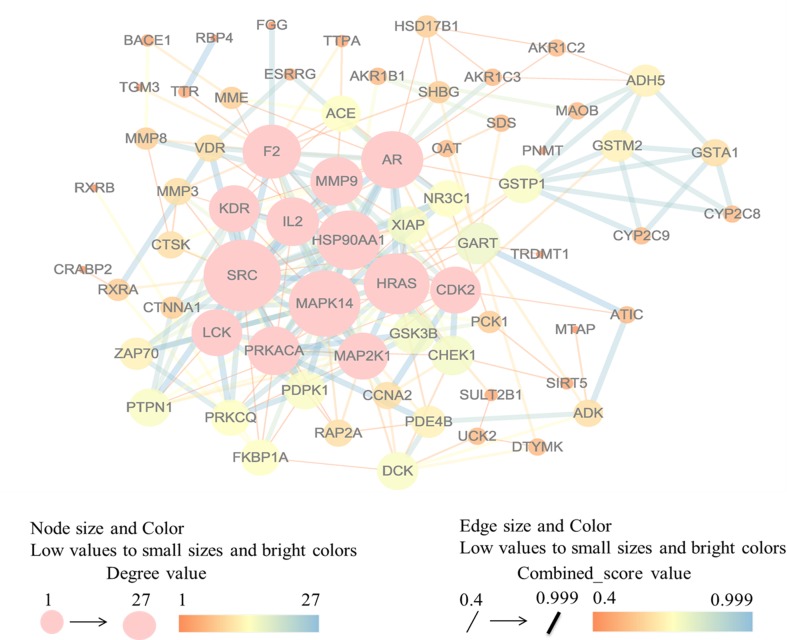
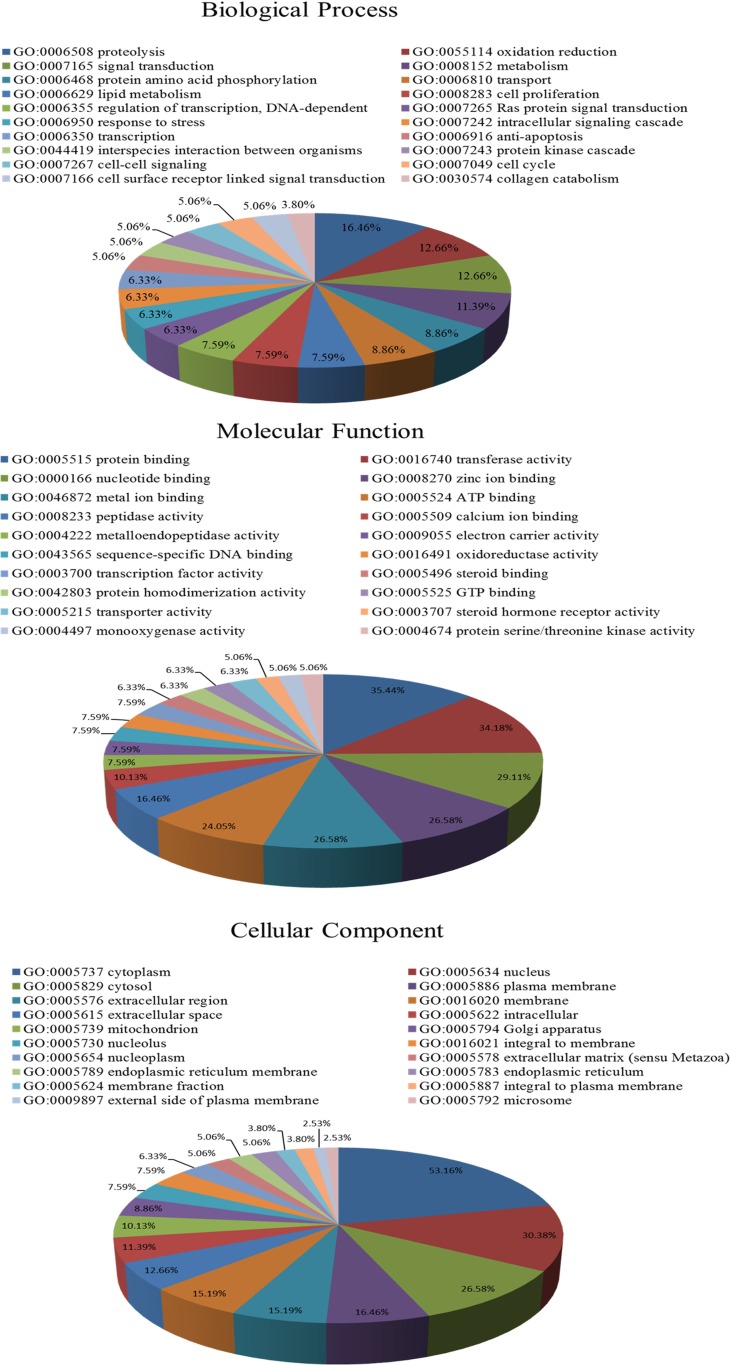
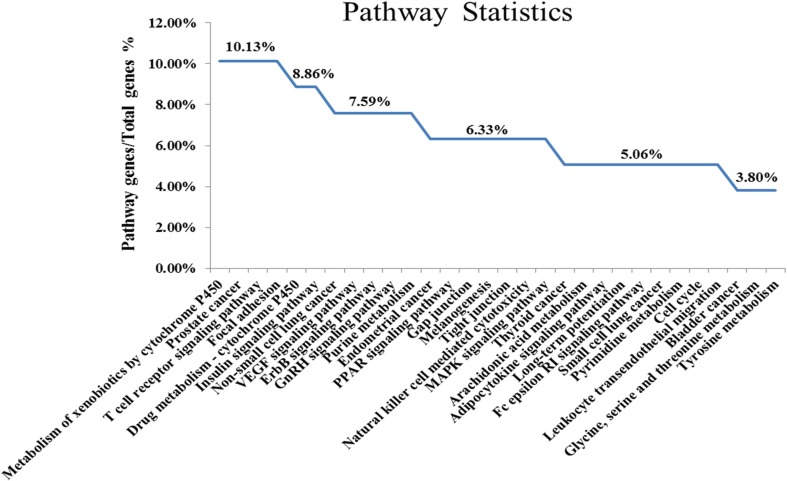
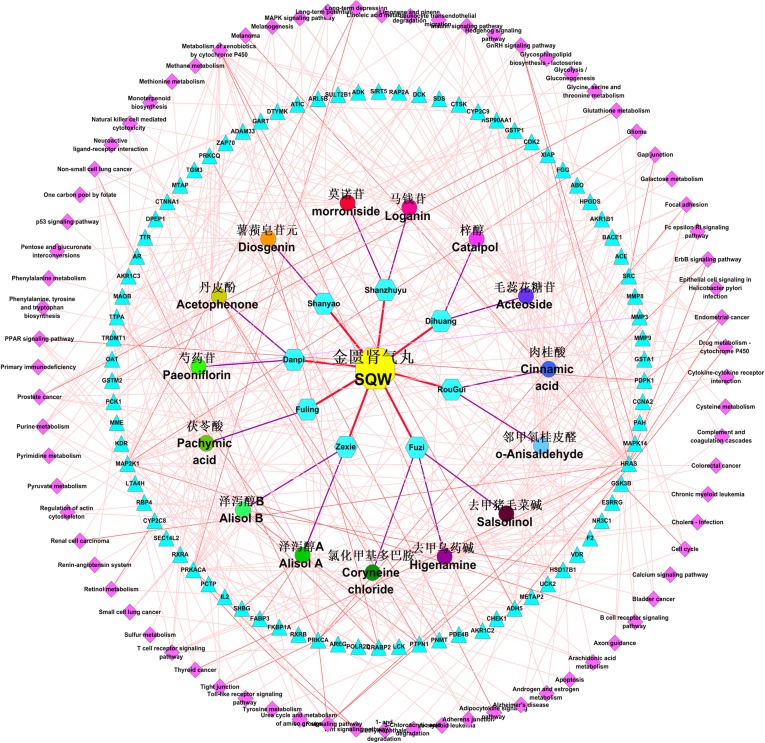
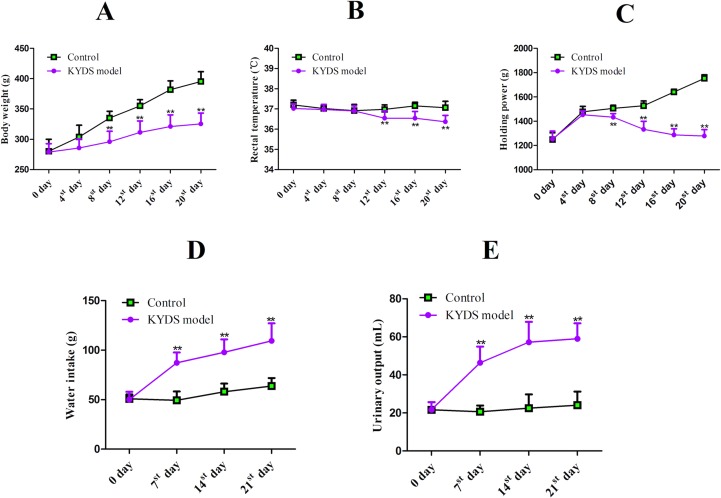
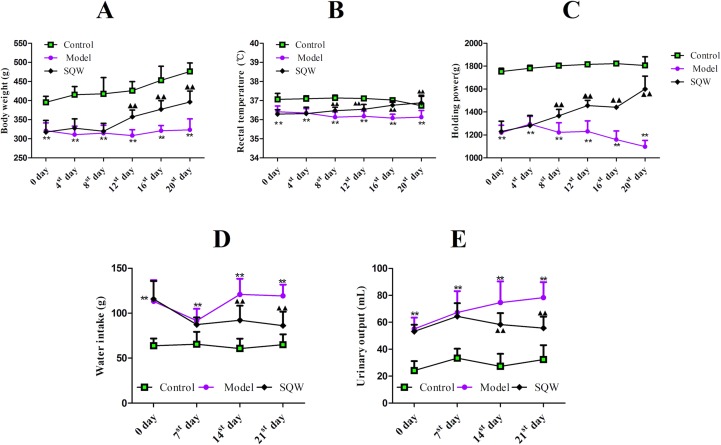
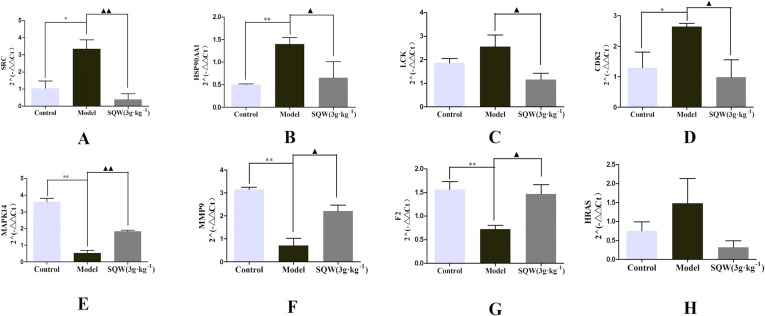
Kidney deficiency syndrome (KYDS) is one of the most common syndromes treated with traditional Chinese medicine (TCM) among elderly patients. (SQW) has been effectively used in treating various diseases associated with KYDS for hundreds of years. However, due to the complex composition of SQW, the mechanism of action remains unknown. To identify the mechanism of the SQW in the treatment of KYDS and determine the molecular targets of SQW. The potential targets of active ingredients in SQW were predicted using PharmMapper. Gene Ontology (GO) and Kyoto Encyclopedia of Genes and Genomes (KEGG) pathway enrichment analyses were carried out using the Molecule Annotation System (MAS3.0). The protein-protein interaction (PPI) network of these potential targets and "components-targets-pathways" interaction networks were constructed using Cytoscape. We also established a KYDS rat model induced by adenine to investigate the therapeutic effects of SQW. Body weight, rectal temperature, holding power, water intake, urinary output, blood urea nitrogen (BUN), serum creatinine (Scr), adrenocorticotrophic hormone (ACTH), cortisol (CORT), urine total protein (U-TP), and 17-hydroxy-corticosteroid (17-OHCS) were measured. Additionally, the mRNA expression levels of candidates were detected by qPCR. KYDS-caused changes in body weight, rectal temperature, holding power, water intake, urinary output, BUN, Scr, ACTH, CORT, U-TP, and 17-OHCS were corrected to the baseline values after SQW treatment. We selected the top 10 targets of each component and obtained 79 potential targets, which were mainly enriched in the proteolysis, protein binding, transferase activity, T cell receptor signaling pathway, and focal adhesion. , , , , , , , and were identified as targets of SQW in the treatment of KYDS. The administration of SQW significantly suppressed the expression of , , , and and markedly increased the expression of , , and . However, levels remained unchanged. These findings demonstrated that SQW corrected hypothalamic-pituitary-target gland axis disorder in rats caused by KYDS. , , , , , , and were determined to the therapeutic target for the further investigation of SQW to ameliorate KYDS.
肾虚证(KYDS)是老年患者中中医治疗最常见的证候之一。数百年来,(参芪五味子汤,SQW)已被有效用于治疗与KYDS相关的各种疾病。然而,由于SQW的成分复杂,其作用机制尚不清楚。为了确定SQW治疗KYDS的机制并确定SQW的分子靶点。使用PharmMapper预测SQW中活性成分的潜在靶点。使用分子注释系统(MAS3.0)进行基因本体(GO)和京都基因与基因组百科全书(KEGG)通路富集分析。使用Cytoscape构建这些潜在靶点的蛋白质-蛋白质相互作用(PPI)网络和“成分-靶点-通路”相互作用网络。我们还建立了腺嘌呤诱导的KYDS大鼠模型,以研究SQW的治疗效果。测量体重、直肠温度、握力、饮水量、尿量、血尿素氮(BUN)、血清肌酐(Scr)、促肾上腺皮质激素(ACTH)、皮质醇(CORT)、尿总蛋白(U-TP)和17-羟皮质类固醇(17-OHCS)。此外,通过qPCR检测候选基因的mRNA表达水平。SQW治疗后,KYDS引起的体重、直肠温度、握力、饮水量、尿量、BUN、Scr、ACTH、CORT、U-TP和17-OHCS的变化均恢复到基线值。我们选择了每种成分的前10个靶点,共获得79个潜在靶点,主要富集在蛋白水解、蛋白质结合、转移酶活性、T细胞受体信号通路和粘着斑。 、 、 、 、 、 、 、 和 被确定为SQW治疗KYDS的靶点。给予SQW可显著抑制 、 、 和 的表达,并显著增加 、 和 的表达。然而, 水平保持不变。这些发现表明,SQW纠正了由KYDS引起的大鼠下丘脑-垂体-靶腺轴紊乱。 、 、 、 、 、 、 和 被确定为进一步研究SQW改善KYDS的治疗靶点。