Wu Peng, Huang Zhengquan, Shan Jinjun, Luo Zichen, Zhang Nongshan, Yin Songjiang, Shen Cunsi, Xing Runlin, Mei Wei, Xiao Yancheng, Xu Bo, Mao Jun, Wang Peimin
1Affiliated Hospital of Nanjing University of Chinese Medicine, Nanjing, 210029 China.
2Jiangsu Province Hospital of Chinese Medicine, Nanjing, 210029 China.
Chin Med. 2020 Jan 23;15:9. doi: 10.1186/s13020-020-0290-5. eCollection 2020.
Our previous clinical evidence suggested that the direct application of "Sanse powder" the main ingredient of "Yiceng" might represent an alternative treatment for knee osteoarthritis. However, the mechanism underlying its effect is poorly understood. In this study, we investigated the mechanism of the effect of direct "Sanse powder" application for the treatment of knee osteoarthritis (KOA) in rats by using lipidomics.
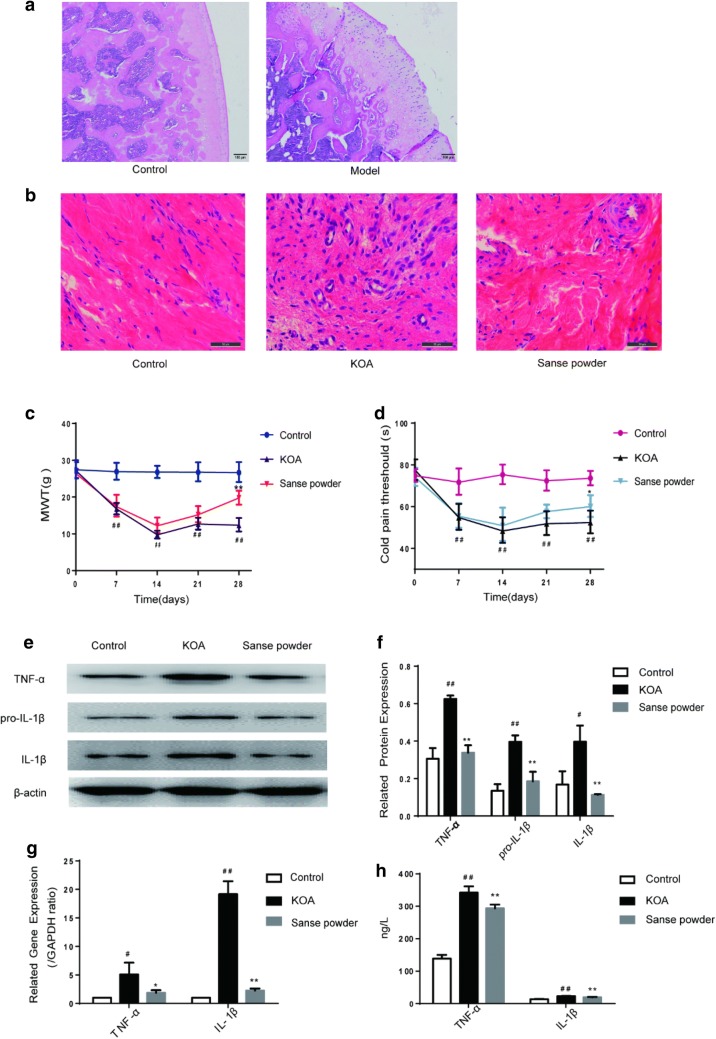
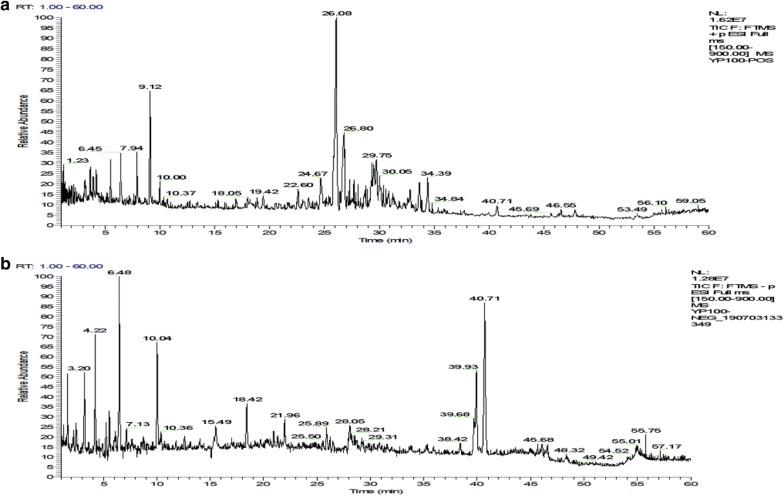
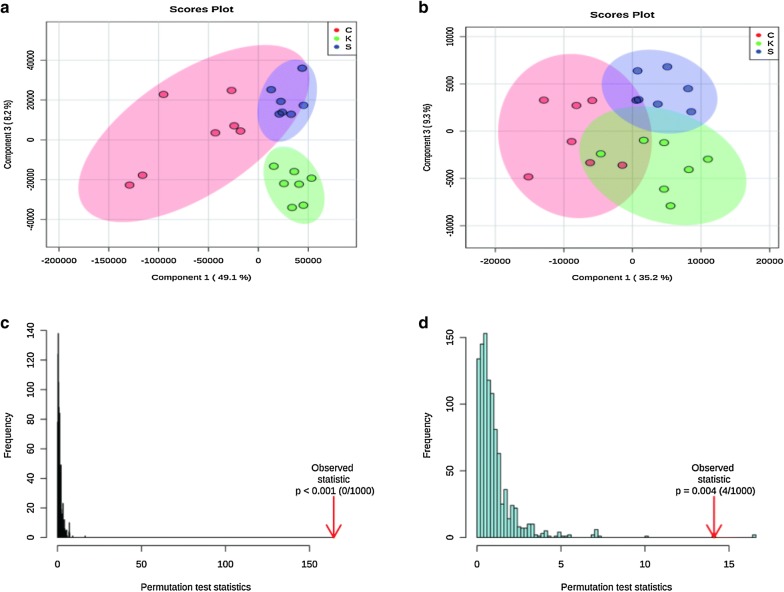
KOA rats were established by cutting the anterior cruciate ligament, and the cold pain threshold and mechanical withdrawal threshold (MWT) of seven rats from each group were measured before modelling (0 days) and at 7, 14, 21 and 28 days after modelling. Histopathological evaluation of the synovial tissue was performed by haematoxylin and eosin (H&E) staining after modelling for 28 days. Interleukin-1β (IL-1β), pro-interleukin-1β (pro-IL-1β) and tumor necrosis factor-α (TNF-α) proteins in synovial tissue were measured by western blot, and the mRNA expression levels of IL-1β and TNF-α in synovial tissue were measured using Real-time reverse transcription polymerase chain reaction (qRT-PCR), the levels of IL-1β and TNF-α in rat serum were measured by enzyme-linked immunosorbent assay (ELISA), Serum lipid profiles were obtained by using ultra-performance liquid chromatography combined with quadrupole-Exactive Orbitrap mass spectrometry (UPLC-Q-Exactive Orbitrap MS).
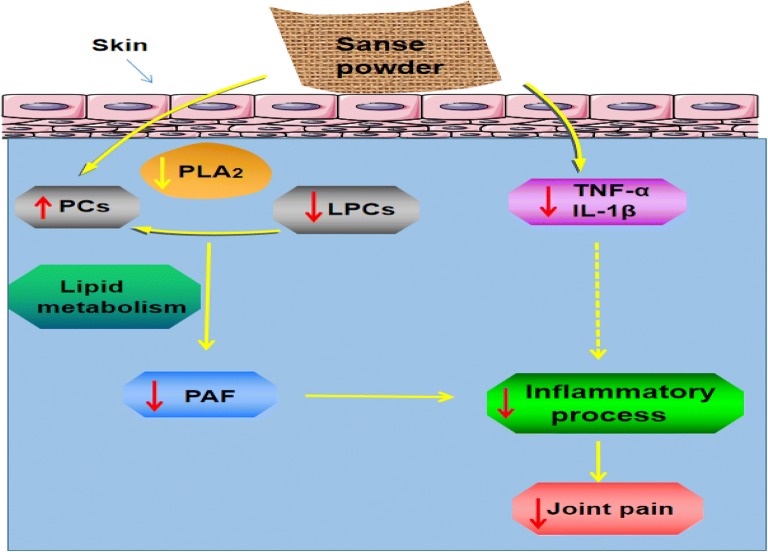
The results confirmed that the direct application of "Sanse powder" had a significant protective effect against KOA in rats. Treatment with "Sanse powder" not only attenuated synovial tissue inflammation but also increased the levels of the cold pain threshold and MWT. In addition, the lipidomics results showed that the levels of diacylglycerol (DAG), triacylglycerols (TAGs), lysophosphatidylcholine (LPC), phosphatidylcholine (PC), fatty acid esters of hydroxy fatty acids (FAHFAs), and phosphatidylethanolamine (PE) were restored almost to control levels following treatment.
Lipidomics provides a better understanding of the actions of direct application "Sanse powder" therapy for KOA.
我们之前的临床证据表明,直接应用“一层”的主要成分“散剂”可能是治疗膝关节骨关节炎的一种替代疗法。然而,其作用的潜在机制尚不清楚。在本研究中,我们通过脂质组学研究了直接应用“散剂”治疗大鼠膝关节骨关节炎(KOA)的作用机制。
通过切断前交叉韧带建立KOA大鼠模型,在建模前(0天)以及建模后7、14、21和28天测量每组7只大鼠的冷痛阈值和机械缩足阈值(MWT)。建模28天后,通过苏木精和伊红(H&E)染色对滑膜组织进行组织病理学评估。通过蛋白质印迹法测量滑膜组织中白细胞介素-1β(IL-1β)、前白细胞介素-1β(pro-IL-1β)和肿瘤坏死因子-α(TNF-α)蛋白,并使用实时逆转录聚合酶链反应(qRT-PCR)测量滑膜组织中IL-1β和TNF-α的mRNA表达水平,通过酶联免疫吸附测定(ELISA)测量大鼠血清中IL-1β和TNF-α的水平,使用超高效液相色谱结合四极杆-Exactive轨道阱质谱(UPLC-Q-Exactive Orbitrap MS)获得血清脂质谱。
结果证实,直接应用“散剂”对大鼠KOA具有显著的保护作用。用“散剂”治疗不仅减轻了滑膜组织炎症,还提高了冷痛阈值和MWT水平。此外,脂质组学结果表明,治疗后二酰甘油(DAG)、三酰甘油(TAGs)、溶血磷脂酰胆碱(LPC)、磷脂酰胆碱(PC)、羟基脂肪酸脂肪酸酯(FAHFAs)和磷脂酰乙醇胺(PE)的水平几乎恢复到对照水平。
脂质组学有助于更好地理解直接应用“散剂”治疗KOA的作用。