Department of Clinical Oncology, Taihe Hospital, Hubei University of Medicine, Shiyan 442000, China.
Department of Radiation Oncology, Fudan University Shanghai Cancer Center, Shanghai 200032, China.
Dis Markers. 2020 Jan 7;2020:6520259. doi: 10.1155/2020/6520259. eCollection 2020.
Previous studies have demonstrated that (WAF1/CIP1) is a valuable prognostic factor in several malignant tumors. However, it is not known whether can predict the prognosis in patients with esophageal cancer (EC). The aim of this research was to investigate the contribution of expression to the clinicopathological characteristics and of EC.
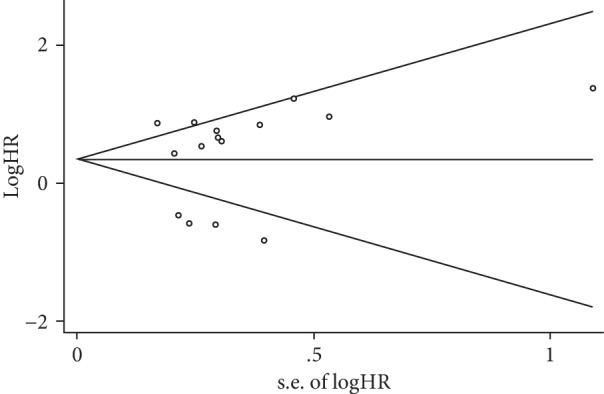
A systematic review and meta-analysis of study focusing on expression, clinicopathological characteristics, and clinical outcomes in patients with EC was performed using seven databases (PubMed, Embase, Web of Science, and four Chinese databases). Pooled hazard ratios and odds ratios were used to explore the association between expression, clinicopathological characteristics, and outcomes in patients with EC. The heterogeneity of the studies was classified by the statistic. The sensitivity analysis was then utilized to assess the robustness of the results. Finally, the funnel plot and Begg's test were used to evaluate the publication bias.
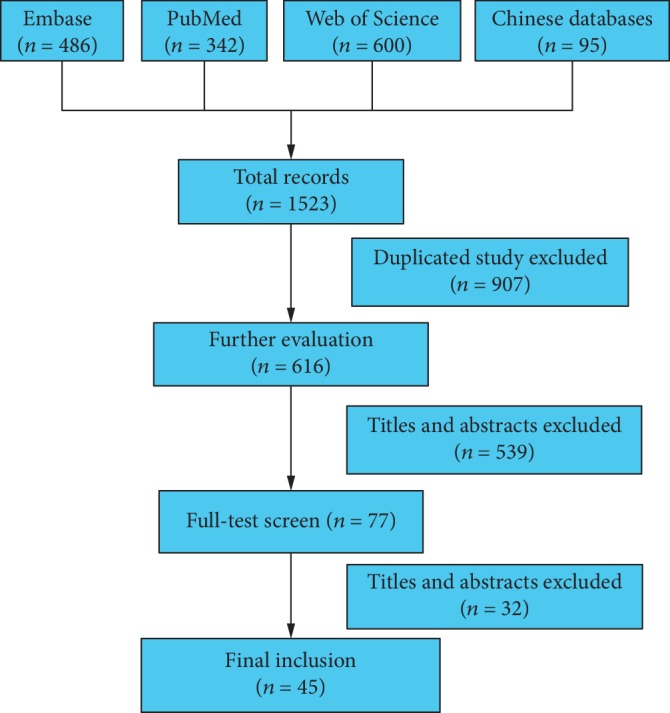
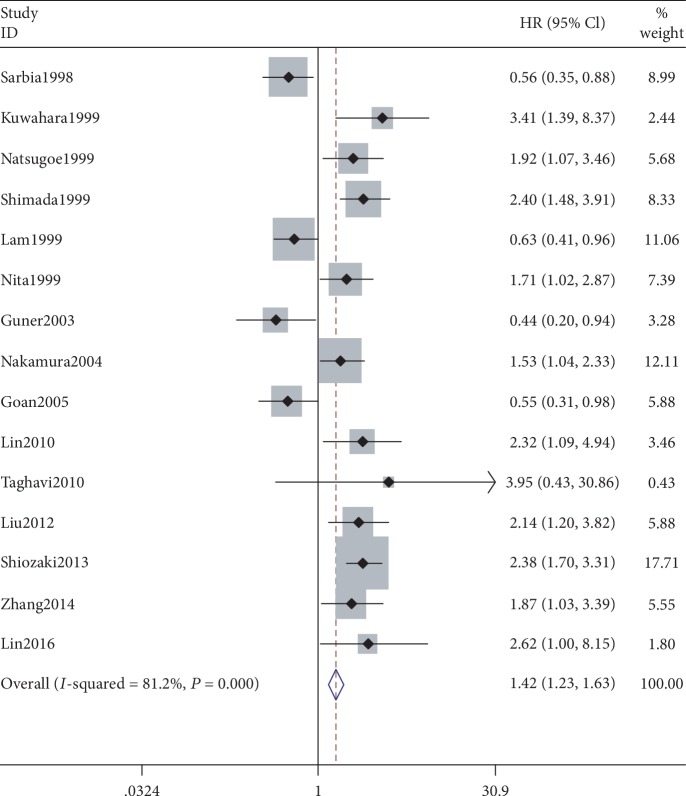
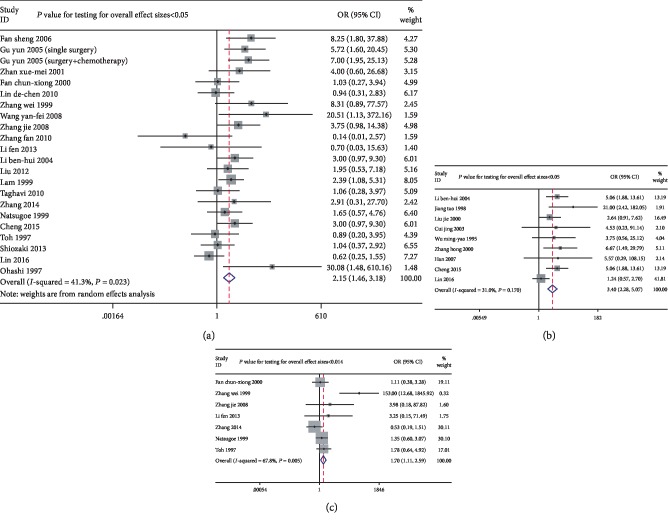
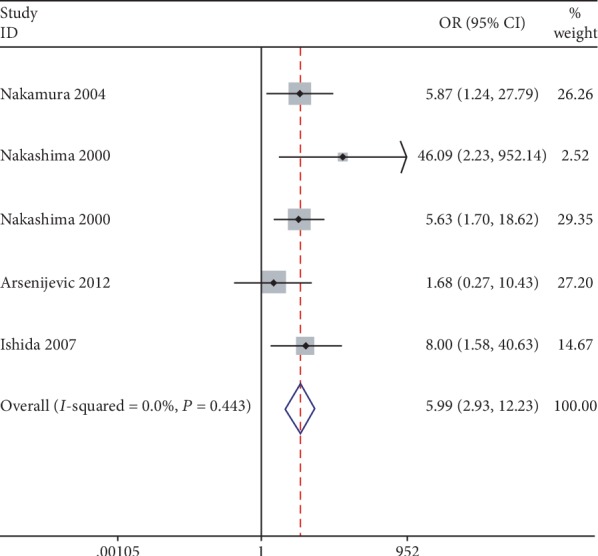
Forty-five studies with 3098 patients were eligible for inclusion in the meta-analysis. Thirty of these studies reported on clinicopathological characteristics and 15 on clinical outcomes. The pooled hazard ratio of 1.456 (95% confidence intervals 1.033-2.053, = 0.032) for overall survival indicated that a low expression level was an unfavorable prognostic factor for a clinical outcome in patients with EC. Furthermore, the pooled odds ratio confirmed an association between decreased expression and poor clinicopathological characteristics, including differentiation, lymph node metastasis, invasion, and higher grade and clinical stage. Notably, high expression was a significant predictor of a favorable response to chemotherapy. There was no evidence of publication bias.
Reduced expression is associated with a poor outcome in patients with EC.
先前的研究表明,WAF1/CIP1 是几种恶性肿瘤中一个有价值的预后因素。然而,目前尚不清楚是否可以预测食管癌(EC)患者的预后。本研究旨在探讨 表达对 EC 患者临床病理特征和临床结局的贡献。
通过对七个数据库(PubMed、Embase、Web of Science 和四个中文数据库)中聚焦于 EC 患者 表达、临床病理特征和临床结局的研究进行系统回顾和荟萃分析。使用合并风险比和优势比来探讨 表达与 EC 患者临床病理特征和结局之间的关联。通过 Q 统计量对研究的异质性进行分类。然后进行敏感性分析以评估结果的稳健性。最后,使用漏斗图和 Begg 检验评估发表偏倚。
共有 45 项研究(纳入 3098 例患者)符合纳入荟萃分析的标准。其中 30 项研究报告了临床病理特征,15 项研究报告了临床结局。总体生存率的合并风险比为 1.456(95%置信区间 1.033-2.053,P=0.032),表明 低表达水平是 EC 患者临床结局不良的预后因素。此外,合并优势比证实了 表达降低与较差的临床病理特征(包括分化、淋巴结转移、浸润和较高的分级和临床分期)之间的关联。值得注意的是,高 表达是对化疗反应良好的显著预测因子。未发现发表偏倚的证据。
降低的 表达与 EC 患者的不良结局相关。