PLUX Wireless Biosignals S.A, Avenida 5 Outubro 70, 1050-59 Lisbon, Portugal.
Department of Biomechanics and Center for Research in Human Movement Variability, University of Nebraska at Omaha, Omaha, NE, USA.
J Healthc Eng. 2020 Jan 7;2020:6484129. doi: 10.1155/2020/6484129. eCollection 2020.
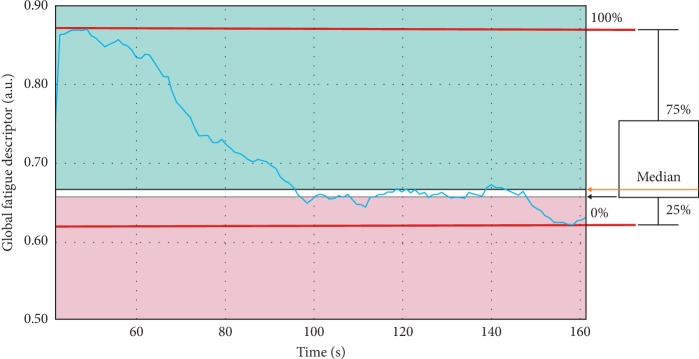
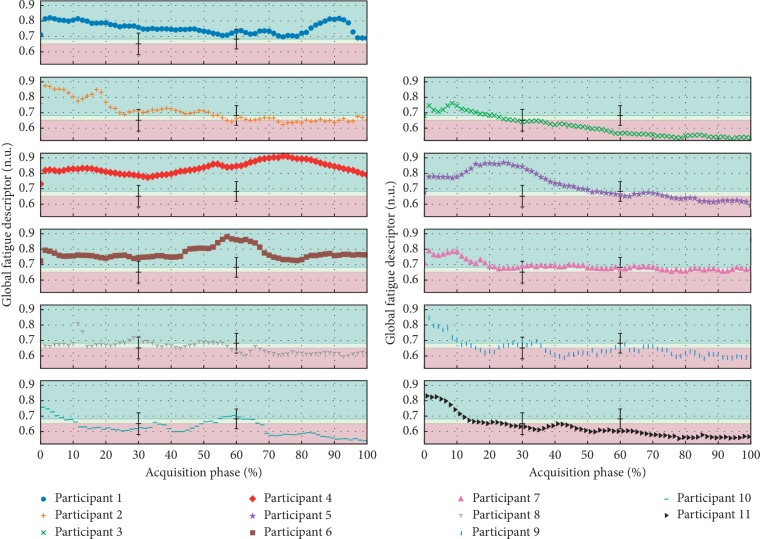
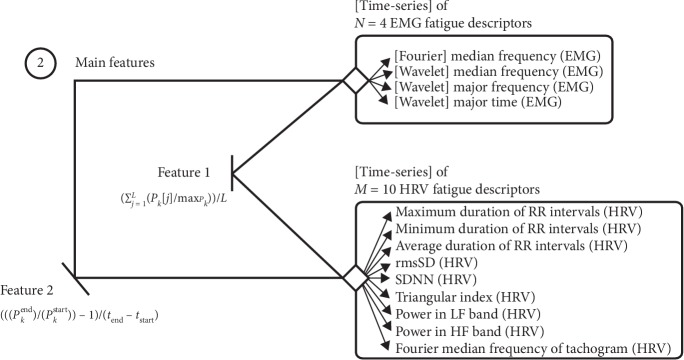
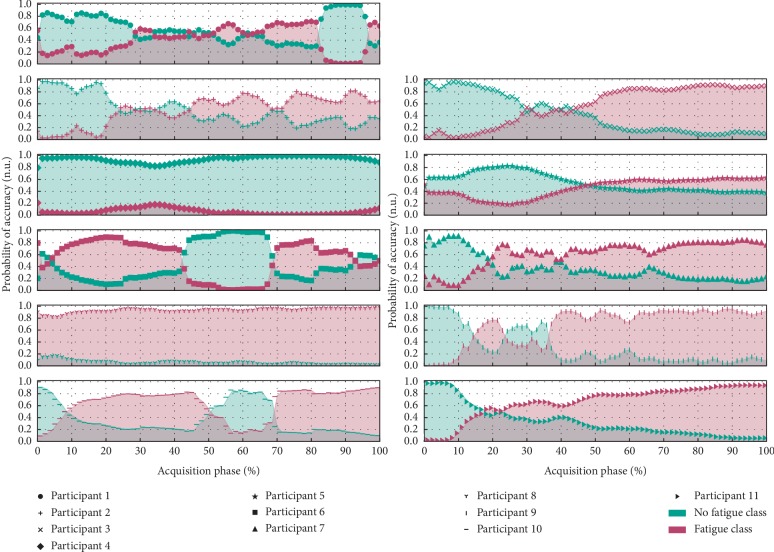
Research in physiology and sports science has shown that fatigue, a complex psychophysiological phenomenon, has a relevant impact in performance and in the correct functioning of our motricity system, potentially being a cause of damage to the human organism. Fatigue can be seen as a subjective or objective phenomenon. Subjective fatigue corresponds to a mental and cognitive event, while fatigue referred as objective is a physical phenomenon. Despite the fact that subjective fatigue is often undervalued, only a physically and mentally healthy athlete is able to achieve top performance in a discipline. Therefore, we argue that physical training programs should address the preventive assessment of both subjective and objective fatigue mechanisms in order to minimize the risk of injuries. In this context, our paper presents a machine-learning system capable of extracting individual fatigue descriptors (IFDs) from electromyographic (EMG) and heart rate variability (HRV) measurements. Our novel approach, using two types of biosignals so that a global (mental and physical) fatigue assessment is taken into account, reflects the onset of fatigue by implementing a combination of a dimensionless (0-1) global fatigue descriptor (GFD) and a support vector machine (SVM) classifier. The system, based on 9 main combined features, achieves fatigue regime classification performances of 0.82 ± 0.24, ensuring a successful preventive assessment when dangerous fatigue levels are reached. Training data were acquired in a constant work rate test (executed by 14 subjects using a cycloergometry device), where the variable under study (fatigue) gradually increased until the volunteer reached an objective exhaustion state.
研究表明,在生理学和运动科学领域,疲劳是一种复杂的心理生理现象,对运动表现和运动系统的正常功能有重要影响,可能导致人体组织损伤。疲劳既可以是主观现象,也可以是客观现象。主观疲劳对应于心理和认知事件,而客观疲劳则是一种身体现象。尽管主观疲劳常常被低估,但只有身心健康的运动员才能在某项运动中达到最佳表现。因此,我们认为体能训练计划应该针对主观和客观疲劳机制进行预防性评估,以最大程度地降低受伤风险。在这种情况下,我们提出了一种基于机器学习的系统,能够从肌电图(EMG)和心率变异性(HRV)测量中提取个体疲劳描述符(IFD)。我们的新方法使用两种生物信号,考虑到全面的(心理和生理)疲劳评估,通过实施无量纲(0-1)全局疲劳描述符(GFD)和支持向量机(SVM)分类器的组合来反映疲劳的发生。该系统基于 9 个主要组合特征,实现了 0.82±0.24 的疲劳状态分类性能,当达到危险疲劳水平时,可以确保进行成功的预防性评估。训练数据是在恒定工作率测试中采集的(由 14 名使用自行车测力计的志愿者完成),研究中的变量(疲劳)逐渐增加,直到志愿者达到客观疲劳状态。