Klevebro Susanna, Juul Sandra E, Wood Thomas R
Department of Clinical Science and Education, Stockholm South General Hospital, Karolinska Institutet, Stockholm, Sweden.
Division of Neonatology, Department of Pediatrics, University of Washington, Seattle, WA, United States.
Front Pediatr. 2020 Jan 10;7:533. doi: 10.3389/fped.2019.00533. eCollection 2019.
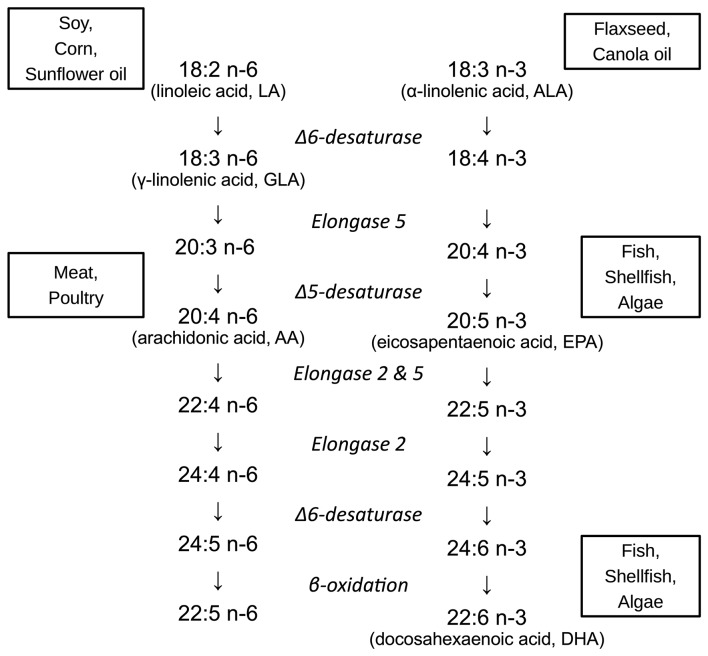
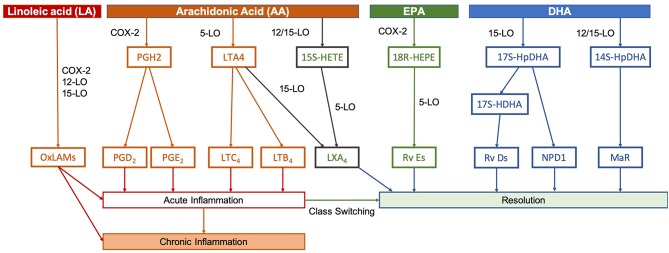
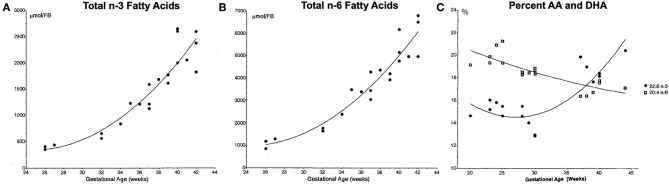
There is growing evidence that long-chain polyunsaturated fatty acids (LCPUFAs) are of importance for normal brain development. Adequate supply of LCPUFAs may be particularly important for preterm infants, because the third trimester is an important period of brain growth and accumulation of arachidonic acid (n-6 LCPUFA) and docosahexaenoic acid (n-3 LCPUFA). Fatty acids from the n-6 and n-3 series, particularly, have important functions in the brain as well as in the immune system, and their absolute and relative intakes may alter both the risk of impaired neurodevelopment and response to injury. This narrative review focuses on the potential importance of the n-6:n-3 fatty acid ratio in preterm brain development. Randomized trials of post-natal LCPUFA supplementation in preterm infants are presented. Pre-clinical evidence, results from observational studies in preterm infants as well as studies in term infants and evidence related to maternal diet during pregnancy, focusing on the n-6:n-3 fatty acid ratio, are also summarized. Two randomized trials in preterm infants have compared different ratios of arachidonic acid and docosahexaenoic acid intakes. Most of the other studies in preterm infants have compared formula supplemented with arachidonic acid and docosahexaenoic acid to un-supplemented formula. No trial has had a comprehensive approach to differences in total intake of both n-6 and n-3 fatty acids during a longer period of neurodevelopment. The results from preclinical and clinical studies indicate that intake of LCPUFAs during pregnancy and post-natal development is of importance for neurodevelopment and neuroprotection in preterm infants, but the interplay between fatty acids and their metabolites is complex. The best clinical approach to LCPUFA supplementation and n-6 to n-3 fatty acid ratio is still far from evident, and requires in-depth future studies that investigate specific fatty acid supplementation in the context of other fatty acids in the diet.
越来越多的证据表明,长链多不饱和脂肪酸(LCPUFAs)对正常脑发育至关重要。充足的LCPUFAs供应对早产儿可能尤为重要,因为孕晚期是脑生长以及花生四烯酸(n-6 LCPUFA)和二十二碳六烯酸(n-3 LCPUFA)积累的重要时期。特别是n-6和n-3系列的脂肪酸在脑和免疫系统中都具有重要功能,它们的绝对摄入量和相对摄入量可能会改变神经发育受损的风险以及对损伤的反应。本叙述性综述重点关注n-6:n-3脂肪酸比例在早产儿脑发育中的潜在重要性。介绍了对早产儿进行出生后LCPUFAs补充的随机试验。还总结了临床前证据、对早产儿的观察性研究结果以及对足月儿的研究结果,以及与孕期母亲饮食相关的证据,重点是n-6:n-3脂肪酸比例。两项针对早产儿的随机试验比较了不同比例的花生四烯酸和二十二碳六烯酸摄入量。大多数其他针对早产儿的研究将补充了花生四烯酸和二十二碳六烯酸的配方奶与未补充的配方奶进行了比较。没有一项试验对较长神经发育期间n-6和n-3脂肪酸的总摄入量差异采取全面的研究方法。临床前和临床研究结果表明,孕期和出生后发育期间摄入LCPUFAs对早产儿的神经发育和神经保护很重要,但脂肪酸及其代谢产物之间的相互作用很复杂。关于LCPUFAs补充以及n-6与n-3脂肪酸比例最佳的临床方法仍远不明确,需要未来进行深入研究,在饮食中其他脂肪酸的背景下研究特定脂肪酸的补充情况。