Li Xinlei, Chen Ruju, Kemper Sherri, Brigstock David R
Center for Clinical and Translational Research, The Research Institute at Nationwide Children's Hospital, Columbus, OH, United States.
Department of Surgery, Wexner Medical Center, The Ohio State University, Columbus, OH, United States.
Front Cell Dev Biol. 2020 Jan 10;7:368. doi: 10.3389/fcell.2019.00368. eCollection 2019.
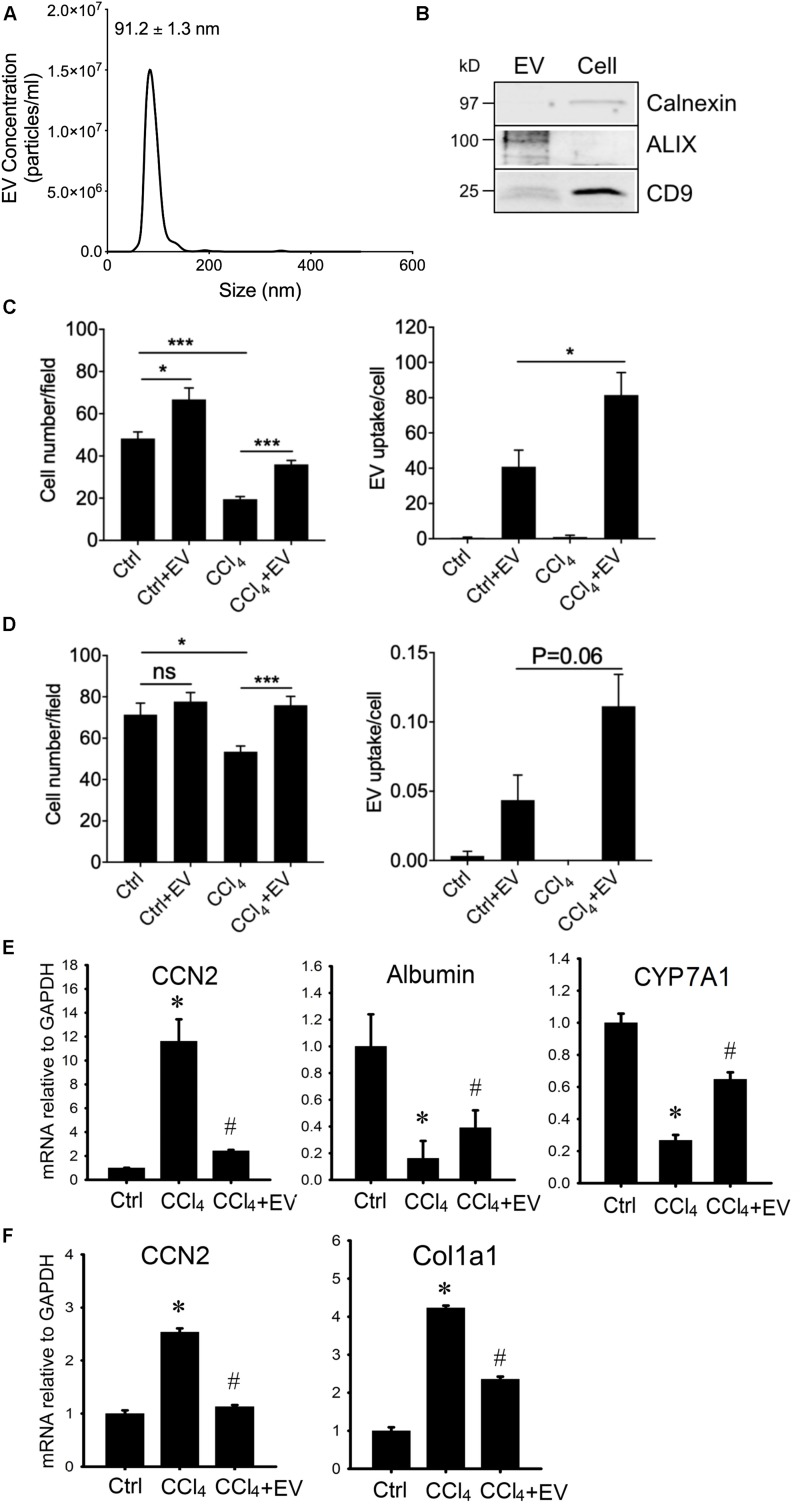
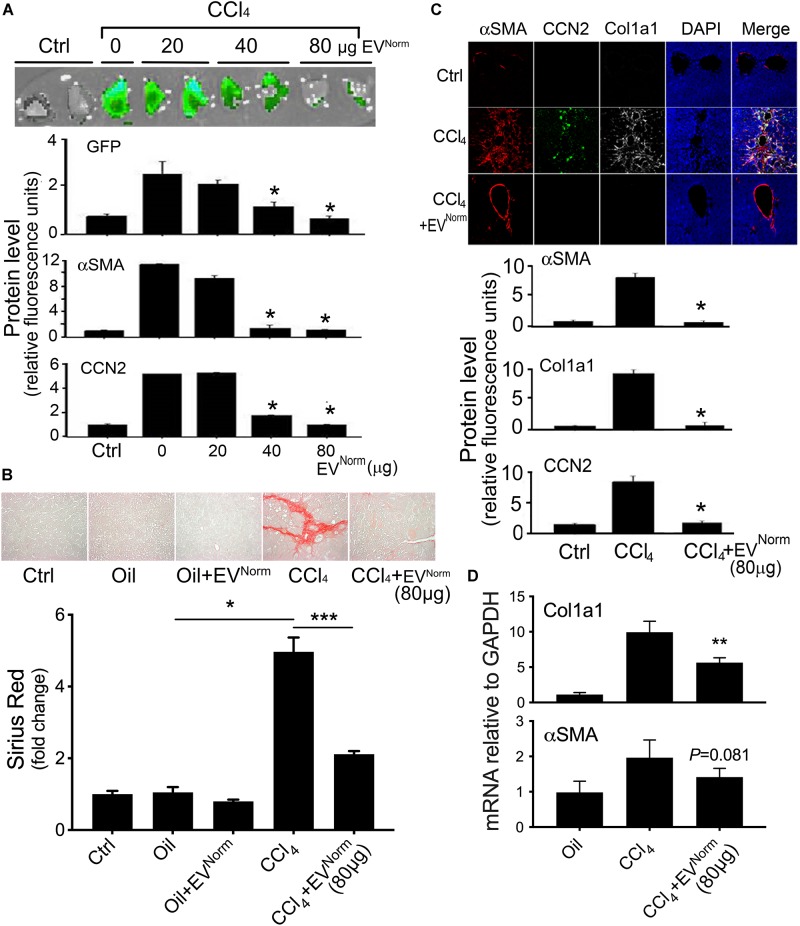
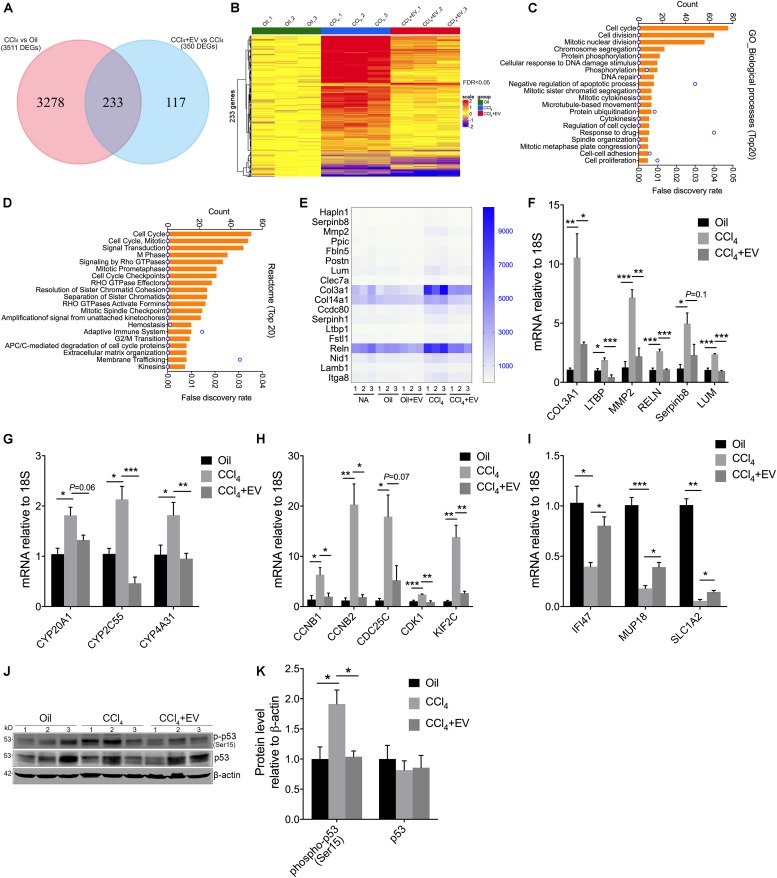
Extracellular vesicles (EVs) are nano-sized membrane-limited organelles that are liberated from their producer cells, traverse the intercellular space, and may interact with other cells resulting in the uptake of the EV molecular payload by the recipient cells which may become functionally reprogramed as a result. Previous studies showed that EVs purified from normal mouse AML12 hepatocytes ("EV") attenuate the pro-fibrogenic activities of activated hepatic stellate cells (HSCs), a principal fibrosis-producing cell type in the liver. In a 10-day CCl injury model, liver fibrogenesis, expression of hepatic cellular communication network factor 2 [CCN2, also known as connective tissue growth factor (CTGF)] or alpha smooth muscle actin (αSMA) was dose-dependently blocked during concurrent administration of EV. Hepatic inflammation and expression of inflammatory cytokines were also reduced by EV. In a 5-week CCl fibrosis model in mice, interstitial collagen deposition and mRNA and/or protein for collagen 1a1, αSMA or CCN2 were suppressed following administration of EV over the last 2 weeks. RNA sequencing (RNA-seq) revealed that EV therapy of mice receiving CCl for 5 weeks resulted in significant differences [false discovery rate (FDR) <0.05] in expression of 233 CCl-regulated hepatic genes and these were principally associated with fibrosis, cell cycle, cell division, signal transduction, extracellular matrix (ECM), heat shock, cytochromes, drug detoxification, adaptive immunity, and membrane trafficking. Selected gene candidates from these groups were verified by qRT-PCR as targets of EV in CCl-injured livers. Additionally, EV administration resulted in reduced activation of p53, a predicted upstream regulator of 40% of the genes for which expression was altered by EV following CCl liver injury. , EVs from human HepG2 hepatocytes suppressed fibrogenic gene expression in activated mouse HSC and reversed the reduced viability or proliferation of HepG2 cells or AML12 cells exposed to CCl. Similarly, EVs produced by primary human hepatocytes (PHH) protected PHH or human LX2 HSC from CCl-mediated changes in cell number or gene expression . These findings show that EVs from human or mouse hepatocytes regulate toxin-associated gene expression leading to therapeutic outcomes including suppression of fibrogenesis, hepatocyte damage, and/or inflammation.
细胞外囊泡(EVs)是纳米级的膜性细胞器,它们从产生细胞中释放出来,穿过细胞间空间,并可能与其他细胞相互作用,导致受体细胞摄取EV的分子载荷,受体细胞可能因此发生功能重编程。先前的研究表明,从正常小鼠AML12肝细胞中纯化的EVs(“EV”)可减弱活化的肝星状细胞(HSCs)的促纤维化活性,肝星状细胞是肝脏中主要的纤维化产生细胞类型。在为期10天的CCl损伤模型中,在同时给予EV期间,肝纤维化、肝细胞通讯网络因子2[CCN2,也称为结缔组织生长因子(CTGF)]或α平滑肌肌动蛋白(αSMA)的表达呈剂量依赖性被阻断。EV还可减轻肝脏炎症和炎性细胞因子的表达。在小鼠为期5周的CCl纤维化模型中,在最后2周给予EV后,间质胶原沉积以及胶原1a1、αSMA或CCN2的mRNA和/或蛋白表达均受到抑制。RNA测序(RNA-seq)显示,对接受CCl处理5周的小鼠进行EV治疗后,233个受CCl调节的肝脏基因的表达出现显著差异[错误发现率(FDR)<0.05],这些基因主要与纤维化、细胞周期、细胞分裂、信号转导、细胞外基质(ECM)、热休克、细胞色素、药物解毒、适应性免疫和膜运输有关。通过qRT-PCR验证了从这些组中选择的基因候选物是CCl损伤肝脏中EV的靶标。此外,给予EV导致p53的活化降低,p53是CCl肝损伤后其表达被EV改变的40%基因的预测上游调节因子。来自人HepG2肝细胞的EVs抑制活化的小鼠HSC中纤维化基因的表达,并逆转暴露于CCl的HepG2细胞或AML12细胞活力或增殖的降低。同样,原代人肝细胞(PHH)产生的EVs保护PHH或人LX2 HSC免受CCl介导的细胞数量或基因表达变化的影响。这些发现表明,来自人或小鼠肝细胞的EVs调节毒素相关基因的表达,从而产生包括抑制纤维化、肝细胞损伤和/或炎症在内的治疗效果。