Key Laboratory for Forest Resources Conservation and Utilization in the Southwest Mountains of China, Ministry of Education, Southwest Forestry University, Kunming, 650224, People's Republic of China.
Key Laboratory of Economic Plants and Biotechnology, Yunnan Key Laboratory for Wild Plant Resources, Kunming Institute of Botany, Chinese Academy of Sciences, Kunming, 650201, People's Republic of China.
BMC Plant Biol. 2020 Jan 30;20(1):48. doi: 10.1186/s12870-020-2249-1.
Little is known about the molecular basis of seed size formation in endospermic seed of dicotyledons. The seed of castor bean (Ricinus communis L.) is considered as a model system in seed biology studies because of its persistent endosperms throughout seed development.
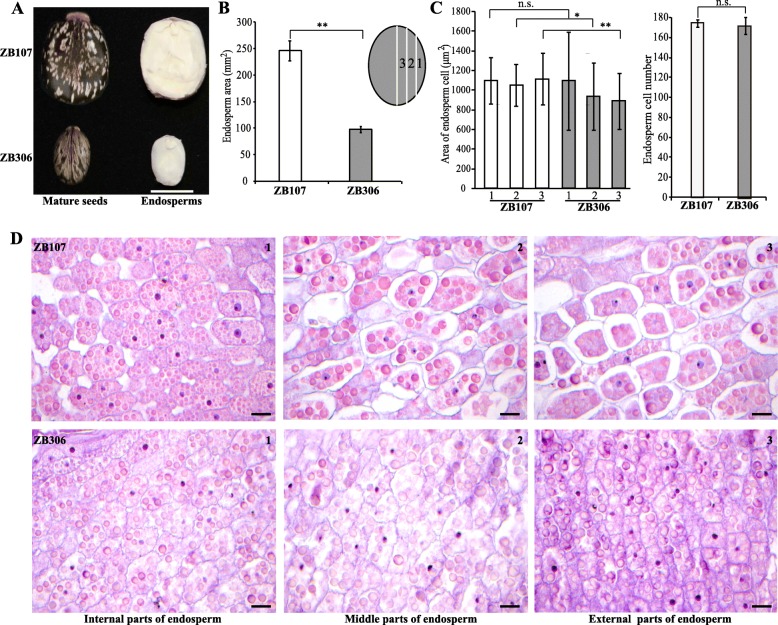
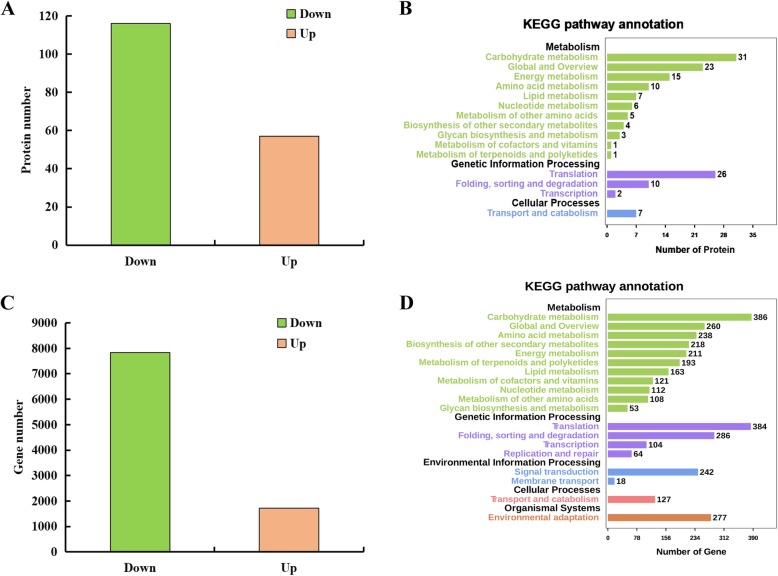
We compared the size of endosperm and endospermic cells between ZB107 and ZB306 and found that the larger seed size of ZB107 resulted from a higher cell count in the endosperm, which occupy a significant amount of the total seed volume. In addition, fresh weight, dry weight, and protein content of seeds were remarkably higher in ZB107 than in ZB306. Comparative proteomic and transcriptomic analyses were performed between large-seed ZB107 and small-seed ZB306, using isobaric tags for relative and absolute quantification (iTRAQ) and RNA-seq technologies, respectively. A total of 1416 protein species were identified, of which 173 were determined as differentially abundant protein species (DAPs). Additionally, there were 9545 differentially expressed genes (DEGs) between ZB306 and ZB107. Functional analyses revealed that these DAPs and DEGs were mainly involved in cell division and the metabolism of carbohydrates and proteins.
These findings suggest that both cell number and storage-component accumulation are critical for the formation of seed size, providing new insight into the potential mechanisms behind seed size formation in endospermic seeds.
人们对双子叶植物胚乳种子中种子大小形成的分子基础知之甚少。蓖麻种子(Ricinus communis L.)被认为是种子生物学研究的模型系统,因为其胚乳在整个种子发育过程中是持久存在的。
我们比较了 ZB107 和 ZB306 之间胚乳和胚乳细胞的大小,发现 ZB107 较大的种子大小是由于胚乳中的细胞数量较高,这占据了种子总体积的很大一部分。此外,ZB107 种子的鲜重、干重和蛋白质含量明显高于 ZB306。我们分别使用相对和绝对定量同位素标记(iTRAQ)和 RNA-seq 技术,对大种子 ZB107 和小种子 ZB306 进行了比较蛋白质组学和转录组学分析。共鉴定出 1416 种蛋白质,其中 173 种被确定为差异丰度蛋白(DAPs)。此外,ZB306 和 ZB107 之间有 9545 个差异表达基因(DEGs)。功能分析表明,这些 DAPs 和 DEGs 主要参与细胞分裂以及碳水化合物和蛋白质的代谢。
这些发现表明,细胞数量和储存成分的积累对于种子大小的形成都很重要,为胚乳种子中种子大小形成的潜在机制提供了新的见解。