Department of Animal and Poultry Sciences, Virginia Tech, Blacksburg, VA, USA.
Department of Animal and Poultry Sciences, Virginia Tech, Blacksburg, VA, USA.
Theriogenology. 2020 Jul 1;150:229-235. doi: 10.1016/j.theriogenology.2020.01.036. Epub 2020 Jan 22.
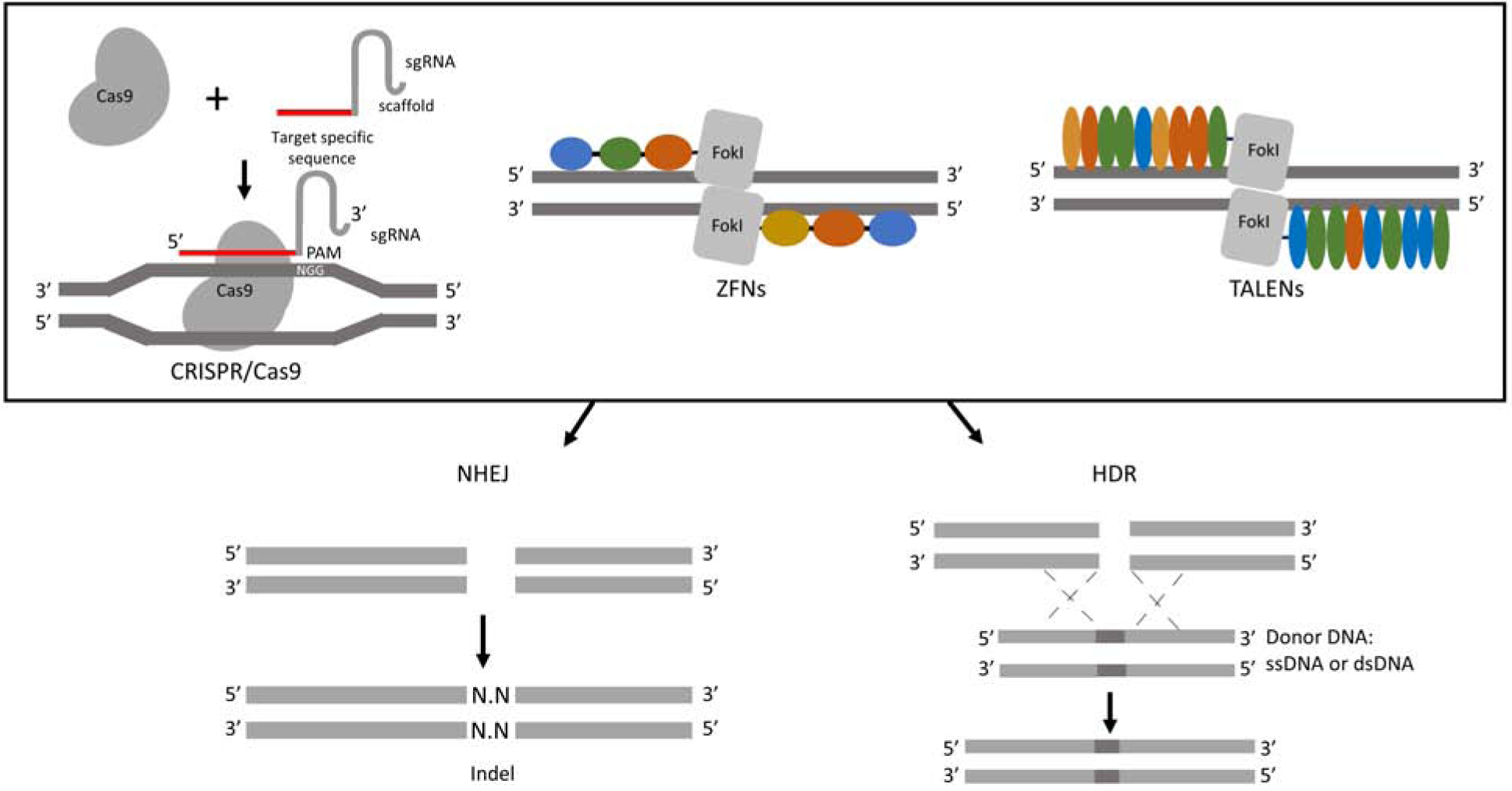
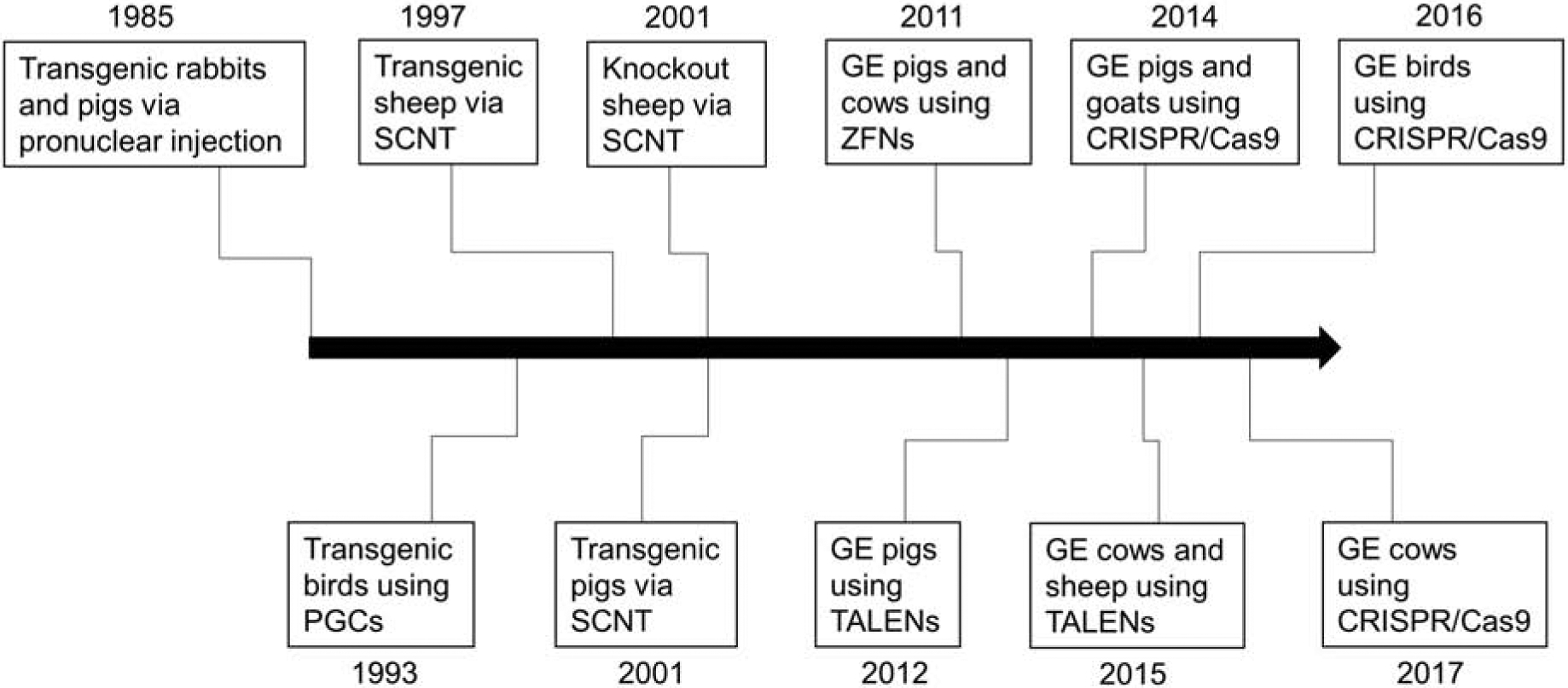
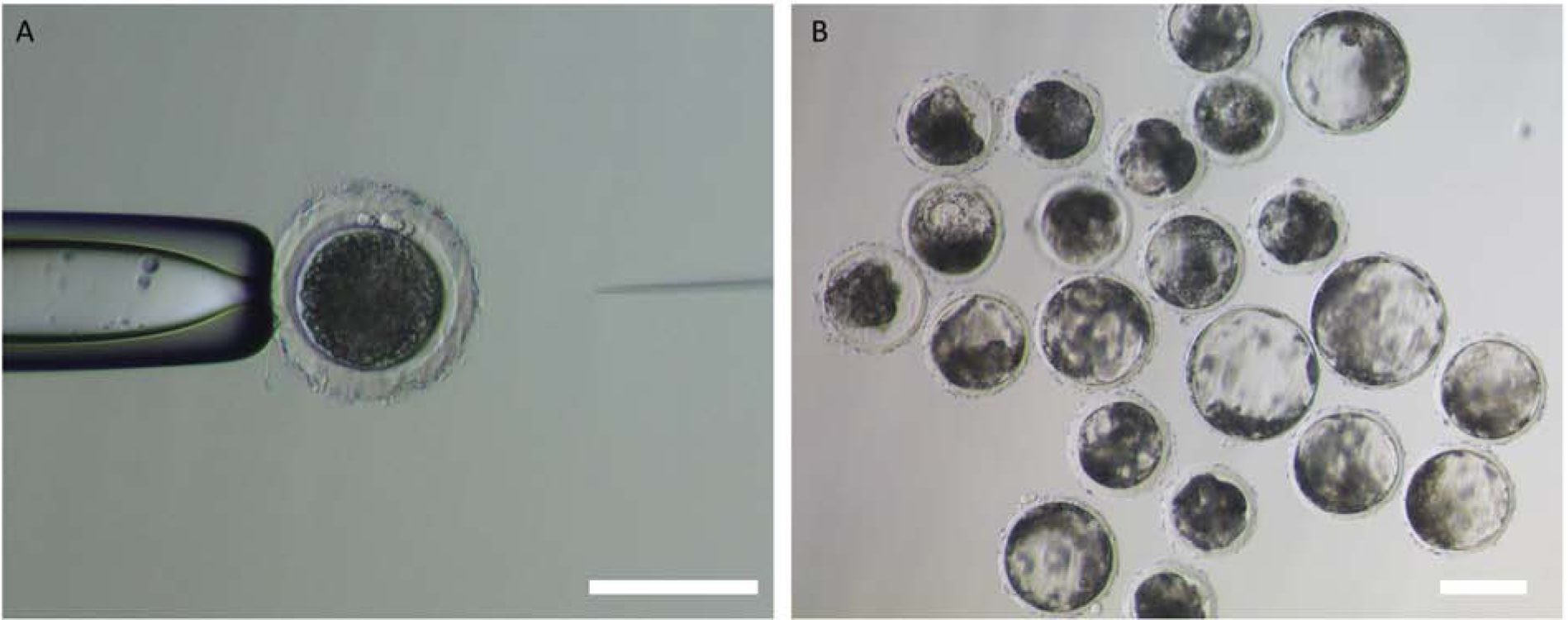
Historically, genetic engineering in livestock proved to be challenging. Without stable embryonic stem cell lines to utilize, somatic cell nuclear transfer (SCNT) had to be employed to produce many of the genetically engineered (GE) livestock models. Through the genetic engineering of somatic cells followed by SCNT, GE livestock models could be generated carrying site-specific modifications. Although successful, only a few GE livestock models were generated because of low efficiency and associated birth defects. Recently, there have been major strides in the development of genome editing tools: Zinc-Finger Nucleases (ZFNs), Transcription activator-like effector nucleases (TALENS), and Clustered regularly interspaced short palindromic repeats (CRISPR) and CRISPR-associated 9 (Cas9) system. These tools rely on the generation of a double strand DNA break, followed by one of two repair pathways: non-homologous end joining (NHEJ) or homology directed repair (HDR). Compared to the traditional approaches, these tools dramatically reduce time and effort needed to establish a GE animal. Another benefit of utilizing genome editing tools is the application of direct injection into developing embryos to induce targeted mutations, therefore, eliminating side effects associated with SCNT. Emerging technological advancements of genome editing systems have dramatically improved efficiency to generate GE livestock models for both biomedical and agricultural purposes. Although the efficiency of genome editing tools has revolutionized GE livestock production, improvements for safe and consistent application are desired. This review will provide an overview of genome editing techniques, as well as examples of GE livestock models for agricultural and biomedical purposes.
从历史上看,家畜基因工程证明具有挑战性。由于缺乏稳定的胚胎干细胞系可供利用,必须采用体细胞核移植(SCNT)来生产许多基因工程(GE)家畜模型。通过对体细胞进行基因工程改造,然后进行 SCNT,可以产生携带特定部位修饰的 GE 家畜模型。尽管取得了成功,但由于效率低和相关的出生缺陷,只产生了少数几个 GE 家畜模型。最近,基因组编辑工具的发展取得了重大进展:锌指核酸酶(ZFNs)、转录激活因子样效应物核酸酶(TALENS)和规律成簇间隔短回文重复(CRISPR)和 CRISPR 相关 9(Cas9)系统。这些工具依赖于双链 DNA 断裂的产生,随后是两种修复途径之一:非同源末端连接(NHEJ)或同源定向修复(HDR)。与传统方法相比,这些工具大大减少了建立 GE 动物所需的时间和精力。利用基因组编辑工具的另一个好处是可以将其直接注射到发育中的胚胎中,以诱导靶向突变,从而消除与 SCNT 相关的副作用。基因组编辑系统的新兴技术进步极大地提高了效率,为生物医学和农业目的生成了 GE 家畜模型。尽管基因组编辑工具的效率已经彻底改变了 GE 家畜的生产,但仍需要改进以实现安全和一致的应用。本文综述了基因组编辑技术,并介绍了农业和生物医学目的的 GE 家畜模型的实例。