Laboratory of Animal Reproduction and Physiology, Department of Animal Science and Biotechnology, College of Agriculture and Life Science, Chungnam National University, Daejeon, 34134, Korea.
MK biotech Inc., Daejeon, 34134, Korea.
BMC Biotechnol. 2022 Jul 13;22(1):19. doi: 10.1186/s12896-022-00749-3.
Canine cloning technology based on somatic cell nuclear transfer (SCNT) combined with genome-editing tools such as CRISPR-Cas9 can be used to correct pathogenic mutations in purebred dogs or to generate animal models of disease.
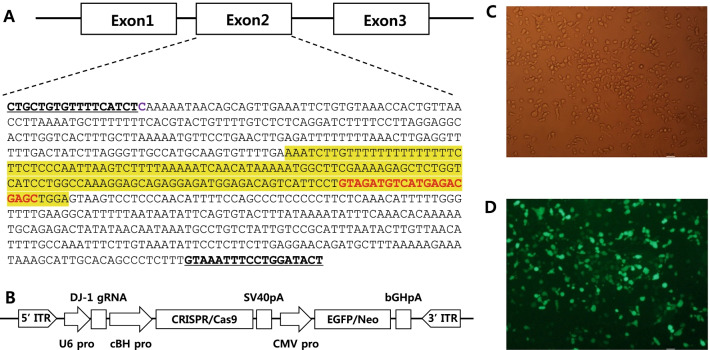
We constructed a CRISPR-Cas9 vector targeting canine DJ-1. Genome-edited canine fibroblasts were established using vector transfection and antibiotic selection. We performed canine SCNT using genome-edited fibroblasts and successfully generated two genome-edited dogs. Both genome-edited dogs had insertion-deletion mutations at the target locus, and DJ-1 expression was either downregulated or completely repressed.
SCNT successfully produced genome-edited dogs by using the CRISPR-Cas9 system for the first time.
基于体细胞核移植(SCNT)的犬克隆技术与 CRISPR-Cas9 等基因组编辑工具相结合,可用于纠正纯种犬的致病突变或产生疾病动物模型。
我们构建了针对犬 DJ-1 的 CRISPR-Cas9 载体。使用载体转染和抗生素选择,建立了基因组编辑犬成纤维细胞。我们使用基因组编辑的成纤维细胞进行犬 SCNT,成功地产生了两只基因组编辑犬。两个基因组编辑犬的靶位点都有插入-缺失突变,DJ-1 表达要么下调,要么完全被抑制。
首次使用 CRISPR-Cas9 系统通过 SCNT 成功产生了基因组编辑犬。