Department of Rheumatology and Immunology, Wuhan Fourth Hospital, Puai Hospital, Tongji Medical College, Huazhong University of Science and Technology, Wuhan, 430033, PR China.
Department of Clinical Laboratory, Wuhan Fourth Hospital, Puai Hospital, Tongji Medical College, Huazhong University of Science and Technology, Wuhan, 430033, PR China.
Cell Death Dis. 2020 Jan 30;11(1):78. doi: 10.1038/s41419-020-2281-y.
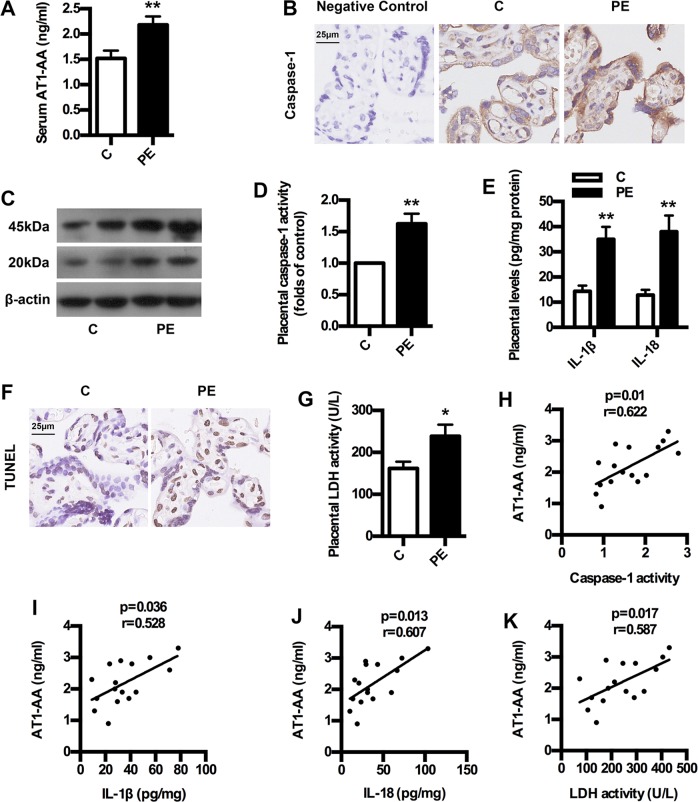
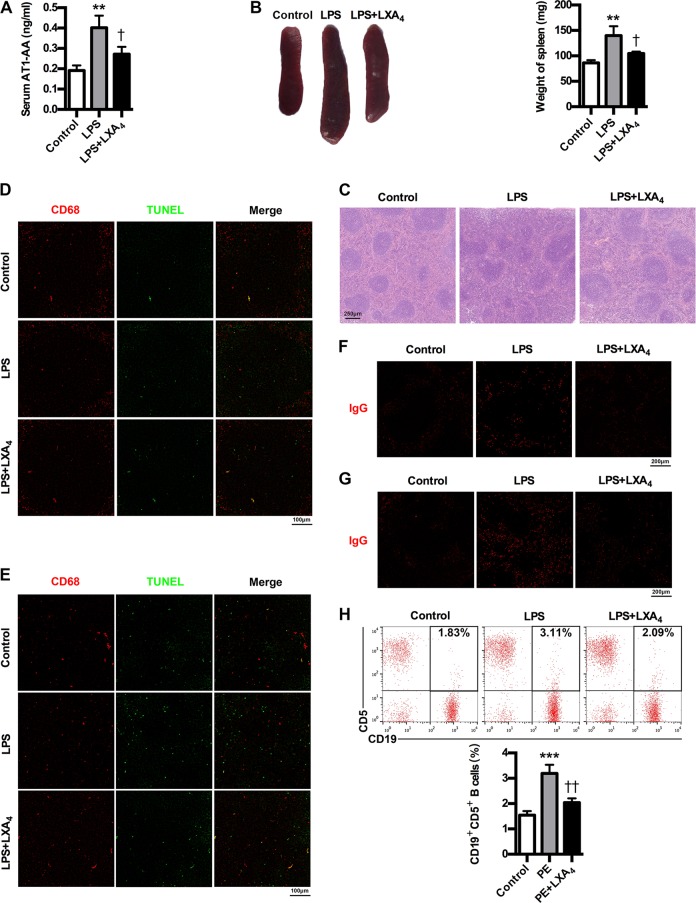
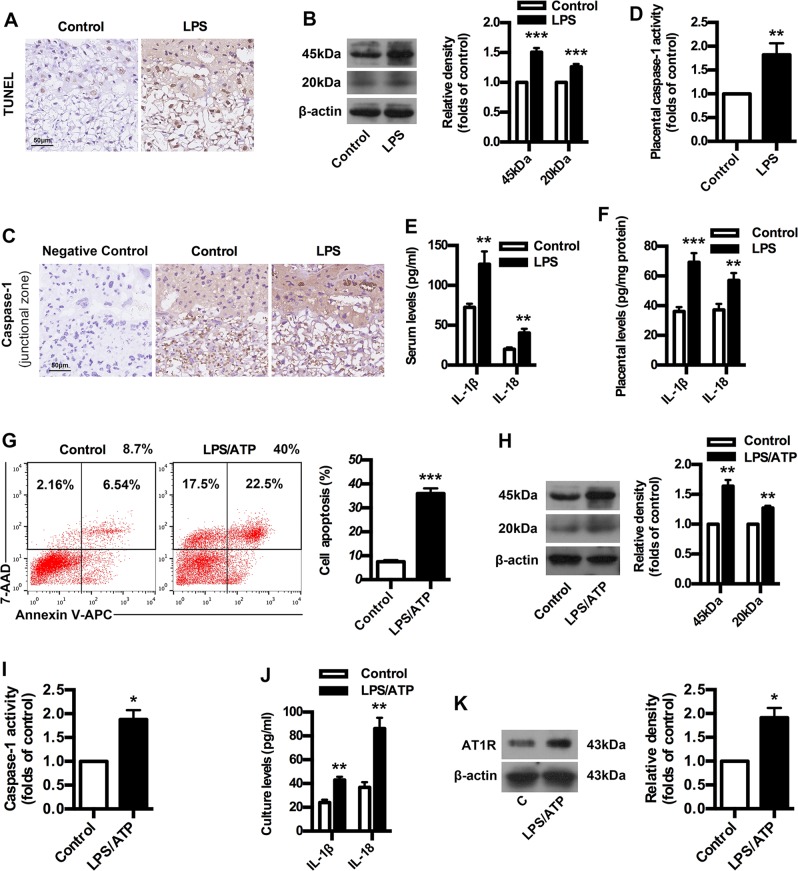
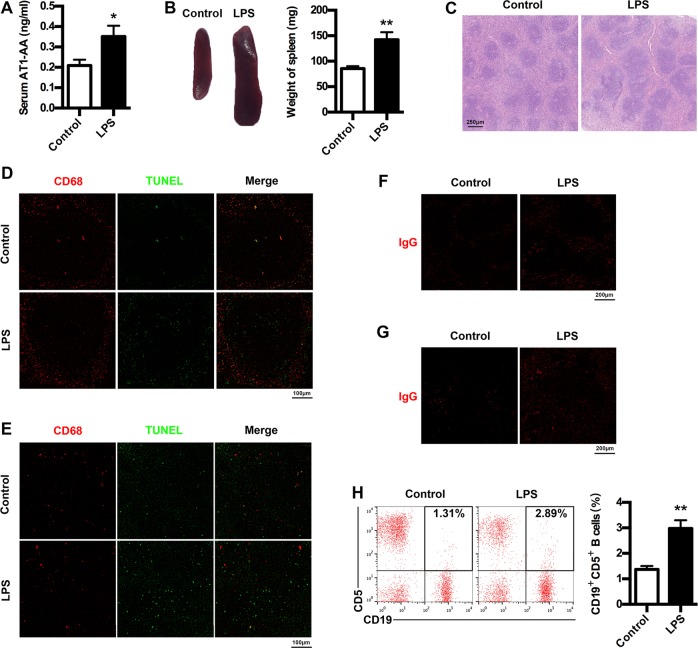
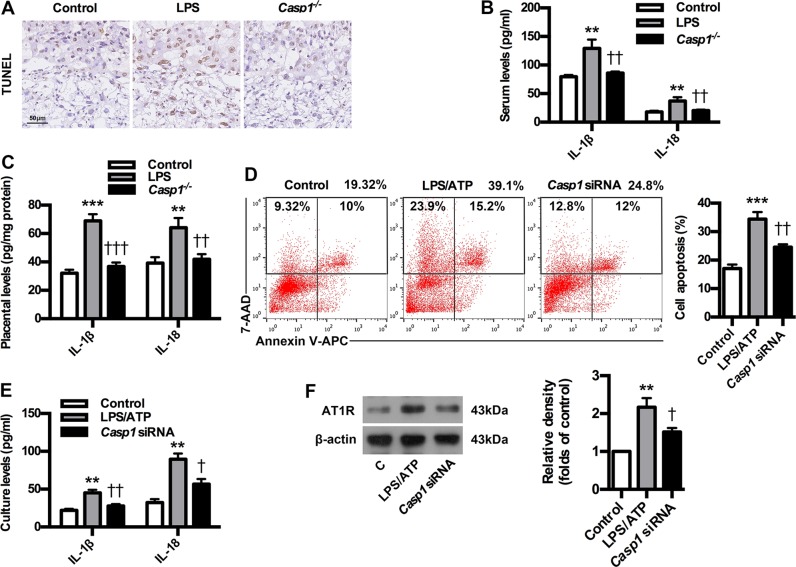
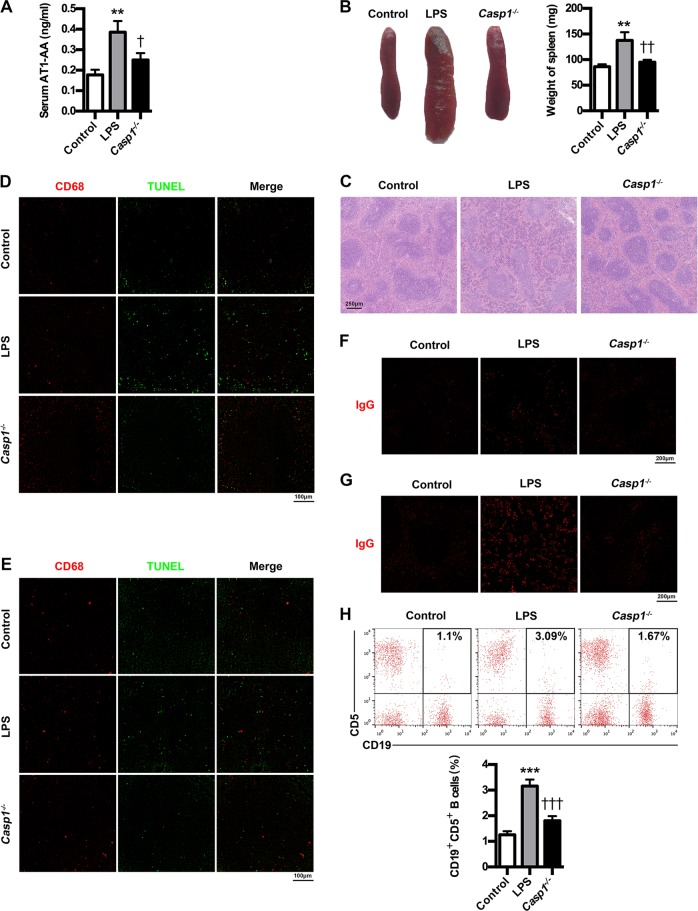
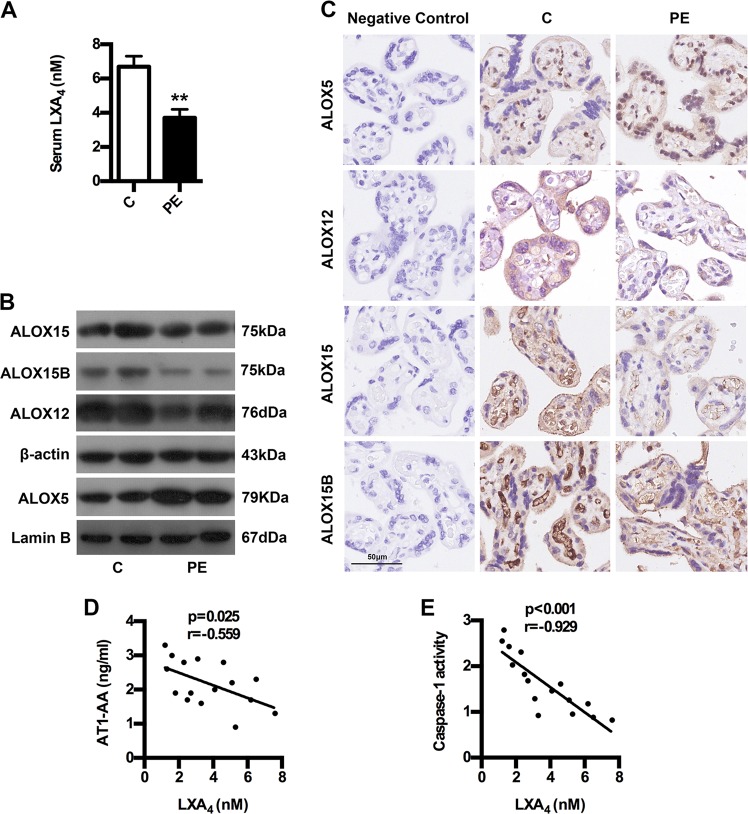
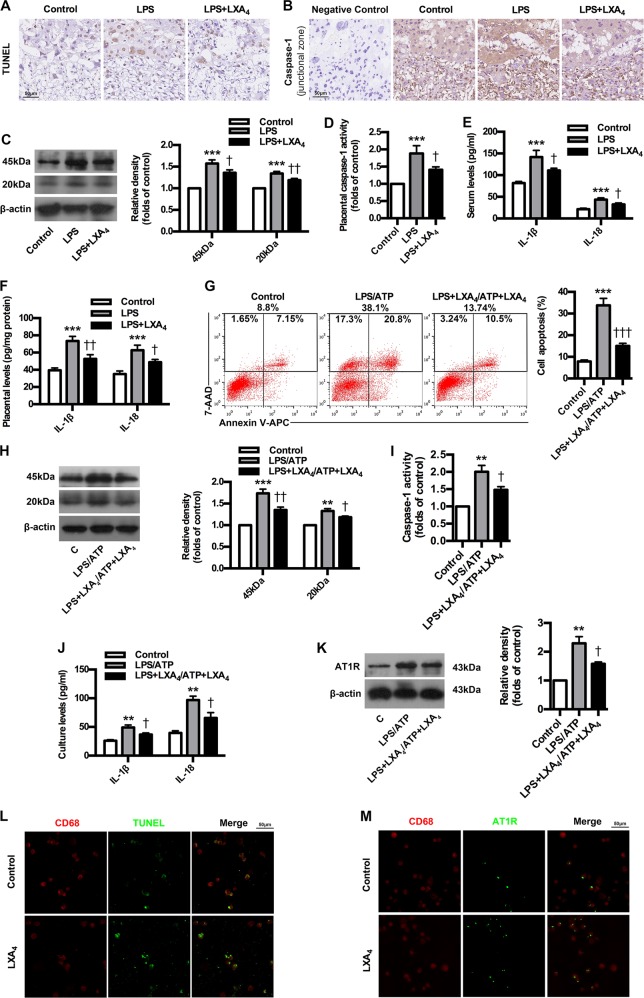
Preeclampsia (PE) remains a leading cause of maternal and neonatal morbidity and mortality. Numerous studies have shown that women with PE develop autoantibody, termed angiotensin II type 1 receptor autoantibody (AT1-AA), and key features of the disease result from it. Emerging evidence has indicated that inflammatory cell necrosis, such as pyroptosis, could lead to autoantigen exposure and stimulate autoantibody production. Caspase-1, the central enzyme of inflammasome and key target of pyroptosis, may play roles in AT1R exposure and AT1-AA production. Exploring endogenous regulator that could inhibit AT1-AA production by targeting pyroptosis will be essential for treating PE. Lipoxin A (LXA), endogenous dual anti-inflammatory and proresolving lipid mediator, may inhibit AT1-AA production via modulating caspase-1. Thus, we explore whether caspase-1 is essential for AT1-AA production and LXA inhibits AT1-AA via modulating caspase-1. PE patients and mice developed AT1-AA associated with caspase-1 activation. Caspase-1 deletion leaded to AT1-AA decrease in PE mice. Consistent with these findings, we confirmed caspase-1 activation, trophoblast pyroptosis and AT1R exposure in PE mice and trophoblast model, while caspase-1 deficiency showed decreased trophoblast pyroptosis and AT1R exposure in vitro and in vivo. Interestingly, LXA could suppress AT1-AA production via regulating caspase-1 as well as enhancing phagocytosis of dead trophoblasts by macrophages. These results suggest that caspase-1 promotes AT1-AA production via inducing trophoblast pyroptosis and AT1R exposure, while LXA suppresses AT1-AA production via modulating caspase-1, supporting caspase-1 serving as a therapeutic target for attenuating AT1-AA and LXA protecting patients from AT1-AA and PE.
子痫前期(PE)仍然是孕产妇和新生儿发病率和死亡率的主要原因。许多研究表明,患有 PE 的女性会产生自身抗体,称为血管紧张素 II 型 1 型受体自身抗体(AT1-AA),并且疾病的关键特征由此产生。新出现的证据表明,炎症细胞坏死,如细胞焦亡,可能导致自身抗原暴露并刺激自身抗体产生。半胱天冬酶-1(caspase-1),炎症小体的中心酶和细胞焦亡的关键靶点,可能在 AT1R 暴露和 AT1-AA 产生中发挥作用。探索能够通过靶向细胞焦亡抑制 AT1-AA 产生的内源性调节剂对于治疗 PE 将是至关重要的。脂氧素 A(LXA),内源性双重抗炎和促解决脂质介质,可能通过调节半胱天冬酶-1 来抑制 AT1-AA 的产生。因此,我们探讨了 caspase-1 是否对 AT1-AA 的产生是必不可少的,以及 LXA 是否通过调节 caspase-1 来抑制 AT1-AA。PE 患者和小鼠产生了与 caspase-1 激活相关的 AT1-AA。Caspase-1 缺失导致 PE 小鼠 AT1-AA 减少。与这些发现一致,我们在 PE 小鼠和滋养细胞模型中证实了 caspase-1 激活、滋养细胞细胞焦亡和 AT1R 暴露,而 caspase-1 缺乏症显示出体外和体内滋养细胞细胞焦亡和 AT1R 暴露减少。有趣的是,LXA 可以通过调节 caspase-1 以及增强巨噬细胞对死亡滋养细胞的吞噬作用来抑制 AT1-AA 的产生。这些结果表明,caspase-1 通过诱导滋养细胞细胞焦亡和 AT1R 暴露促进 AT1-AA 的产生,而 LXA 通过调节 caspase-1 抑制 AT1-AA 的产生,支持 caspase-1 作为减轻 AT1-AA 的治疗靶点和 LXA 保护患者免受 AT1-AA 和 PE 的影响。