Department of Biomedical and Biotechnological Sciences, Section of Pharmacology; University of Catania, Catania, Italy.
Curr Neuropharmacol. 2020;18(5):446-455. doi: 10.2174/1570159X18666200131105418.
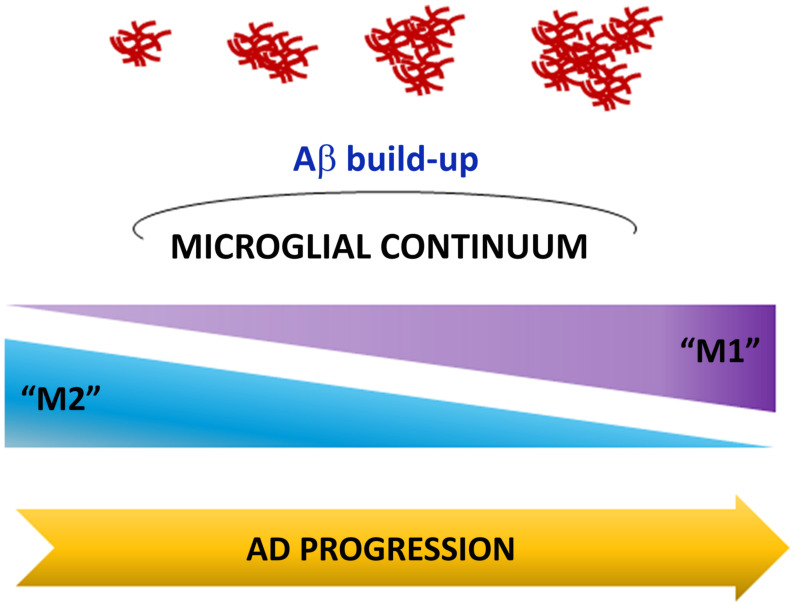
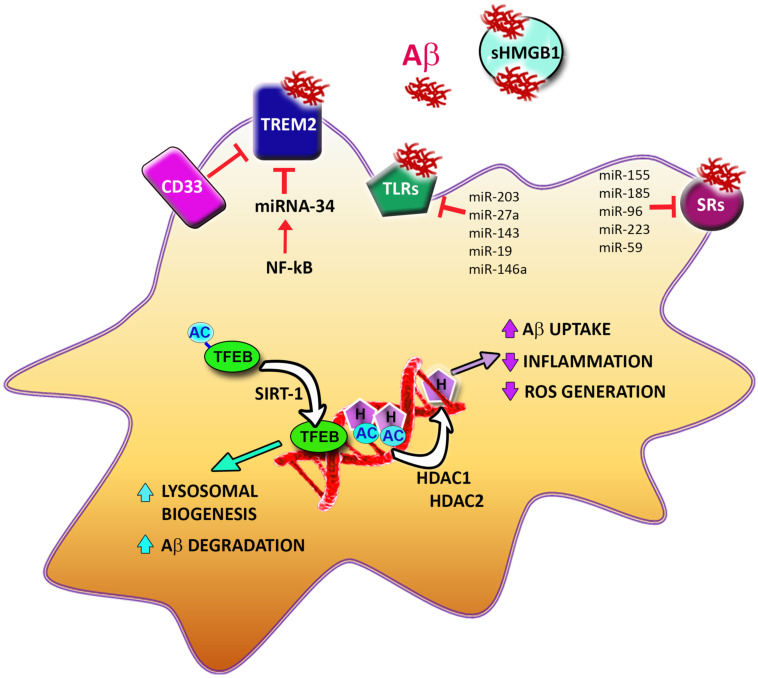
Amyloid-β (Aβ) has long been shown to be critical in Alzheimer's disease pathophysiology. Microglia contributes to the earliest responses to Aβ buildup, by direct interaction through multiple receptors. Microglial cells operate Aβ clearance and trigger inflammatory/regenerative processes that take place in the long years of silent disease progression that precede symptomatic appearance. But in time and with aging, the fine balance between pro- and anti-inflammatory activity of microglia deranges, negatively impacting its Aβ-clearing ability. Furthermore, in recent years, microglial activation has proven to be much more complex than the mere dichotomic pro/antiinflammatory polarization previously accepted. Microglia can display a wide spectrum of phenotypes, which can even be mixed. On these bases, it is evident that while pharmacological intervention aiding microglia to prolong its ability to cope with Aβ buildup could be extremely relevant, its feasibility is hampered by such high complexity, which still needs to be completely understood.
淀粉样蛋白-β(Aβ)长期以来一直被认为是阿尔茨海默病病理生理学中的关键因素。小胶质细胞通过多种受体的直接相互作用,有助于对 Aβ 堆积的最早反应。小胶质细胞可以清除 Aβ,并触发炎症/再生过程,这些过程发生在症状出现之前的多年沉默疾病进展中。但是随着时间的推移和衰老,小胶质细胞的促炎和抗炎活性之间的微妙平衡会失调,从而降低其清除 Aβ 的能力。此外,近年来,小胶质细胞的激活已被证明比以前接受的简单的促炎/抗炎二分法复杂得多。小胶质细胞可以表现出广泛的表型,甚至可以混合。基于这些,很明显,虽然药理学干预有助于小胶质细胞延长其应对 Aβ 堆积的能力可能非常重要,但由于这种高度复杂性,其可行性受到阻碍,而这种复杂性仍需要完全理解。