iHuman Institute, ShanghaiTech University, Shanghai 201210, China.
iHuman Institute, ShanghaiTech University, Shanghai 201210, China.
Cell. 2020 Feb 20;180(4):655-665.e18. doi: 10.1016/j.cell.2020.01.008. Epub 2020 Jan 30.
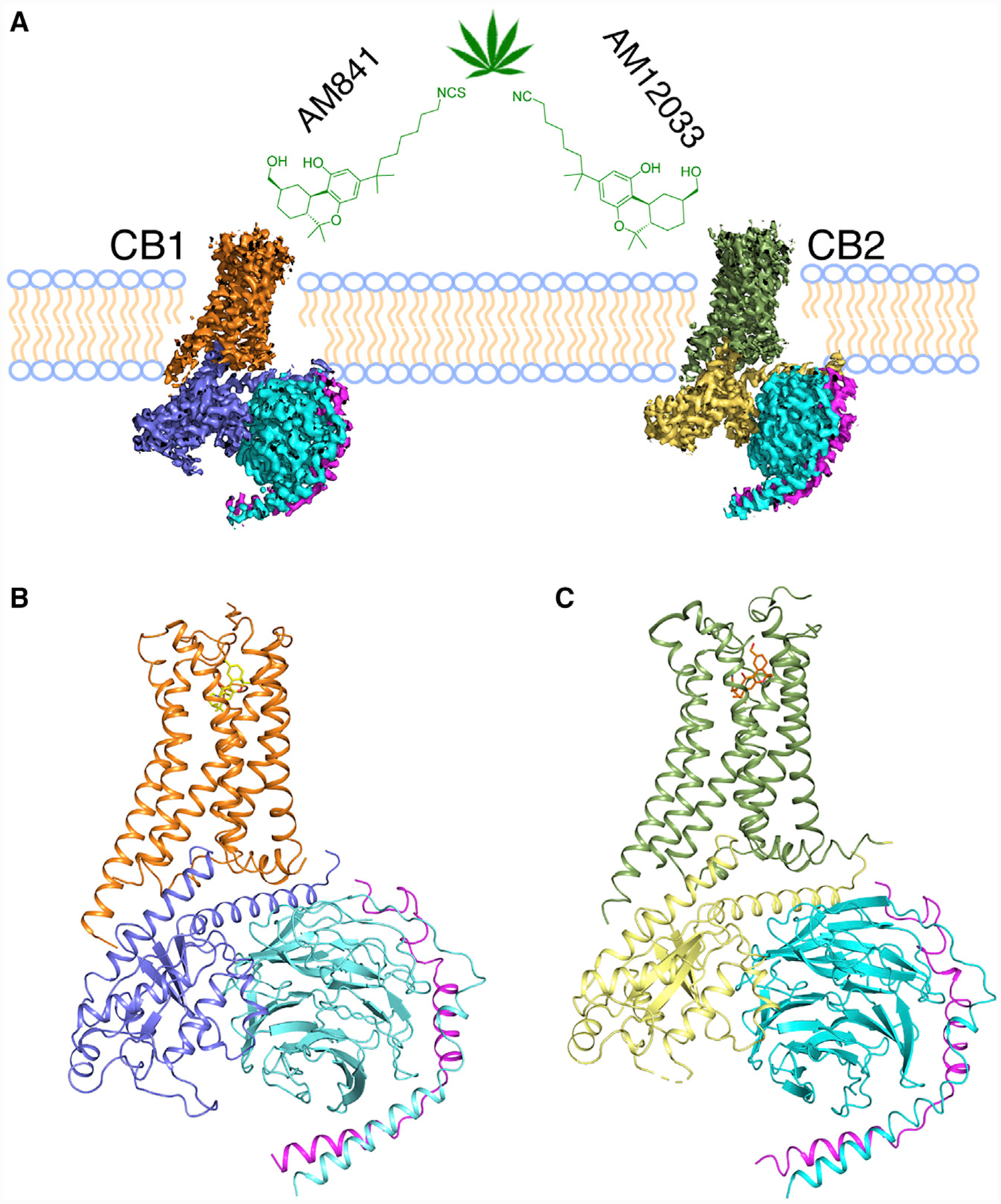
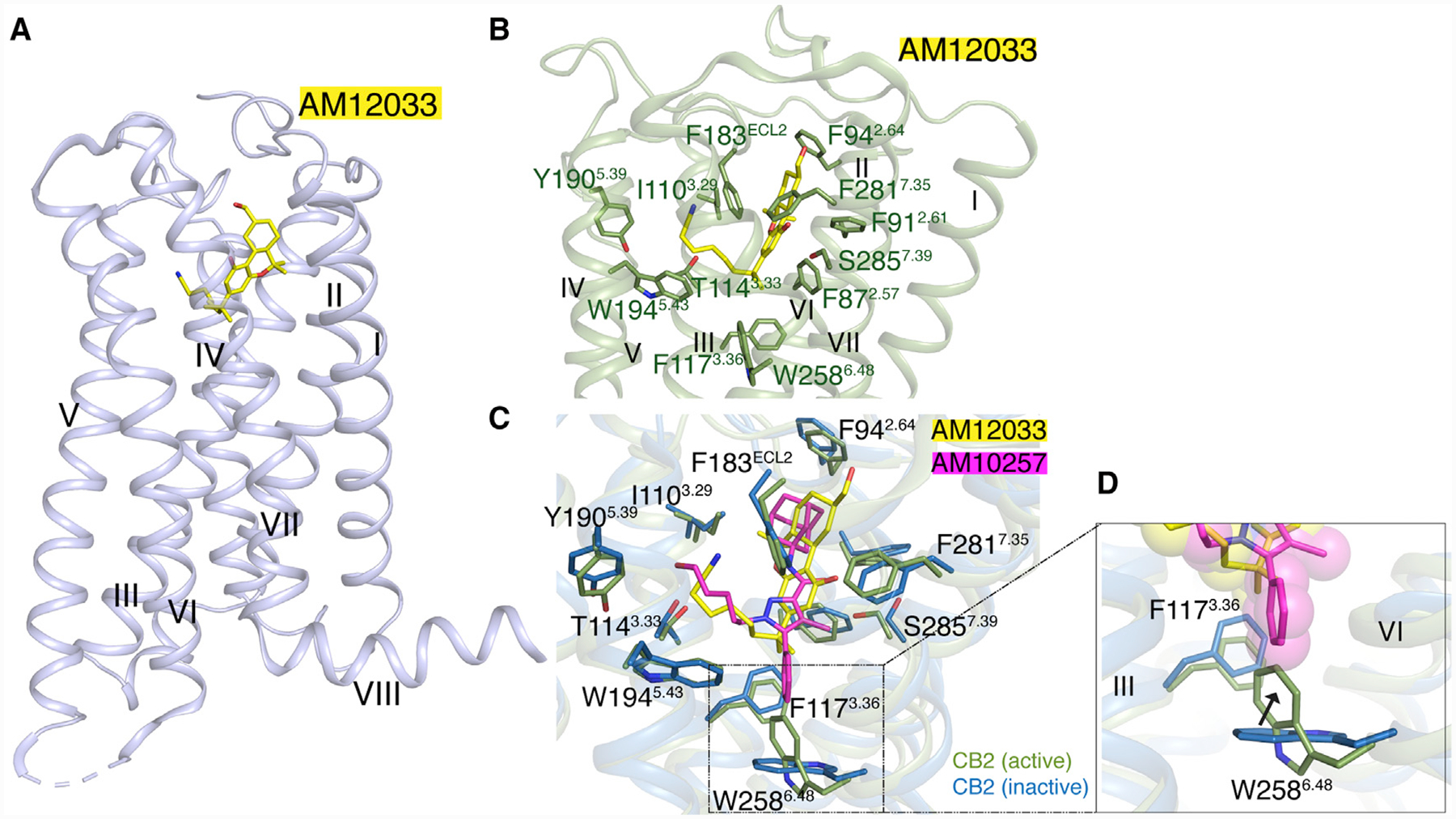
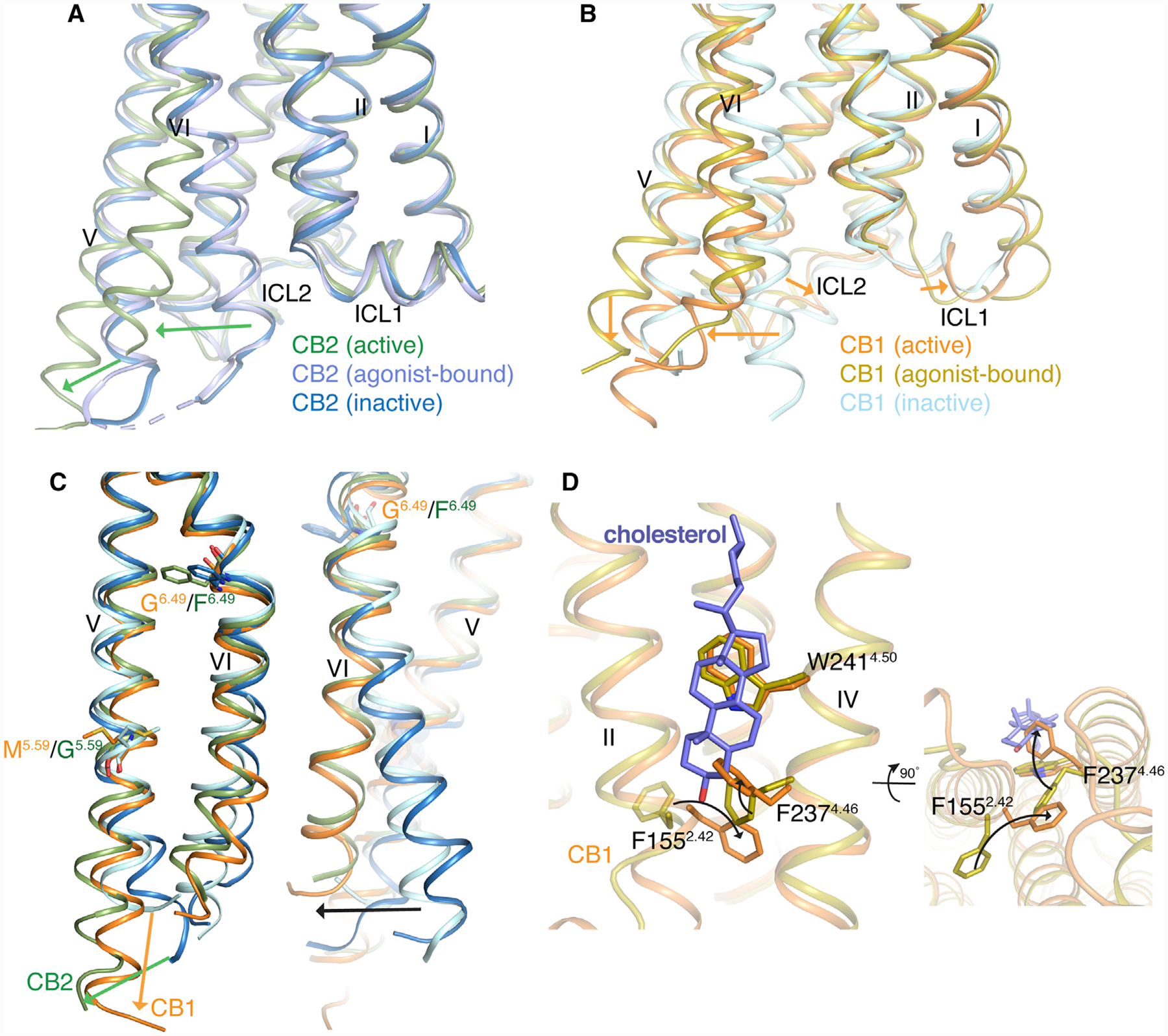
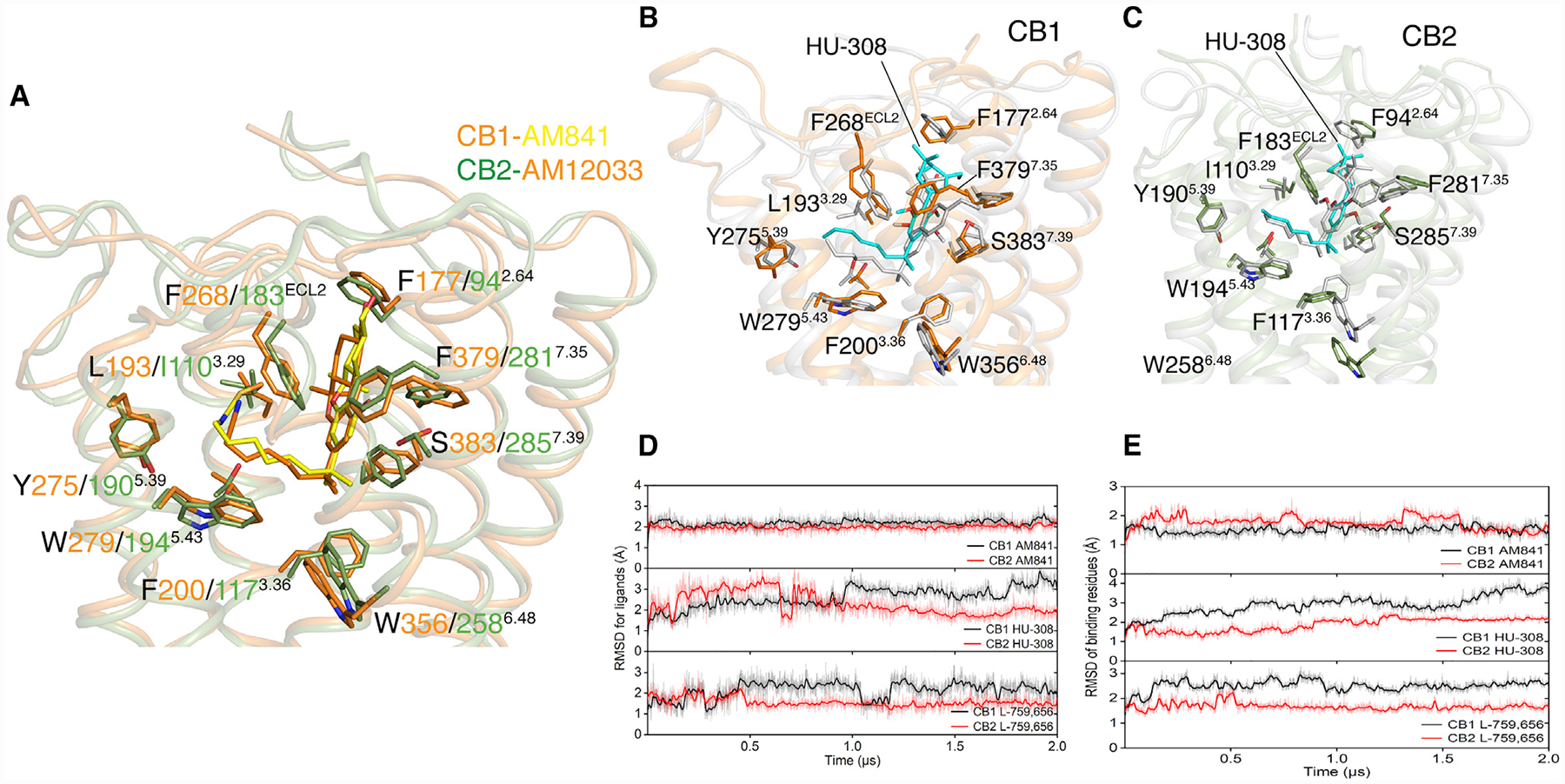
Human endocannabinoid systems modulate multiple physiological processes mainly through the activation of cannabinoid receptors CB1 and CB2. Their high sequence similarity, low agonist selectivity, and lack of activation and G protein-coupling knowledge have hindered the development of therapeutic applications. Importantly, missing structural information has significantly held back the development of promising CB2-selective agonist drugs for treating inflammatory and neuropathic pain without the psychoactivity of CB1. Here, we report the cryoelectron microscopy structures of synthetic cannabinoid-bound CB2 and CB1 in complex with G, as well as agonist-bound CB2 crystal structure. Of important scientific and therapeutic benefit, our results reveal a diverse activation and signaling mechanism, the structural basis of CB2-selective agonists design, and the unexpected interaction of cholesterol with CB1, suggestive of its endogenous allosteric modulating role.
人类内源性大麻素系统主要通过大麻素受体 CB1 和 CB2 的激活来调节多种生理过程。然而,由于它们的序列高度相似、激动剂选择性低,以及缺乏激活和 G 蛋白偶联的知识,这阻碍了它们在治疗应用方面的发展。重要的是,缺少结构信息极大地阻碍了具有前景的、用于治疗炎症和神经性疼痛的、且不具有 CB1 精神活性的 CB2 选择性激动剂药物的发展。在这里,我们报道了合成大麻素结合的 CB2 和 CB1 与 G 复合物的冷冻电镜结构,以及激动剂结合的 CB2 晶体结构。我们的研究结果揭示了一种多样化的激活和信号转导机制、CB2 选择性激动剂设计的结构基础,以及胆固醇与 CB1 的意外相互作用,提示其可能具有内源性变构调节作用,这具有重要的科学和治疗意义。