Program in Chronic Infectious and Inflammatory Diseases, Oxidant and Inflammation Biology Group, School of Health and Biomedical Sciences, College of Science, Engineering & Health, RMIT University, Bundoora, Australia.
School of Pharmacy and Medical Sciences, University of South Australia Cancer Research Institute, University of South Australia, Adelaide, Australia.
Antioxid Redox Signal. 2020 May 1;32(13):993-1013. doi: 10.1089/ars.2020.8028.
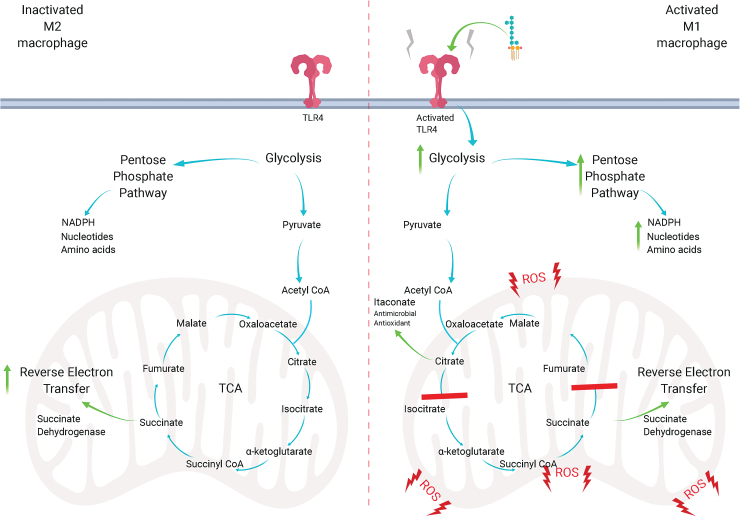
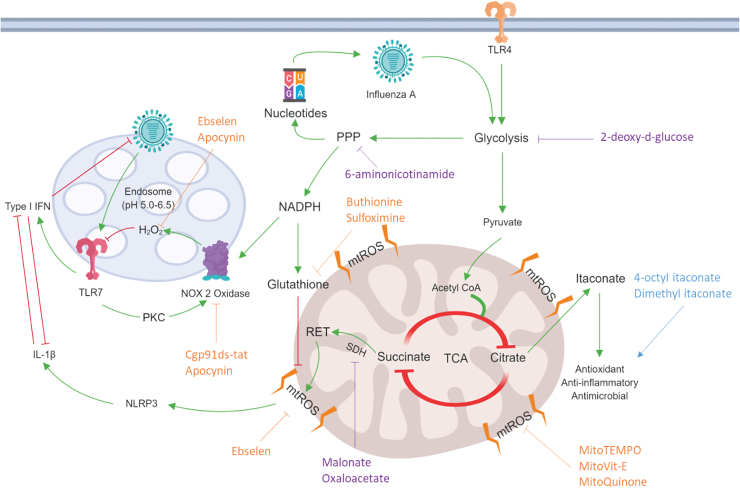
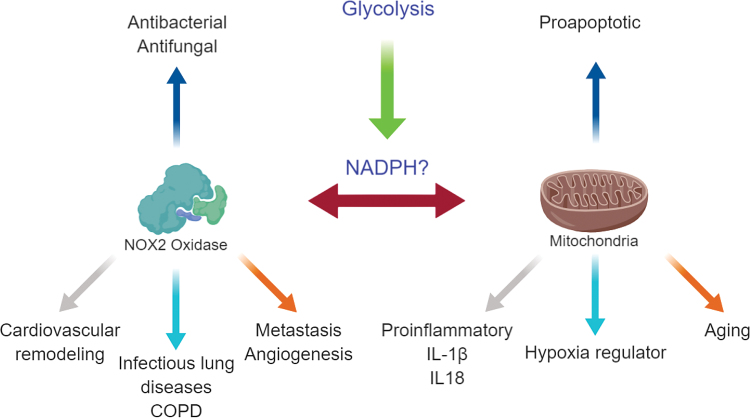
Up until recently, metabolism has scarcely been referenced in terms of immunology. However, emerging evidence has shown that immune cells undergo an adaptation of metabolic processes, known as the metabolic switch. This switch is key to the activation, and sustained inflammatory phenotype in immune cells, which includes the production of cytokines and reactive oxygen species (ROS) that underpin infectious diseases, respiratory and cardiovascular disease, neurodegenerative disease, as well as cancer. There is a burgeoning body of evidence that immunometabolism and redox biology drive infectious diseases. For example, influenza A virus (IAV) utilizes endogenous ROS production NADPH oxidase (NOX)2-containing NOXs and mitochondria to circumvent antiviral responses. These evolutionary conserved processes are promoted by glycolysis, the pentose phosphate pathway, and the tricarboxylic acid (TCA) cycle that drive inflammation. Such metabolic products involve succinate, which stimulates inflammation through ROS-dependent stabilization of hypoxia-inducible factor-1α, promoting interleukin-1β production by the inflammasome. In addition, itaconate has recently gained significant attention for its role as an anti-inflammatory and antioxidant metabolite of the TCA cycle. The molecular mechanisms by which immunometabolism and ROS promote viral and bacterial pathology are largely unknown. This review will provide an overview of the current paradigms with an emphasis on the roles of immunometabolism and ROS in the context of IAV infection and secondary complications due to bacterial infection such as . Molecular targets based on metabolic cell processes and ROS generation may provide novel and effective therapeutic strategies for IAV and associated bacterial superinfections.
直到最近,代谢几乎没有在免疫学中被提及。然而,新出现的证据表明,免疫细胞经历了代谢过程的适应,称为代谢开关。这种开关是免疫细胞激活和持续炎症表型的关键,包括细胞因子和活性氧物质(ROS)的产生,这些物质是感染性疾病、呼吸和心血管疾病、神经退行性疾病以及癌症的基础。越来越多的证据表明免疫代谢和氧化还原生物学驱动着传染病。例如,甲型流感病毒(IAV)利用内源性 ROS 产生 NADPH 氧化酶(NOX)2 包含的 NOX 和线粒体来规避抗病毒反应。这些进化保守的过程是由糖酵解、戊糖磷酸途径和三羧酸(TCA)循环促进的,这些循环驱动炎症。这些代谢产物涉及琥珀酸,它通过 ROS 依赖性缺氧诱导因子-1α 的稳定来刺激炎症,促进炎症小体产生白细胞介素-1β。此外,作为 TCA 循环的抗炎和抗氧化代谢物,衣康酸最近引起了人们的极大关注。免疫代谢和 ROS 促进病毒和细菌病理学的分子机制在很大程度上尚不清楚。这篇综述将概述当前的范式,并强调免疫代谢和 ROS 在 IAV 感染和细菌感染引起的继发性并发症(如肺炎)中的作用。基于代谢细胞过程和 ROS 产生的分子靶标可能为 IAV 及相关细菌合并感染提供新的有效治疗策略。