Department of Pediatrics, The University of Texas Medical Branch, Galveston, Texas, USA.
Department of Microbiology and Immunology, The University of Texas Medical Branch, Galveston, Texas, USA.
Microbiol Spectr. 2023 Jun 15;11(3):e0037823. doi: 10.1128/spectrum.00378-23. Epub 2023 Apr 6.
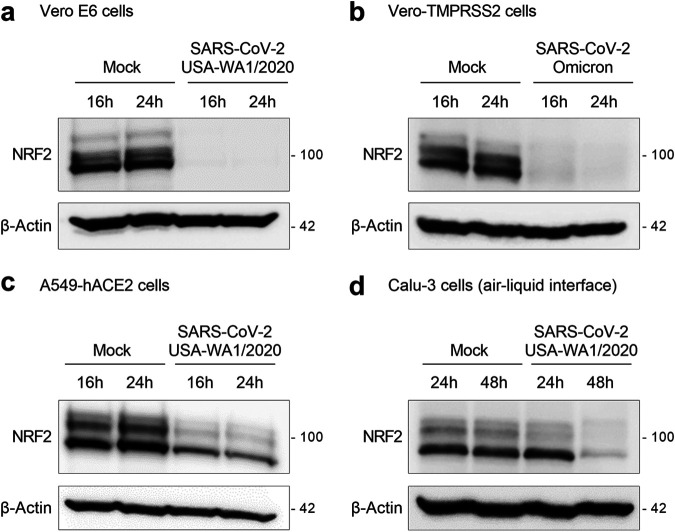
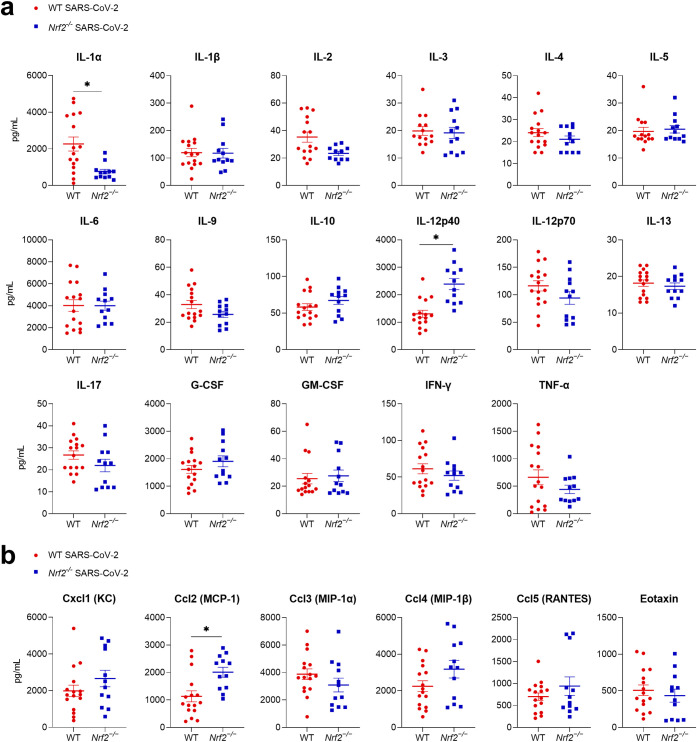
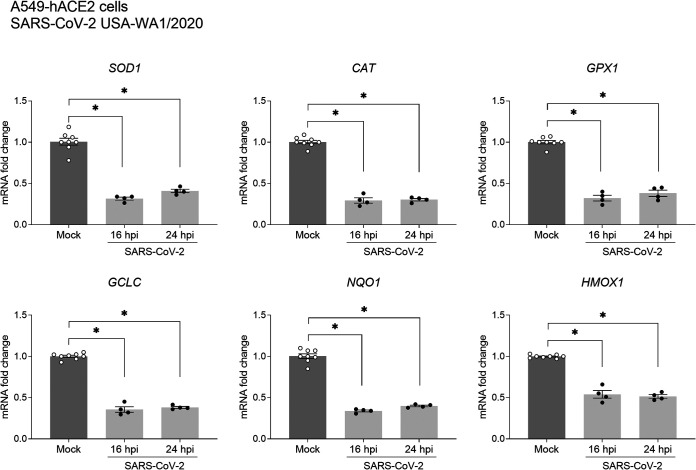
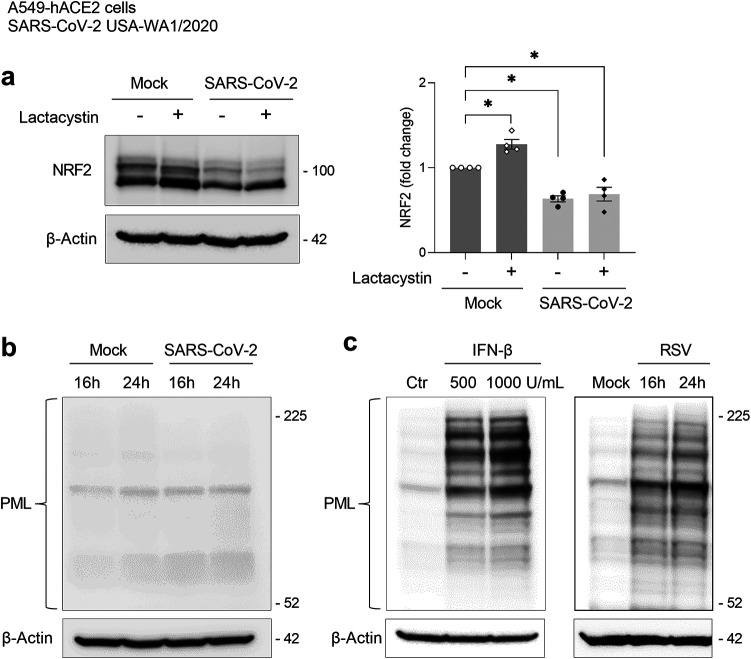
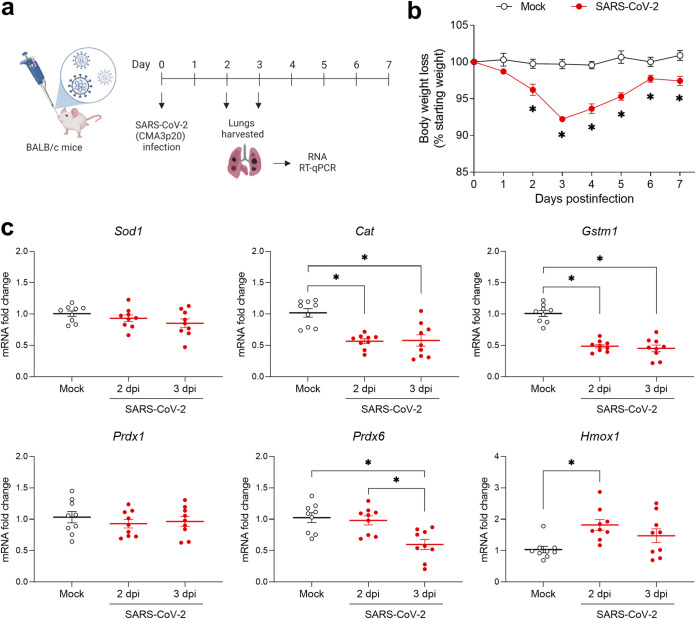
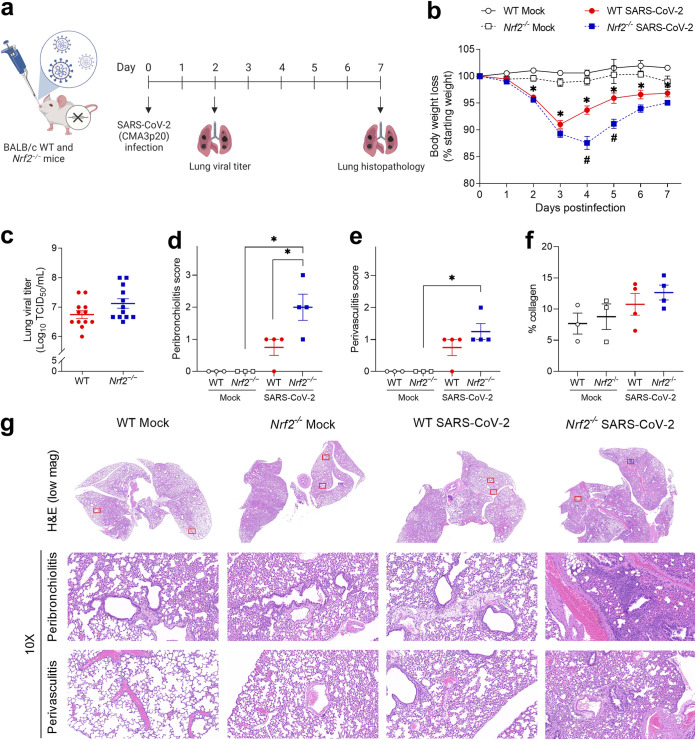
Several viruses have been shown to modulate the transcription factor nuclear factor erythroid 2-related factor 2 (NRF2), the master regulator of redox homeostasis. The severe acute respiratory syndrome coronavirus 2 (SARS-CoV-2), responsible for the COVID-19 pandemic, also seems to disrupt the balance between oxidants and antioxidants, which likely contributes to lung damage. Using and models of infection, we investigated how SARS-CoV-2 modulates the transcription factor NRF2 and its dependent genes, as well as the role of NRF2 during SARS-CoV-2 infection. We found that SARS-CoV-2 infection downregulates NRF2 protein levels and NRF2-dependent gene expression in human airway epithelial cells and in lungs of BALB/c mice. Reductions in cellular levels of NRF2 seem to be independent of proteasomal degradation and the interferon/promyelocytic leukemia (IFN/PML) pathway. Furthermore, lack of the gene in SARS-CoV-2-infected mice exacerbates clinical disease, increases lung inflammation, and is associated with a trend toward increased lung viral titers, indicating that NRF2 has a protective role during this viral infection. In summary, our results suggest that SARS-CoV-2 infection alters the cellular redox balance by downregulating NRF2 and its dependent genes, which exacerbates lung inflammation and disease, therefore, suggesting that the activation of NRF2 could be explored as therapeutic approach during SARS-CoV-2 infection. The antioxidant defense system plays a major function in protecting the organism against oxidative damage caused by free radicals. COVID-19 patients often present with biochemical characteristics of uncontrolled pro-oxidative responses in the respiratory tract. We show herein that SARS-CoV-2 variants, including Omicron, are potent inhibitors of cellular and lung nuclear factor erythroid 2-related factor 2 (NRF2), the master transcription factor that controls the expression of antioxidant and cytoprotective enzymes. Moreover, we show that mice lacking the gene show increased clinical signs of disease and lung pathology when infected with a mouse-adapted strain of SARS-CoV-2. Overall, this study provides a mechanistic explanation for the observed unbalanced pro-oxidative response in SARS-CoV-2 infections and suggests that therapeutic strategies for COVID-19 may consider the use of pharmacologic agents that are known to boost the expression levels of cellular NRF2.
几种病毒已被证明可以调节转录因子核因子红细胞 2 相关因子 2(NRF2),NRF2 是氧化还原稳态的主要调节剂。导致 COVID-19 大流行的严重急性呼吸综合征冠状病毒 2(SARS-CoV-2)似乎也破坏了氧化剂和抗氧化剂之间的平衡,这可能导致肺部损伤。我们使用 和 感染模型,研究了 SARS-CoV-2 如何调节转录因子 NRF2 及其依赖的基因,以及 NRF2 在 SARS-CoV-2 感染过程中的作用。我们发现,SARS-CoV-2 感染下调了人呼吸道上皮细胞和 BALB/c 小鼠肺部的 NRF2 蛋白水平和 NRF2 依赖基因的表达。细胞内 NRF2 水平的降低似乎与蛋白酶体降解和干扰素/早幼粒细胞白血病(IFN/PML)途径无关。此外,在感染 SARS-CoV-2 的小鼠中缺乏 基因会加剧临床疾病,增加肺部炎症,并与肺部病毒滴度增加的趋势相关,表明 NRF2 在这种病毒感染中具有保护作用。总之,我们的结果表明,SARS-CoV-2 感染通过下调 NRF2 及其依赖的基因来改变细胞内的氧化还原平衡,从而加剧肺部炎症和疾病,因此,提示在 SARS-CoV-2 感染期间激活 NRF2 可能作为一种治疗方法进行探索。抗氧化防御系统在保护机体免受自由基引起的氧化损伤方面起着重要作用。COVID-19 患者经常表现出呼吸道中不受控制的促氧化反应的生化特征。我们在此表明,包括奥密克戎在内的 SARS-CoV-2 变体是细胞和肺核因子红细胞 2 相关因子 2(NRF2)的强效抑制剂,NRF2 是控制抗氧化和细胞保护酶表达的主要转录因子。此外,我们还表明,当感染小鼠适应性 SARS-CoV-2 株时,缺乏 基因的小鼠表现出增加的临床疾病体征和肺部病理学。总的来说,这项研究为 SARS-CoV-2 感染中观察到的不平衡促氧化反应提供了一种机制解释,并表明 COVID-19 的治疗策略可能需要考虑使用已知可提高细胞 NRF2 表达水平的药物。