Fan Liyuan, Wei Yumei, Ding Xiuping, Li Baosheng
Department of Radiation Oncology, Shandong Cancer Hospital and Institute, Shandong First Medical University and Shandong Academy of Medical Sciences, Jinan, Shandong 250117, People's Republic of China.
Cheeloo College of Medicine, Shandong University, Jinan, Shandong 250112, People's Republic of China.
Onco Targets Ther. 2019 Nov 13;12:9585-9598. doi: 10.2147/OTT.S215674. eCollection 2019.
Coronin3 is a cytoskeletal protein that has been implicated in metastasis in many cancer types. Here, we demonstrate its effect in nasopharyngeal carcinoma (NPC) and propose a new probable mechanism of CORO1C-mediated cell migration and invasion by regulation of epithelial-to-mesenchymal transition (EMT) and CDH11.
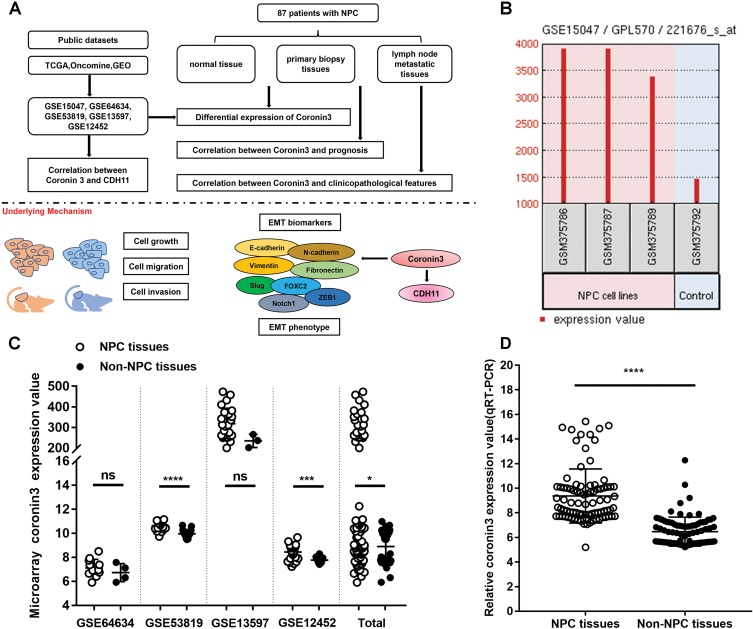
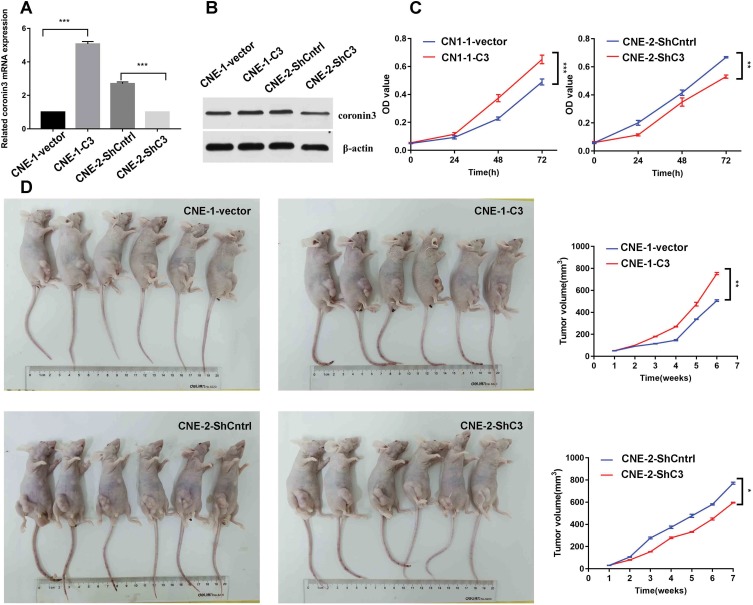
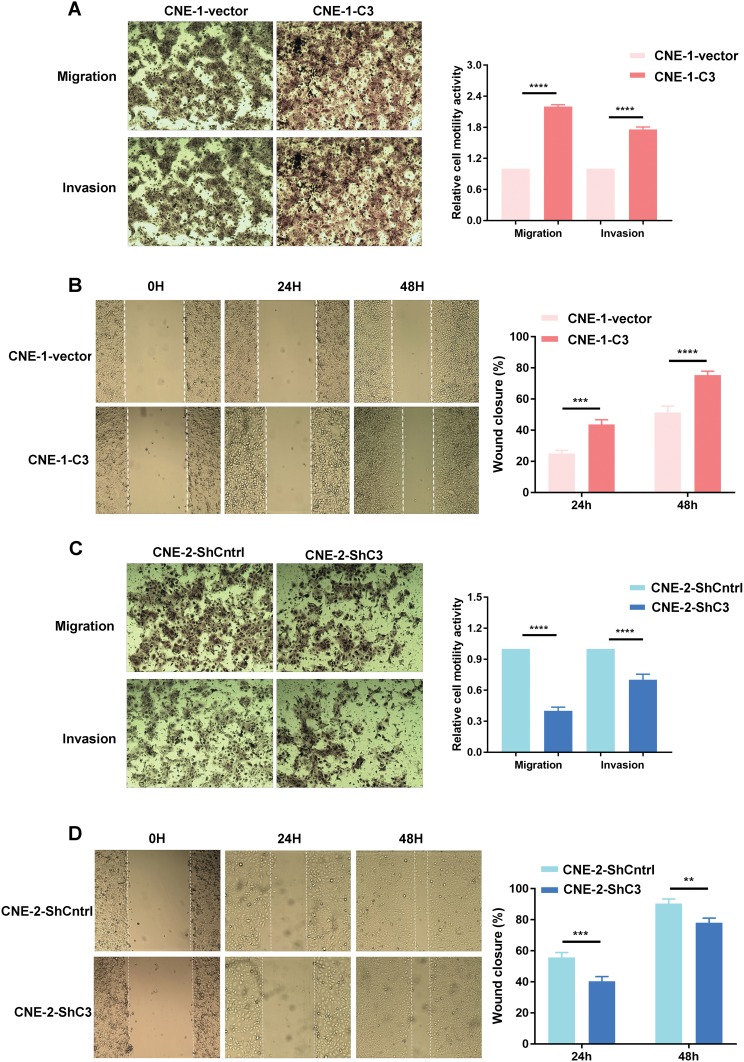
First, we measured the differential expression of CORO1C between NPC and non-NPC cells in both cell lines and clinical specimens, using public datasets. Then, we investigated its relationship with clinicopathological factors and its potential as a biomarker to predict the prognosis of NPC patients. We also explored its influence on the cell behaviors of migration and invasion by upregulating and downregulating the expression of CORO1C and attempted to determine the underlying mechanism.
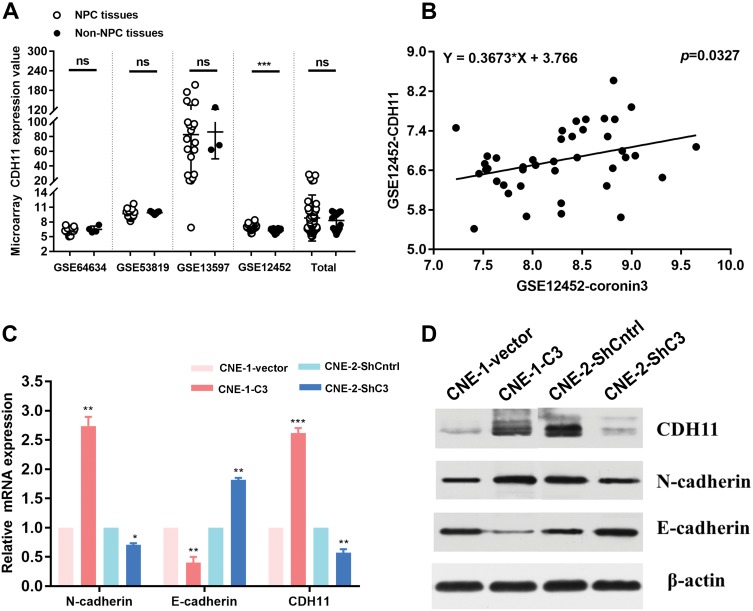
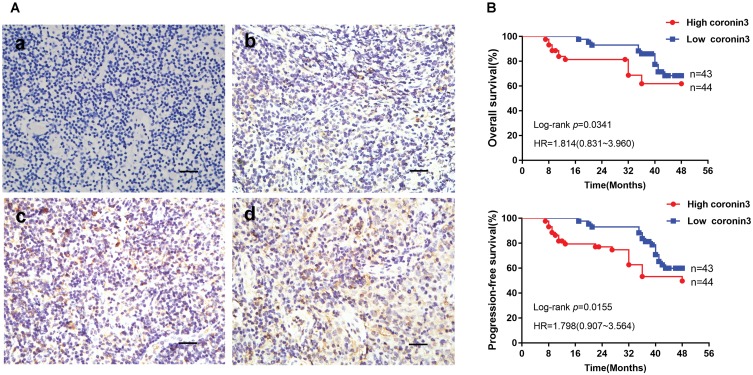
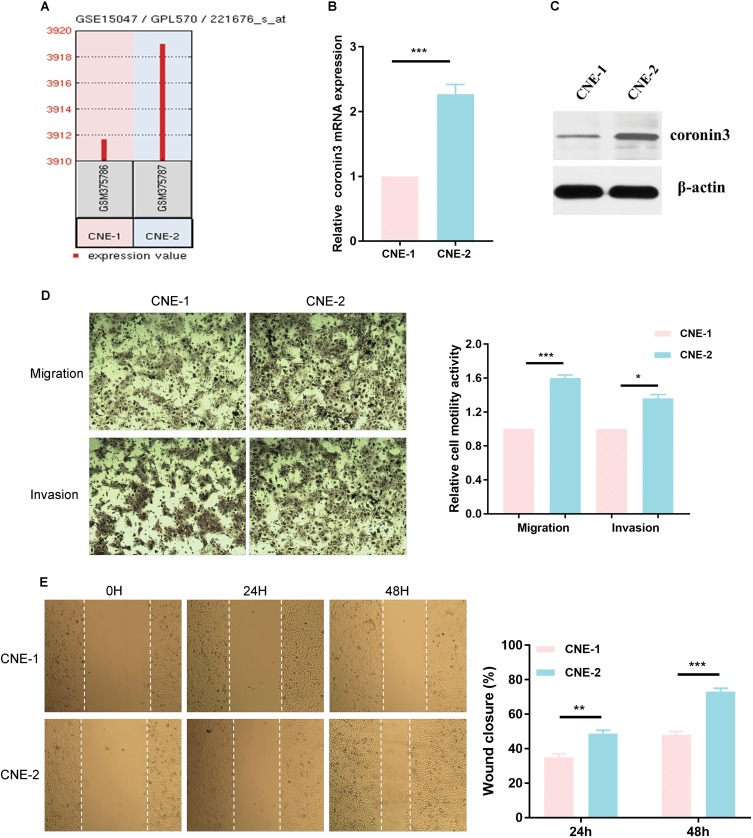
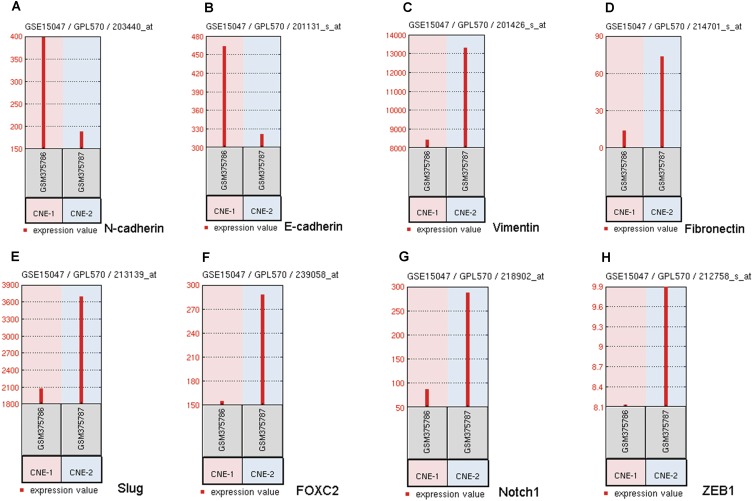
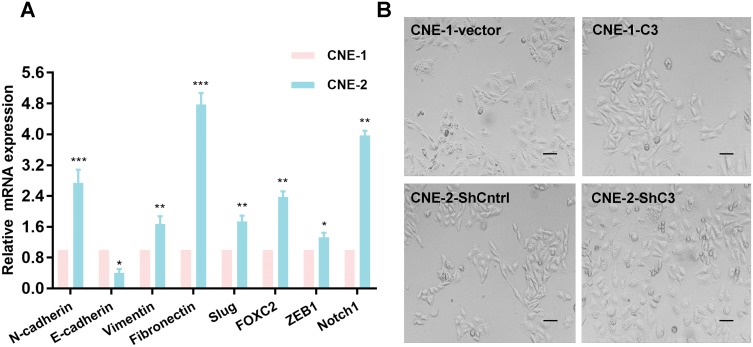
The results verified our original hypothesis. CORO1C was overexpressed in both NPC cell lines and clinical specimens, in both public datasets and our own samples. NPC patients with lower CORO1C expression levels in primary cancer tissues had longer OS (hazard ratio [HR] 1.814, 95% CI 0.831-3.960, p=0.0341) and PFS (HR 1.798, 95% CI 0.907-3.564, p=0.0155), indicating that it could be used as a prognostic biomarker. It was also confirmed that CORO1C enhanced cells' migration and invasion abilities, by inducing morphological and marker changes typical of EMT. Finally, we found that expression was correlated with and regulated CDH11 expression in NPC cell lines.
Our study provided evidence for the contribution of CORO1C to NPC metastasis, and indicated that it could be used as a new therapeutic target and prognostic biomarker.
冠蛋白3是一种细胞骨架蛋白,在多种癌症类型的转移中发挥作用。在此,我们阐述其在鼻咽癌(NPC)中的作用,并提出CORO1C通过调节上皮-间质转化(EMT)和CDH11介导细胞迁移和侵袭的一种新的可能机制。
首先,我们利用公开数据集,在细胞系和临床标本中检测了NPC细胞与非NPC细胞之间CORO1C的差异表达。然后,我们研究了其与临床病理因素的关系以及作为预测NPC患者预后生物标志物的潜力。我们还通过上调和下调CORO1C的表达来探讨其对细胞迁移和侵袭行为的影响,并试图确定潜在机制。
结果证实了我们最初的假设。在公开数据集和我们自己的样本中,CORO1C在NPC细胞系和临床标本中均过表达。原发癌组织中CORO1C表达水平较低的NPC患者总生存期更长(风险比[HR]1.814,95%置信区间0.831 - 3.960,p = 0.0341),无进展生存期更长(HR 1.798,95%置信区间0.907 - 3.564,p = 0.0155),表明它可作为一种预后生物标志物。还证实CORO1C通过诱导EMT典型的形态和标志物变化增强细胞的迁移和侵袭能力。最后,我们发现其表达与NPC细胞系中CDH11的表达相关并对其有调节作用。
我们的研究为CORO1C在NPC转移中的作用提供了证据,并表明它可作为一个新的治疗靶点和预后生物标志物。