Atluri Venkata Subba Rao, Tiwari Sneham, Rodriguez Melisa, Kaushik Ajeet, Yndart Adriana, Kolishetti Nagesh, Yatham Mohan, Nair Madhavan
Department of Immunology and Nano-Medicine, Institute of NeuroImmune Pharmacology, Herbert Wertheim College of Medicine, Florida International University, Miami, FL, United States.
Division of Sciences, Art, & Mathematics, Department of Natural Sciences, Florida Polytechnic University, Lakeland, FL, United States.
Front Aging Neurosci. 2020 Jan 15;11:342. doi: 10.3389/fnagi.2019.00342. eCollection 2019.
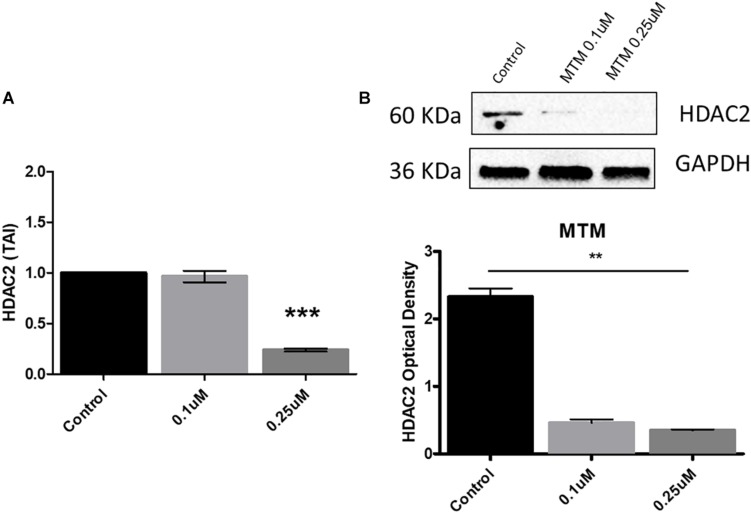
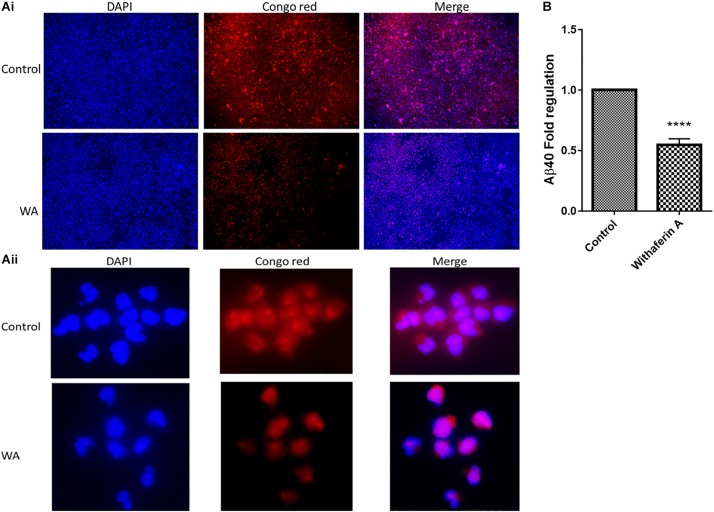
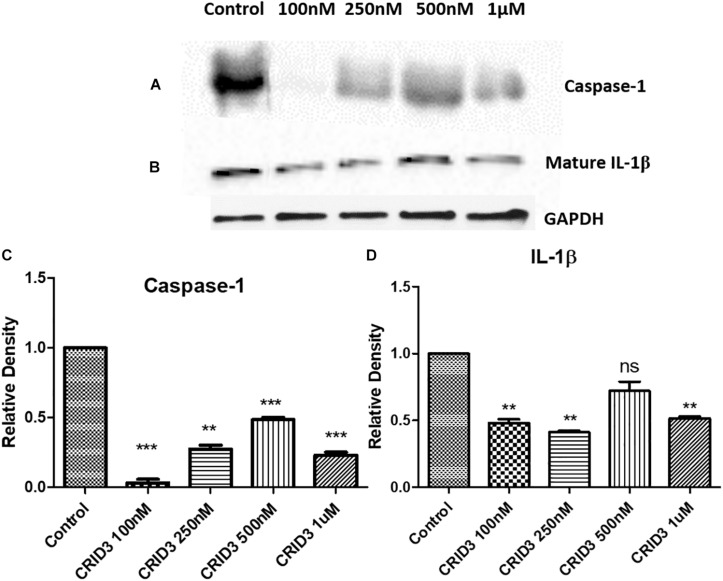
Alzheimer's disease (AD) is a growing global threat to healthcare in the aging population. In the USA alone, it is estimated that one in nine persons over the age of 65 years is living with AD. The pathology is marked by the accumulation of amyloid-beta (Aβ) deposition in the brain, which is further enhanced by the neuroinflammatory process. Nucleotide-binding oligomerization domain, leucine rich repeat and pyrin domain containing 3 (NLRP3) and nuclear factor kappa-light-chain-enhancer of activated B cells (NF-κB) are the major neuroinflammatory pathways that intensify AD pathogenesis. Histone deacetylase 2 (HDAC2)-mediated epigenetic mechanisms play a major role in the genesis and neuropathology of AD. Therefore, therapeutic drugs, which can target Aβ production, NLRP3 activation, and HDAC2 levels, may play a major role in reducing Aβ levels and the prevention of associated neuropathology of AD. In this study, we demonstrate that withaferin A (WA), an extract from plant, significantly inhibits the Aβ production and NF-κB associated neuroinflammatory molecules' gene expression. Furthermore, we demonstrate that cytokine release inhibitory drug 3 (CRID3), an inhibitor of NLRP3, significantly prevents inflammasome-mediated gene expression in our AD model system. We have also observed that mithramycin A (MTM), an HDAC2 inhibitor, significantly upregulated the synaptic plasticity gene expression and downregulated HDAC2 in SH-SY5Y cells overexpressing amyloid precursor protein (SH-APP cells). Therefore, the introduction of these agents targeting Aβ production, NLRP3-mediated neuroinflammation, and HDAC2 levels will have a translational significance in the prevention of neuroinflammation and associated neurodegeneration in AD patients.
阿尔茨海默病(AD)对老年人群的医疗保健构成了日益严重的全球威胁。仅在美国,据估计65岁以上的人群中每九人就有一人患有AD。其病理特征是大脑中β-淀粉样蛋白(Aβ)沉积的积累,神经炎症过程会进一步加剧这种沉积。核苷酸结合寡聚化结构域、富含亮氨酸重复序列和含pyrin结构域的蛋白3(NLRP3)以及活化B细胞的核因子κB轻链增强子(NF-κB)是加剧AD发病机制的主要神经炎症途径。组蛋白去乙酰化酶2(HDAC2)介导的表观遗传机制在AD的发生和神经病理学中起主要作用。因此,能够靶向Aβ生成、NLRP3激活和HDAC2水平的治疗药物,可能在降低Aβ水平和预防AD相关神经病理学方面发挥重要作用。在本研究中,我们证明了从植物中提取的白英素A(WA)能显著抑制Aβ生成以及与NF-κB相关的神经炎症分子的基因表达。此外,我们证明了NLRP3抑制剂细胞因子释放抑制药物3(CRID3)能在我们的AD模型系统中显著预防炎性小体介导的基因表达。我们还观察到,HDAC2抑制剂光辉霉素A(MTM)在过表达淀粉样前体蛋白的SH-SY5Y细胞(SH-APP细胞)中显著上调了突触可塑性基因的表达并下调了HDAC2。因此,引入这些靶向Aβ生成、NLRP3介导的神经炎症和HDAC2水平的药物,对于预防AD患者的神经炎症和相关神经退行性变具有转化意义。