Nagy Annamária, Pethő Dávid, Gáll Tamás, Zavaczki Erzsébet, Nyitrai Mónika, Posta József, Zarjou Abolfazl, Agarwal Anupam, Balla György, Balla József
Department of Internal Medicine, Faculty of Medicine, University of Debrecen, Debrecen, Hungary.
Kálmán Laki Doctoral School, University of Debrecen, Debrecen, Hungary.
Front Physiol. 2020 Jan 15;10:1584. doi: 10.3389/fphys.2019.01584. eCollection 2019.
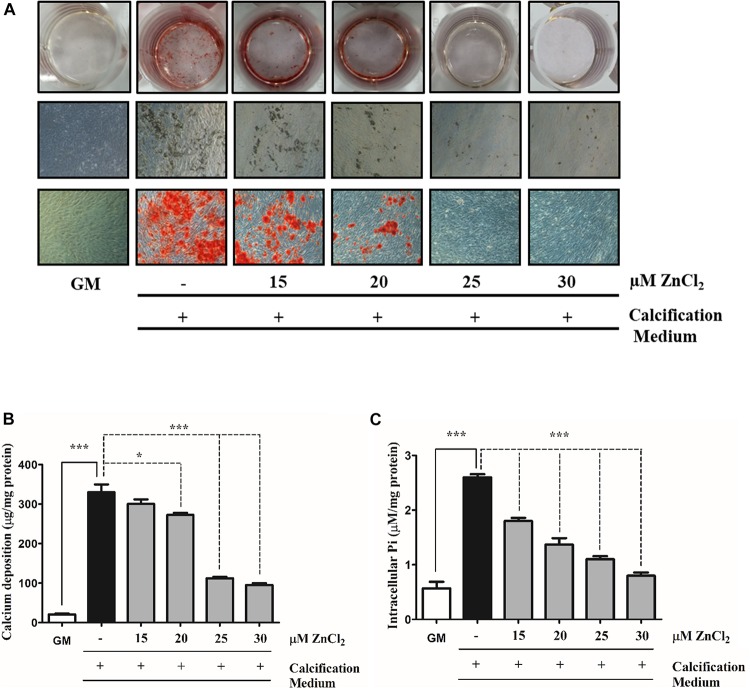
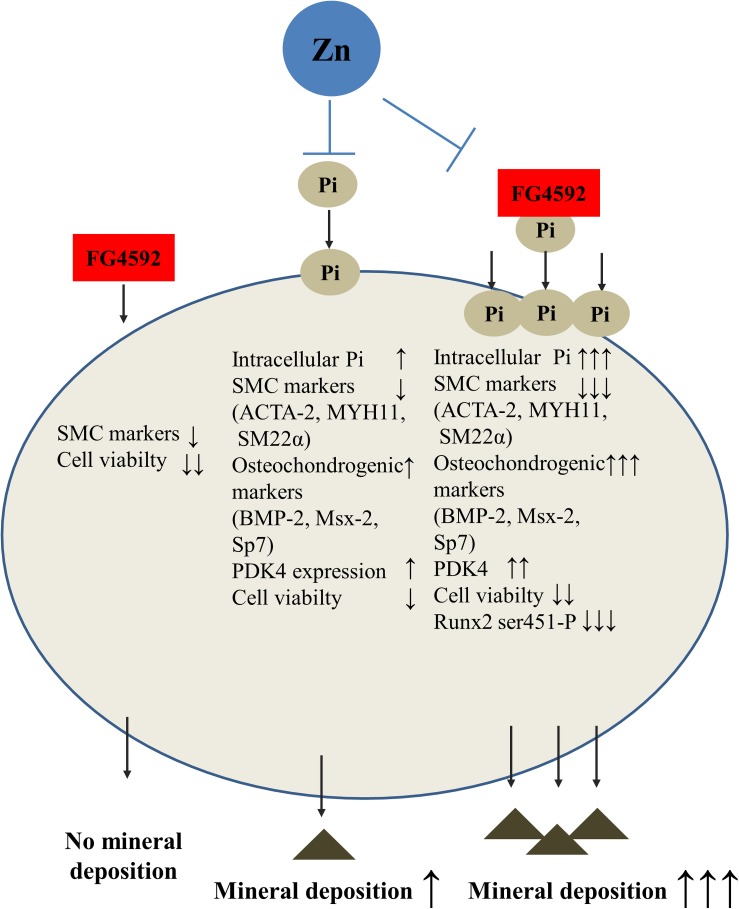
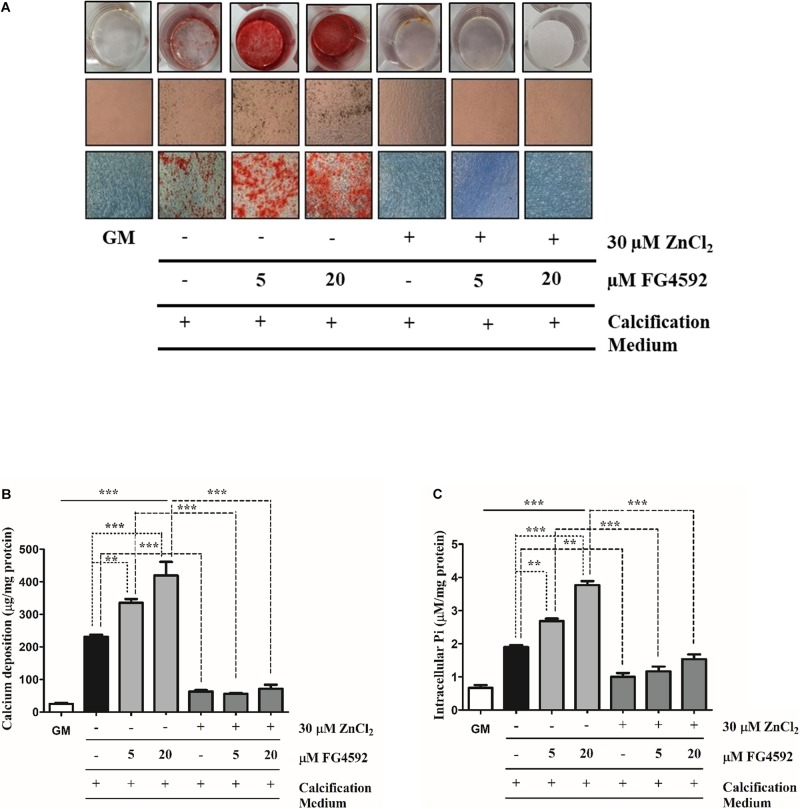
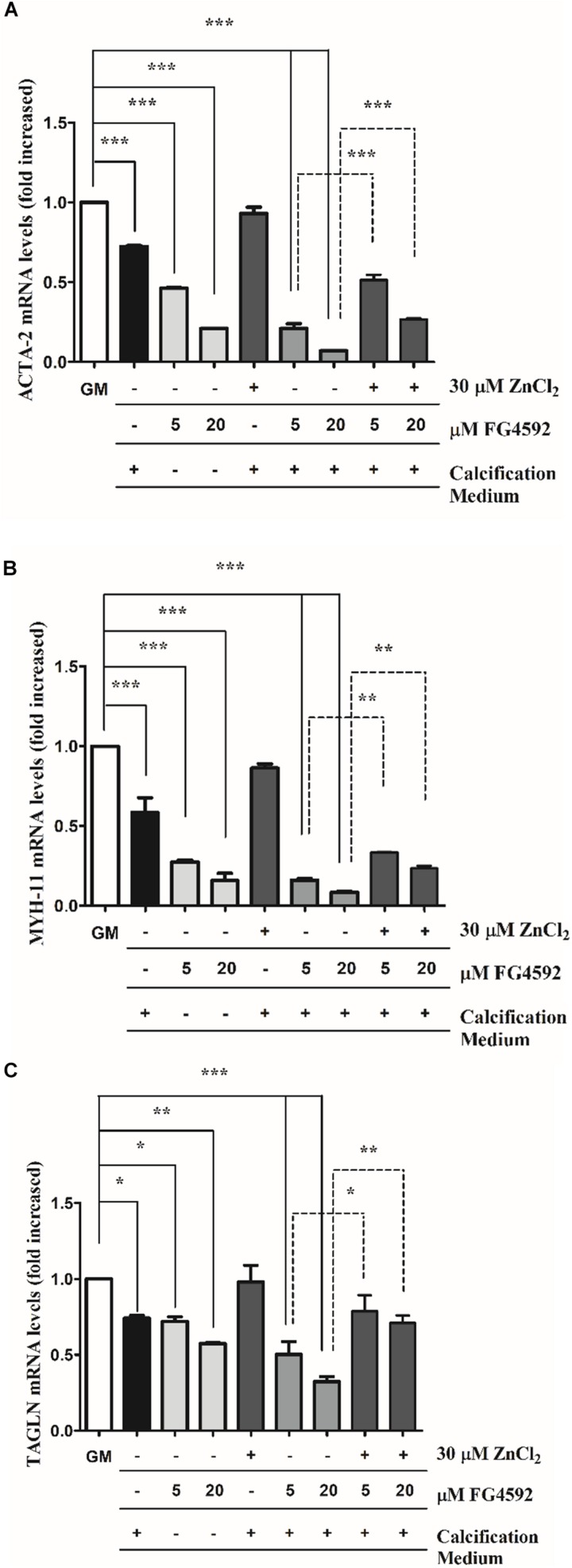
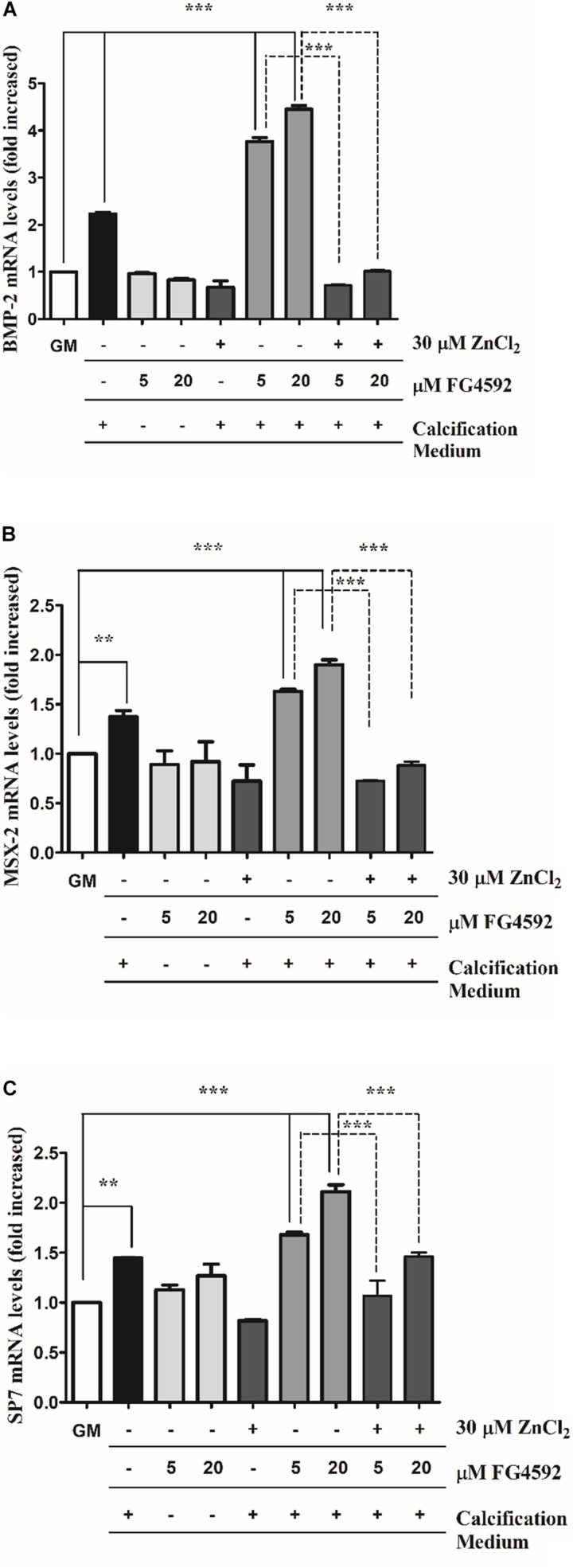
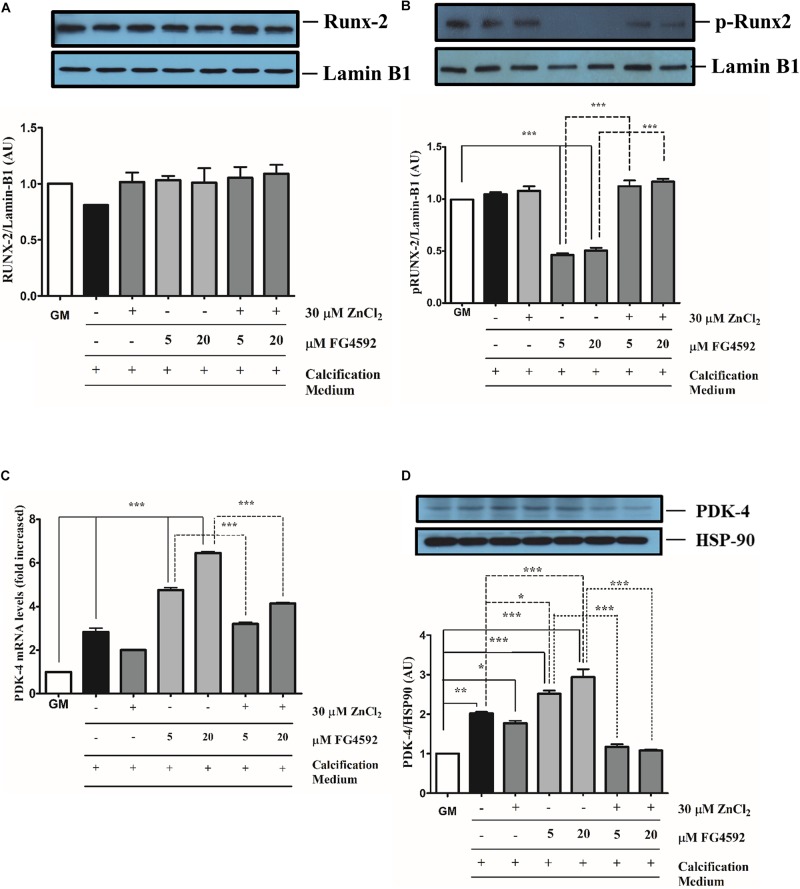
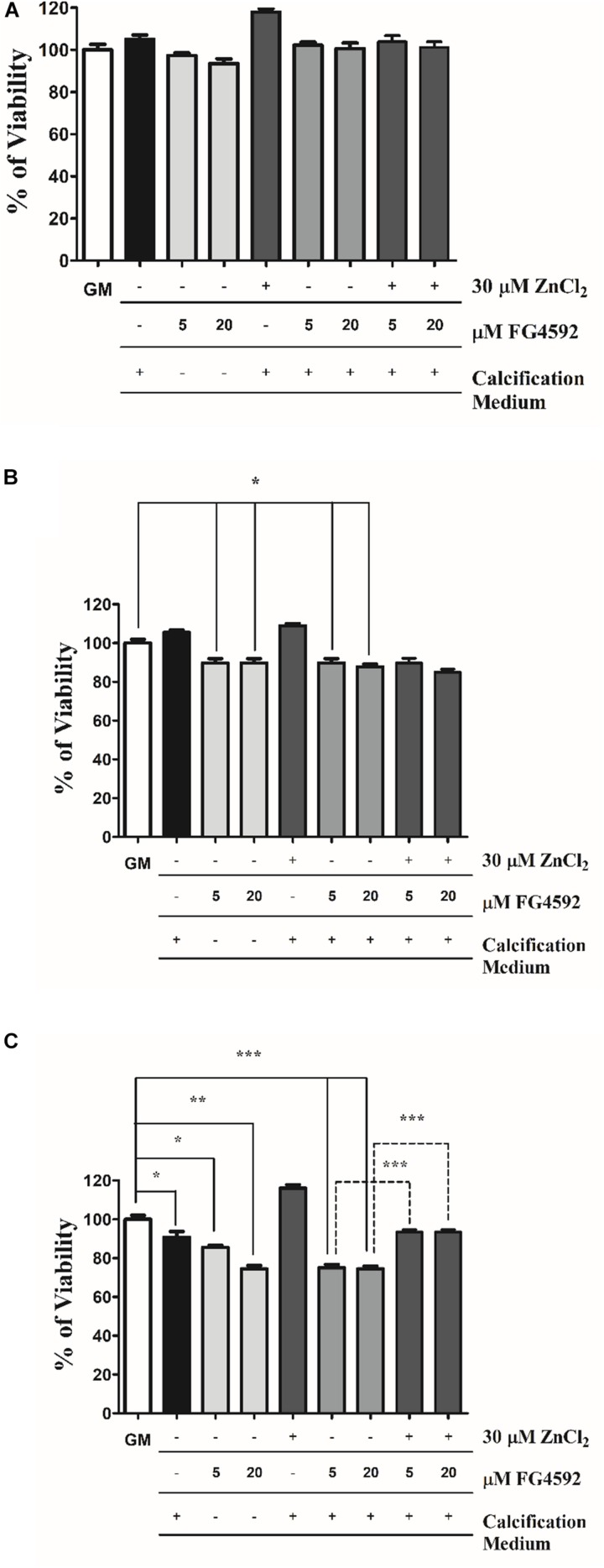
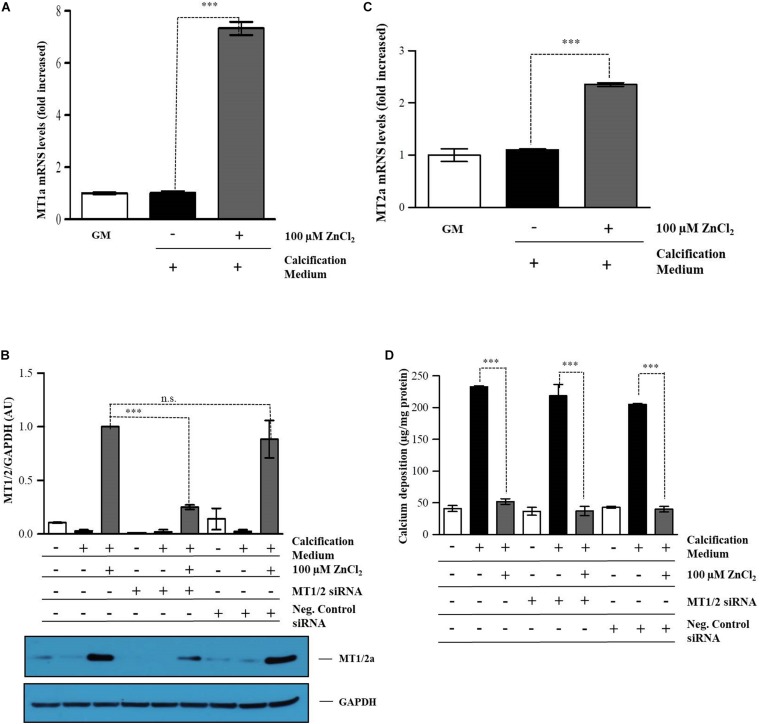
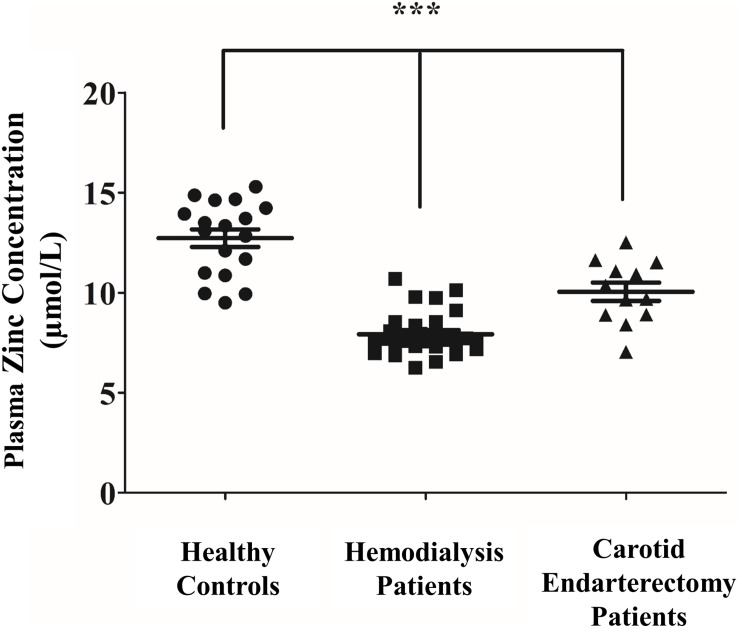
Vascular calcification is a life-threatening clinical condition in chronic kidney disease (CKD) and is associated with reduced zinc serum levels. Anemia is another frequent complication of CKD. Hypoxia-inducible factor (HIF) stabilizers, also known as HIF prolyl hydroxylase inhibitors (PHI), are promising candidates to treat CKD-associated anemia by increasing erythropoietin synthesis. Recent evidence suggests that HIFs play a pivotal role in vascular calcification. Our study explored feasible impacts of HIF PHI on phosphate (Pi)-induced calcification of vascular smooth muscle cells (VSMCs) and tested whether zinc might inhibit this mineralization process. Treatment of VSMCs with PHI aggravated Pi-induced calcium deposition and Pi uptake. PHI promoted Pi-induced loss of smooth muscle cell markers (ACTA-2, MYH11, SM22α) and enhanced osteochondrogenic gene expression (Msx-2, BMP-2, Sp7) triggering osteochondrogenic phenotypic switch of VSMCs. These effects of PHI paralleled with increased pyruvate dehydrogenase kinase 4 (PDK4) expression, decreased Runx2 Ser451 phosphorylation, and reduced cell viability. Zinc inhibited Pi-induced mineralization of VSMCs in a dose-dependent manner and also attenuated the pro-calcification effect of PHI in Pi-induced mineralization. Zinc inhibited osteochondrogenic phenotypic switch of VSMCs reflected by lowering Pi uptake, decreasing the expressions of Msx-2, BMP-2, and Sp7 as well as the loss of smooth muscle cell-specific markers. Zinc preserved phosphorylation state of Runx2 Ser451, decreased PDK4 level, and restored cell viability. PHI alone reduced the expression of smooth muscle markers without inducing mineralization, which was also inhibited by zinc. In addition, we observed a significantly lower serum zinc level in CKD as well as in patients undergoing carotid endarterectomy compared to healthy individuals. Conclusion - PHI promoted the loss of smooth muscle markers and augmented Pi-induced osteochondrogenic phenotypic switch leading to VSMCs calcification. This mineralization process was attenuated by zinc. Enhanced vascular calcification is a potential risk factor during PHI therapy in CKD which necessitates the strict follow up of vascular calcification and zinc supplementation.
血管钙化是慢性肾脏病(CKD)中一种危及生命的临床病症,且与血清锌水平降低有关。贫血是CKD的另一种常见并发症。缺氧诱导因子(HIF)稳定剂,也称为HIF脯氨酰羟化酶抑制剂(PHI),是通过增加促红细胞生成素合成来治疗CKD相关性贫血的有前景的候选药物。最近的证据表明,HIF在血管钙化中起关键作用。我们的研究探讨了HIF PHI对磷酸盐(Pi)诱导的血管平滑肌细胞(VSMC)钙化的可能影响,并测试了锌是否可能抑制这种矿化过程。用PHI处理VSMC会加重Pi诱导的钙沉积和Pi摄取。PHI促进了Pi诱导的平滑肌细胞标志物(ACTA-2、MYH11、SM22α)的丢失,并增强了骨软骨生成基因表达(Msx-2、BMP-2、Sp7),引发VSMC的骨软骨生成表型转换。PHI的这些作用与丙酮酸脱氢酶激酶4(PDK4)表达增加、Runx2 Ser451磷酸化减少以及细胞活力降低平行。锌以剂量依赖的方式抑制Pi诱导的VSMC矿化,并且还减弱了PHI在Pi诱导矿化中的促钙化作用。锌通过降低Pi摄取、降低Msx-2、BMP-2和Sp7的表达以及平滑肌细胞特异性标志物的丢失来抑制VSMC的骨软骨生成表型转换。锌维持Runx2 Ser451的磷酸化状态,降低PDK4水平,并恢复细胞活力。单独使用PHI可降低平滑肌标志物的表达而不诱导矿化,这也被锌抑制。此外,我们观察到与健康个体相比,CKD患者以及接受颈动脉内膜切除术的患者血清锌水平显著降低。结论——PHI促进了平滑肌标志物的丢失,并增强了Pi诱导的骨软骨生成表型转换,导致VSMC钙化。锌减弱了这种矿化过程。在CKD患者接受PHI治疗期间,血管钙化增强是一个潜在的危险因素,这需要对血管钙化进行严格随访并补充锌。