Marine Microbial Pathogenesis and Vaccinology Lab, Department of Ocean Sciences, Memorial University of Newfoundland, St. John's, NL, Canada.
Department of Ocean Sciences, Memorial University of Newfoundland, Ocean Science Centre, St. John's, NL, Canada.
Front Immunol. 2020 Jan 14;10:3011. doi: 10.3389/fimmu.2019.03011. eCollection 2019.
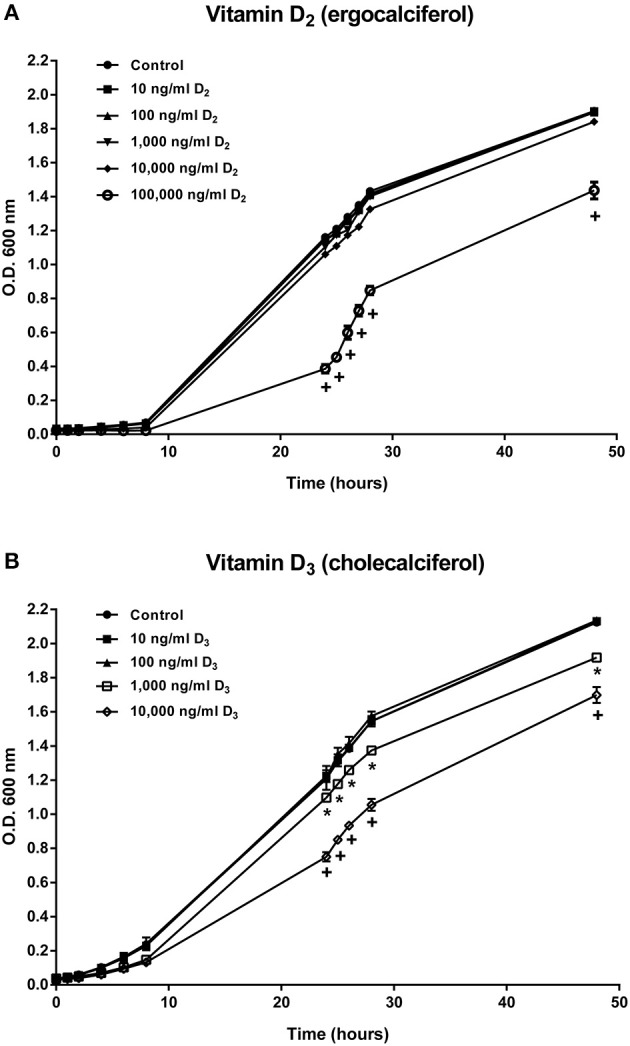
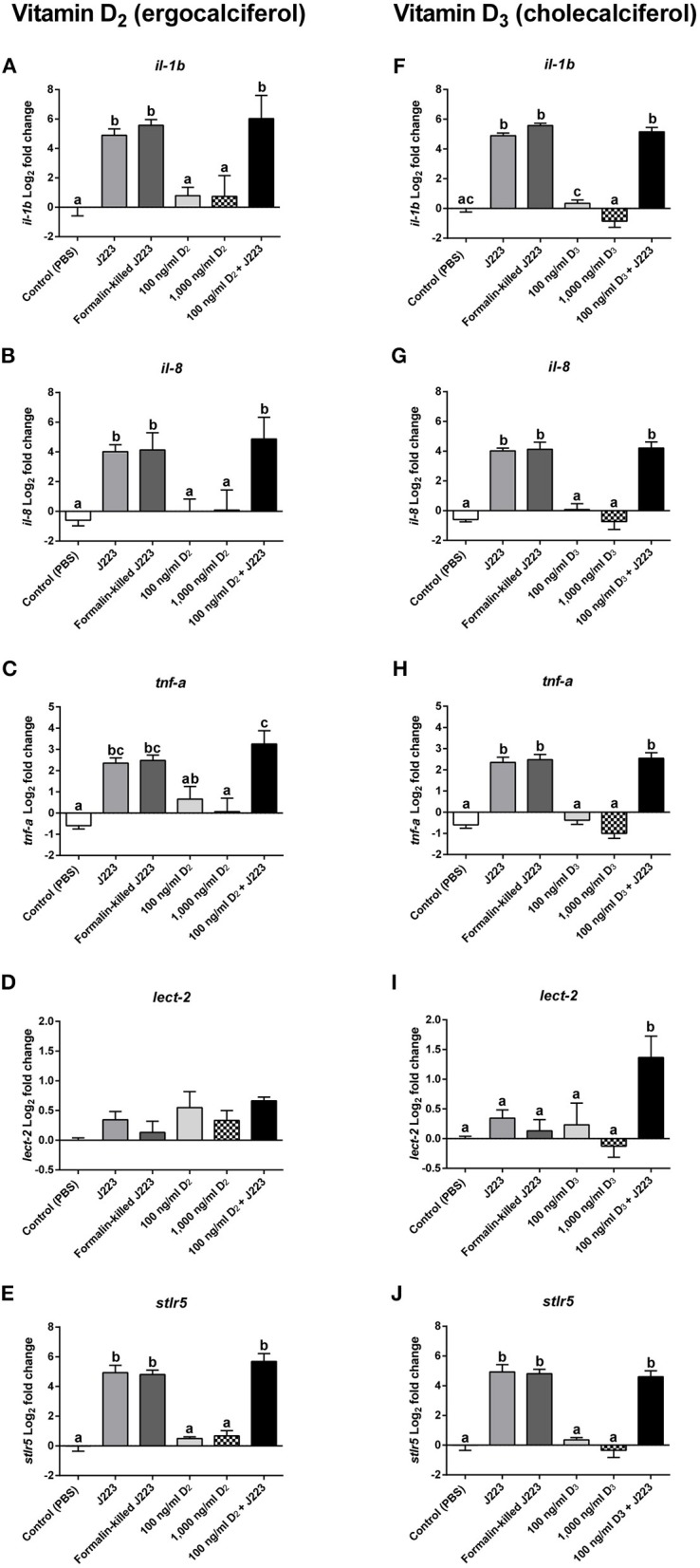
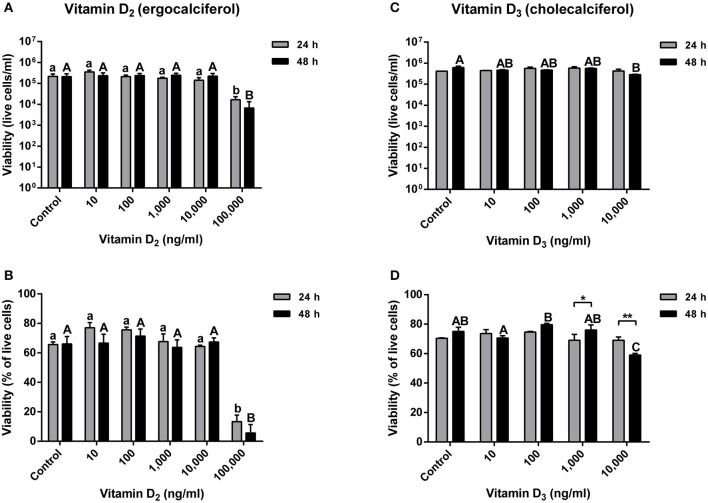
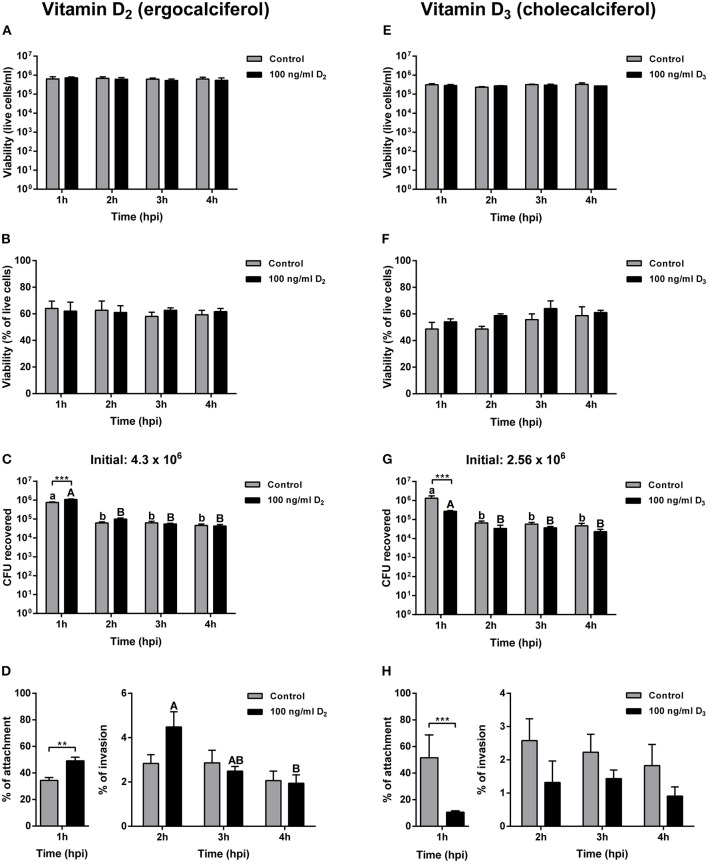
Vitamin D (ergocalciferol) and vitamin D (cholecalciferol) are fat-soluble secosteroid hormones obtained from plant and animal sources, respectively. Fish incorporates vitamin D and D through the diet. In mammals, vitamin D forms are involved in mineral metabolism, cell growth, tissue differentiation, and antibacterial immune response. Vitamin D is an essential nutrient in aquafeeds for finfish. However, the influence of vitamin D on fish cell immunity has not yet been explored. Here, we examined the effects of vitamin D and vitamin D on primary macrophage immune response to subspecies infection under conditions. We determined that high concentrations of vitamin D (100,000 ng/ml) and D (10,000 ng/ml) affect the growth of and decrease the viability of primary macrophages. In addition, we determined that primary macrophages pre-treated with a biologically relevant concentration of vitamin D for 24 h showed a decrease of infection. In contrast, vitamin D did not influence the antibacterial activity of the macrophages infected with . Vitamin D and D did not influence the expression of canonical genes related to innate immune response. On the other hand, we found that up-regulated the expression of several canonical genes and suppressed the expression of () gene, involved in neutrophil recruitment. Primary macrophages pre-treated for 24 h with vitamin D counteracted this immune suppression and up-regulated the transcription of . Our results suggest that vitamin D affects attachment to the primary macrophages, and as a consequence, the invasion decreased. Moreover, our study shows that the positive effects of vitamin D on fish cell immunity seem to be related to the innate immunity mechanisms. We did not identify positive effects of vitamin D on fish cell immunity. In conclusion, we determined that the inactive form of vitamin D, cholecalciferol, induced anti-bacterial innate immunity pathways in Atlantic salmon primary macrophages, suggesting that its utilization as a component of a healthy aquafeed diet in Atlantic salmon could enhance the immune response against .
维生素 D(麦角钙化醇)和维生素 D(胆钙化醇)分别是从植物和动物来源获得的脂溶性甾体激素。鱼类通过饮食摄取维生素 D 和 D。在哺乳动物中,维生素 D 形式参与矿物质代谢、细胞生长、组织分化和抗菌免疫反应。维生素 D 是鱼类饲料中的必需营养素。然而,维生素 D 对鱼类细胞免疫的影响尚未得到探索。在这里,我们研究了维生素 D 和维生素 D 在 亚种感染条件下对原代巨噬细胞免疫反应的影响。我们发现,高浓度的维生素 D(100000ng/ml)和 D(10000ng/ml)会影响 的生长并降低原代巨噬细胞的活力。此外,我们发现,用生物相关浓度的维生素 D 预处理 24 小时的原代巨噬细胞显示出 的感染减少。相比之下,维生素 D 不影响感染 的 巨噬细胞的抗菌活性。维生素 D 和 D 不影响与先天免疫反应相关的典型基因的表达。另一方面,我们发现 上调了几个典型基因的表达,并抑制了参与中性粒细胞募集的 ()基因的表达。用维生素 D 预处理 24 小时的原代巨噬细胞拮抗了这种免疫抑制作用,并上调了 的转录。我们的结果表明,维生素 D 影响 与原代巨噬细胞的附着,因此, 的入侵减少。此外,我们的研究表明,维生素 D 对鱼类细胞免疫的积极影响似乎与鱼类细胞先天免疫机制有关。我们没有发现维生素 D 对鱼类细胞免疫的积极影响。总之,我们确定维生素 D 的无活性形式胆钙化醇在大西洋鲑原代巨噬细胞中诱导了抗细菌先天免疫途径,表明将其用作大西洋鲑健康水产饲料的成分可能会增强对 的免疫反应。