Sun Wanqing, Wang Yishi, Zheng Yang, Quan Nanhu
1Cardiovascular Center, First Affiliated Hospital of Jilin University, Changchun, Jilin, China.
2Fuwai Hospital, National Center of Cardiovascular Diseases, Beijing, China.
Aging Dis. 2020 Feb 1;11(1):154-163. doi: 10.14336/AD.2019.0320. eCollection 2020 Feb.
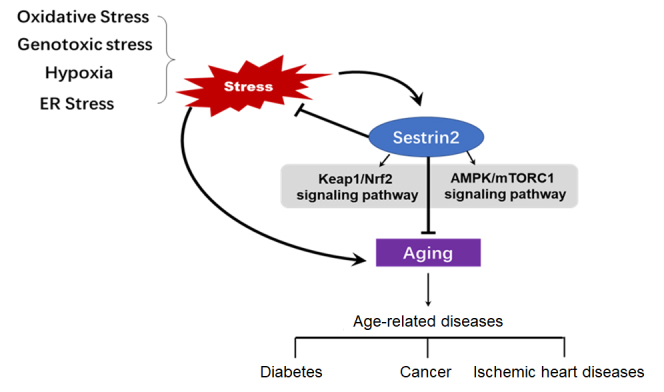
Sestrins (Sesns), including Sesn1, Sesn2, and Sesn3, are cysteine sulfinyl reductases that play critical roles in the regulation of peroxide signaling and oxidant defense. Sesn2 is thought to regulate cell growth, metabolism, and survival response to various stresses, and act as a positive regulator of autophagy. The anti-oxidative and anti-aging roles of Sesn2 have been the focus of many recent studies. The role of Sesn2 in cellular metabolism and cardiovascular and age-related diseases must be analyzed and discussed. In this review, we discuss the physiological and pathophysiological roles and signaling pathways of Sesn2 in different stress-related conditions, such as oxidative stress, genotoxic stress, and hypoxia. Sesn2 is also involved in aging, cancer, diabetes, and ischemic heart disease. Understanding the actions of Sesn2 in cell metabolism and age-related diseases will provide new evidence for future experimental research and aid in the development of novel therapeutic strategies for Sesn2-related diseases.
硒蛋白(Sesns),包括Sesn1、Sesn2和Sesn3,是半胱氨酸亚砜还原酶,在过氧化物信号传导和抗氧化防御调节中起关键作用。Sesn2被认为可调节细胞生长、代谢以及对各种应激的存活反应,并作为自噬的正向调节因子。Sesn2的抗氧化和抗衰老作用一直是近期许多研究的重点。必须分析和讨论Sesn2在细胞代谢以及心血管疾病和与年龄相关疾病中的作用。在本综述中,我们讨论了Sesn2在不同应激相关条件下,如氧化应激、基因毒性应激和缺氧中的生理和病理生理作用及信号通路。Sesn2还与衰老、癌症、糖尿病和缺血性心脏病有关。了解Sesn2在细胞代谢和与年龄相关疾病中的作用,将为未来的实验研究提供新证据,并有助于开发针对Sesn2相关疾病的新型治疗策略。