Ros Gloria, Pegoraro Silvia, De Angelis Paolo, Sgarra Riccardo, Zucchelli Silvia, Gustincich Stefano, Manfioletti Guidalberto
Department of Life Sciences, University of Trieste, Trieste, Italy.
Department of Health Sciences, Center for Autoimmune and Allergic Diseases, Interdisciplinary Research Center of Autoimmune Diseases, University of Piemonte Orientale, Novara, Italy.
Front Oncol. 2020 Jan 17;9:1526. doi: 10.3389/fonc.2019.01526. eCollection 2019.
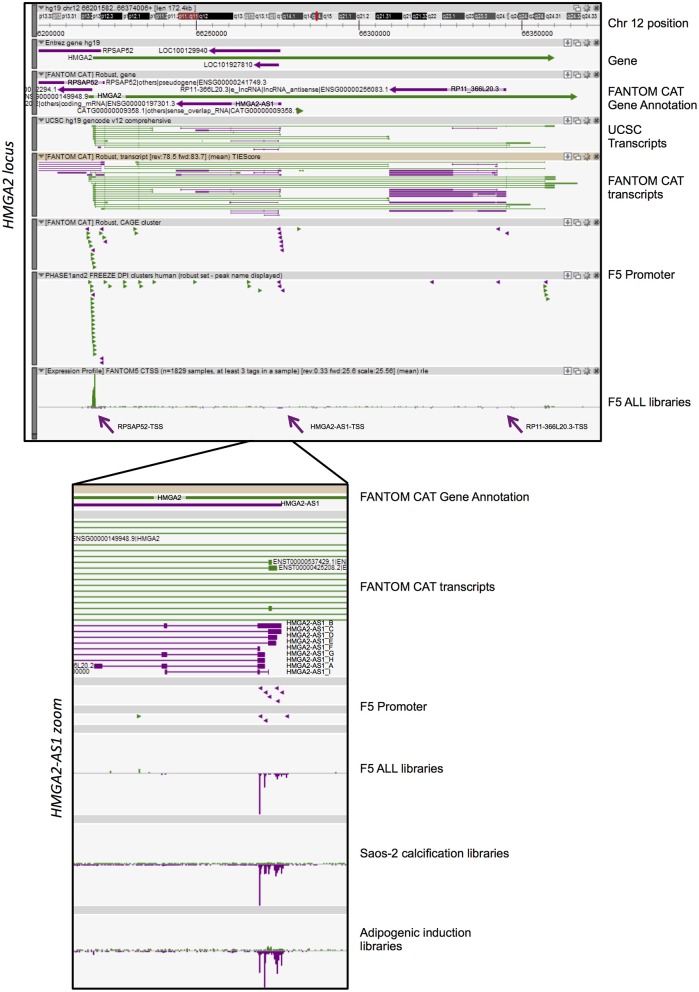
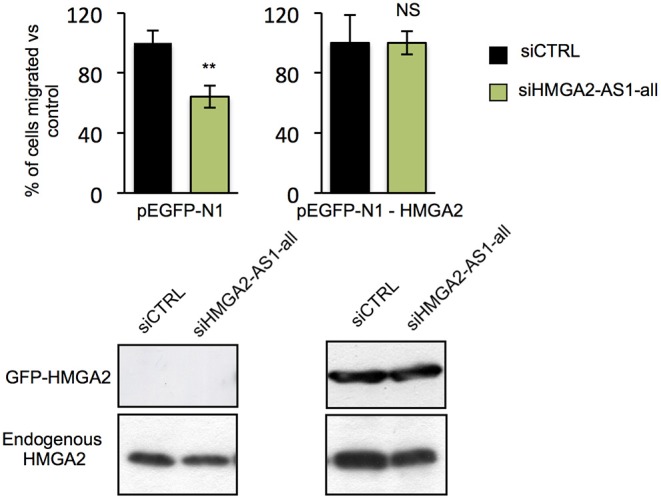
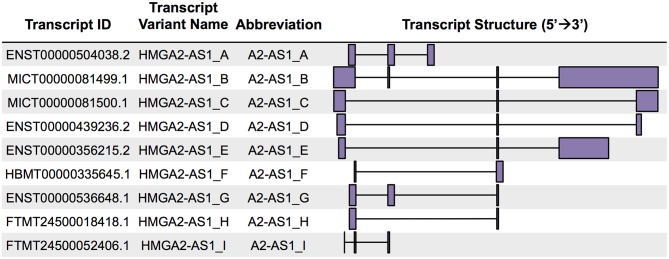
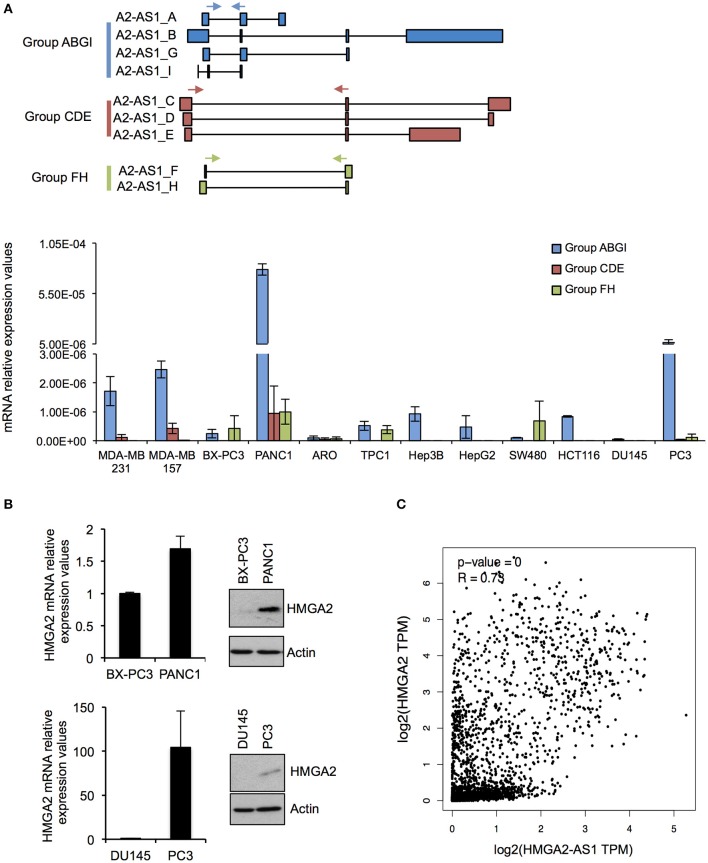
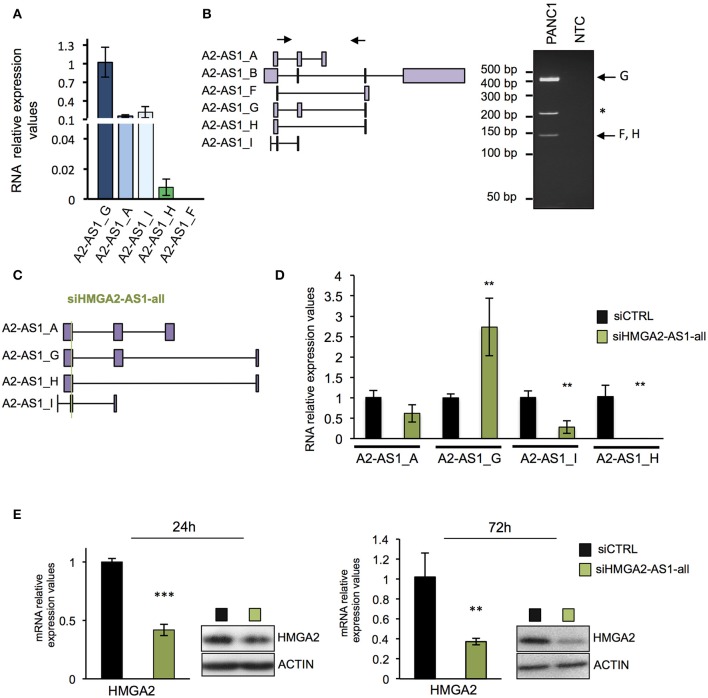
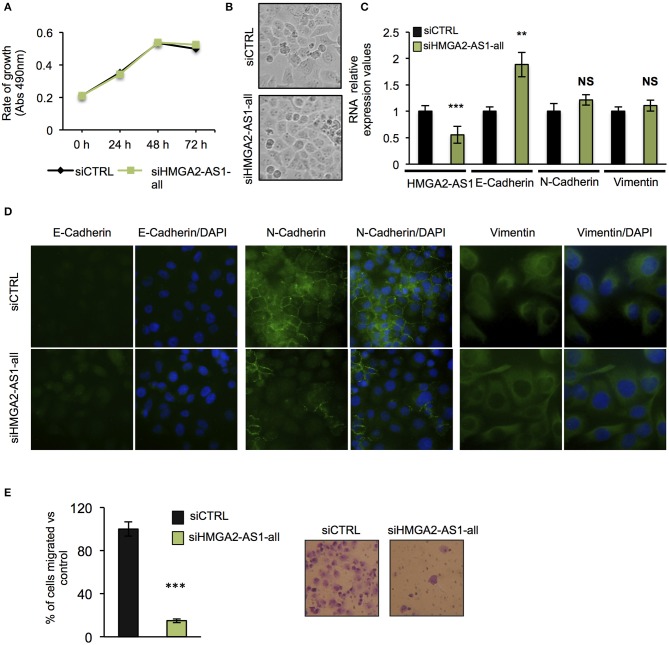
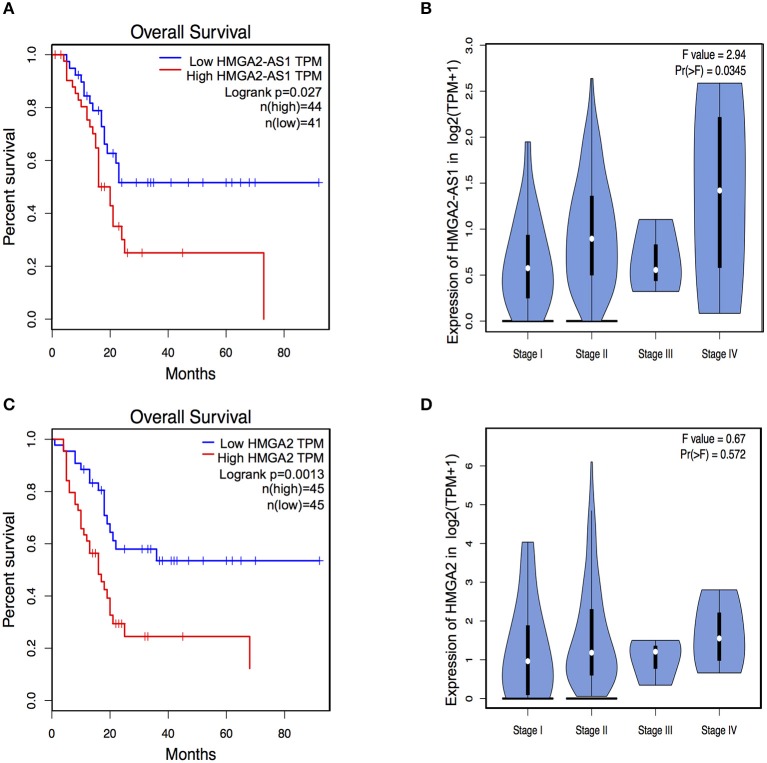
Natural antisense long non-coding RNAs (lncRNAs) are regulatory RNAs transcribed from the opposite strand of either protein coding or non-coding genes, able to modulate their own sense gene expression. Hence, their dysregulation can lead to pathologic processes. Cancer is a complex class of diseases determined by the aberrant expression of a variety of factors, among them, the oncofetal chromatin architectural proteins High Mobility Group A (HMGA) modulate several cancer hallmarks. Thus, we decided to investigate the presence of natural antisense lncRNAs in and , and their possible involvement in gene expression regulation. We used FANTOM5 data resources, FANTOM-CAT genome browser and Zenbu visualization tool, which employ 1,829 human CAGE and RNA-sequencing libraries, to determine expression, ontology enrichment, and dynamic regulation of natural antisense lncRNAs in and . We then performed qRT-PCR in different cancer cell lines to validate the existence of HMGA2-AS1 transcripts. We depleted HMGA2-AS1 transcripts with siRNAs and investigated HMGA2 expression by qRT-PCR and western blot analyses. Moreover, we evaluated cell viability and migration by MTS and transwell assays, and EMT markers by qRT-PCR and immunofluorescence. Furthermore, we used bioinformatics approaches to evaluate HMGA2 and HMGA2-AS1 correlation and overall survival in tumor patients. We found the presence of a promoter-associated lncRNA () in the gene and three antisense genes (, and ) in the gene. We studied the uncharacterized HMGA2-AS1 transcripts, validating their existence in cancer cell lines and observing a positive correlation between HMGA2 and HMGA2-AS1 expression in a cancer-derived patient dataset. We showed that HMGA2-AS1 transcripts positively modulate HMGA2 expression and migration properties of PANC1 cells through HMGA2. In addition, Kaplan-Meier analysis showed that high level of HMGA2-AS1 is a negative prognostic factor in pancreatic cancer patients. Our results describe novel antisense lncRNAs associated with and genes. In particular, we demonstrate that HMGA2-AS1 is involved in the regulation of its own sense gene expression, mediating tumorigenesis. Thus, we highlight a new layer of complexity in the regulation of HMGA2 expression, providing new potential targets for cancer therapy.
天然反义长链非编码RNA(lncRNA)是从蛋白质编码基因或非编码基因的反义链转录而来的调控RNA,能够调节其正义基因的表达。因此,它们的失调会导致病理过程。癌症是一类复杂的疾病,由多种因素的异常表达决定,其中,癌胚染色质结构蛋白高迁移率族蛋白A(HMGA)调节多种癌症特征。因此,我们决定研究HMGA2和HMGA1基因中天然反义lncRNA的存在情况,以及它们可能在基因表达调控中的作用。我们使用了FANTOM5数据资源、FANTOM-CAT基因组浏览器和Zenbu可视化工具,这些工具利用了1829个人类CAGE和RNA测序文库,来确定HMGA2和HMGA1基因中天然反义lncRNA的表达、本体富集和动态调控。然后,我们在不同的癌细胞系中进行qRT-PCR,以验证HMGA2-AS1转录本的存在。我们用小干扰RNA(siRNA)耗尽HMGA2-AS1转录本,并通过qRT-PCR和蛋白质免疫印迹分析来研究HMGA2的表达。此外,我们通过MTS和Transwell实验评估细胞活力和迁移能力,并通过qRT-PCR和免疫荧光检测上皮-间质转化(EMT)标志物。此外,我们使用生物信息学方法评估HMGA2和HMGA2-AS1的相关性以及肿瘤患者的总生存率。我们在HMGA2基因中发现了一个与启动子相关的lncRNA(HMGA2-AS1),在HMGA1基因中发现了三个反义基因(HMGA1-AS1、HMGA1-AS2和HMGA1-AS3)。我们研究了未表征的HMGA2-AS1转录本,验证了它们在癌细胞系中的存在,并在一个癌症患者数据集中观察到HMGA2和HMGA2-AS1表达之间呈正相关。我们发现HMGA2-AS1转录本通过HMGA2正向调节PANC1细胞中HMGA2的表达和迁移特性。此外,Kaplan-Meier分析表明,高水平的HMGA2-AS1是胰腺癌患者的不良预后因素。我们的研究结果描述了与HMGA2和HMGA1基因相关的新型反义lncRNA。特别是,我们证明了HMGA2-AS1参与了其正义基因表达的调控,介导肿瘤发生。因此,我们强调了HMGA2表达调控中的一个新的复杂层面,为癌症治疗提供了新的潜在靶点。