Max Planck Institute for Plant Breeding Research, Carl-von-Linne-Weg 10, 50829, Köln, Germany.
Present Address: UMR AGAP, Univ. Montpellier, INRAE, CIRAD, INSAAE, Montpellier, France.
BMC Plant Biol. 2020 Feb 3;20(1):53. doi: 10.1186/s12870-020-2266-0.
Floral transition initiates reproductive development of plants and occurs in response to environmental and endogenous signals. In Arabidopsis thaliana, this process is accelerated by several environmental cues, including exposure to long days. The photoperiod-dependent promotion of flowering involves the transcriptional induction of FLOWERING LOCUS T (FT) in the phloem of the leaf. FT encodes a mobile protein that is transported from the leaves to the shoot apical meristem, where it forms part of a regulatory complex that induces flowering. Whether FT also has biological functions in leaves of wild-type plants remains unclear.
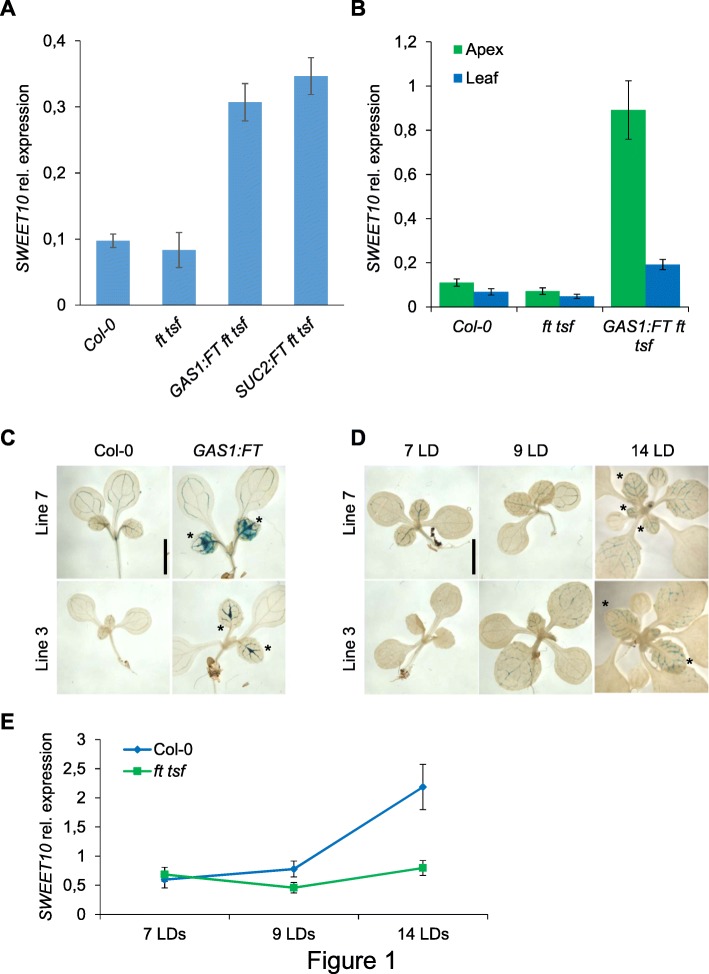
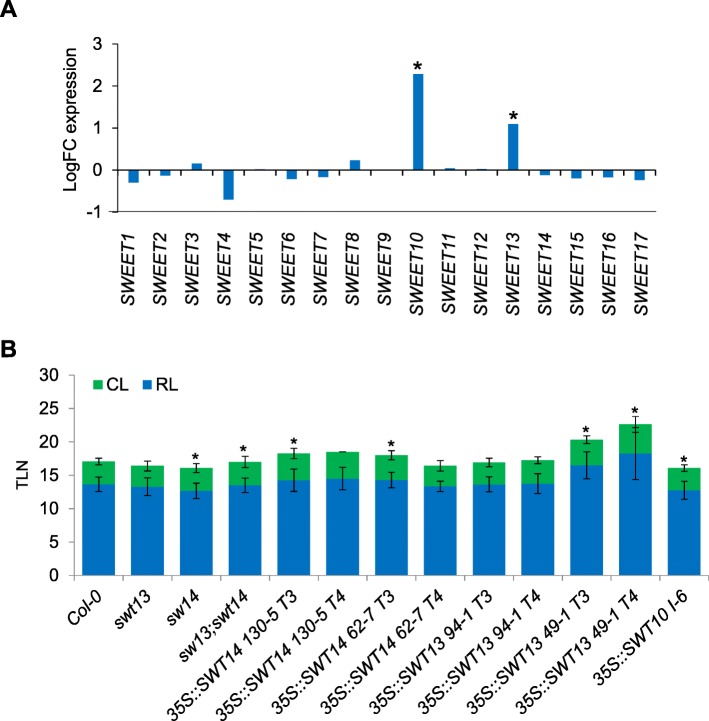
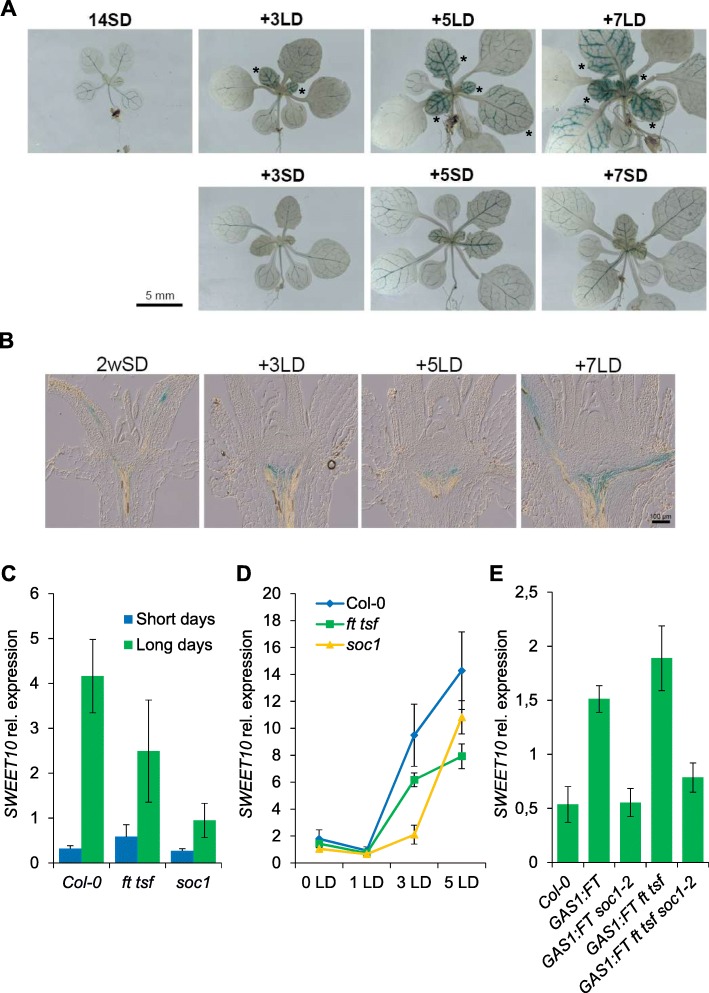
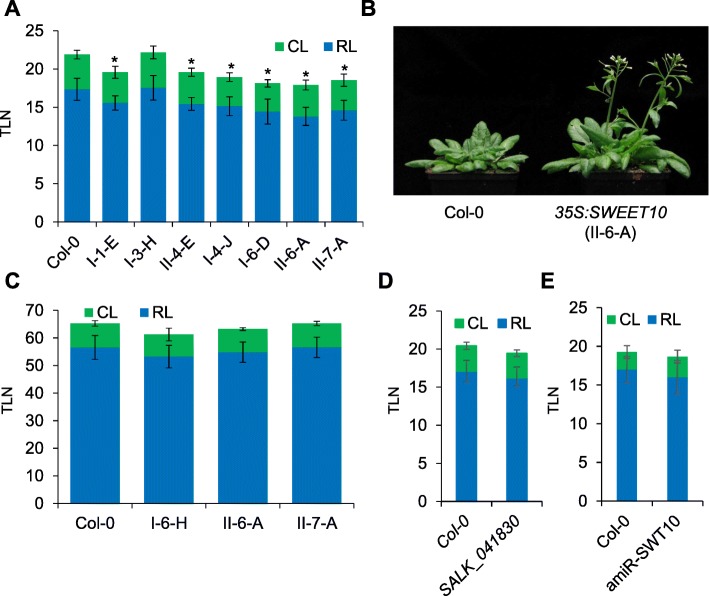
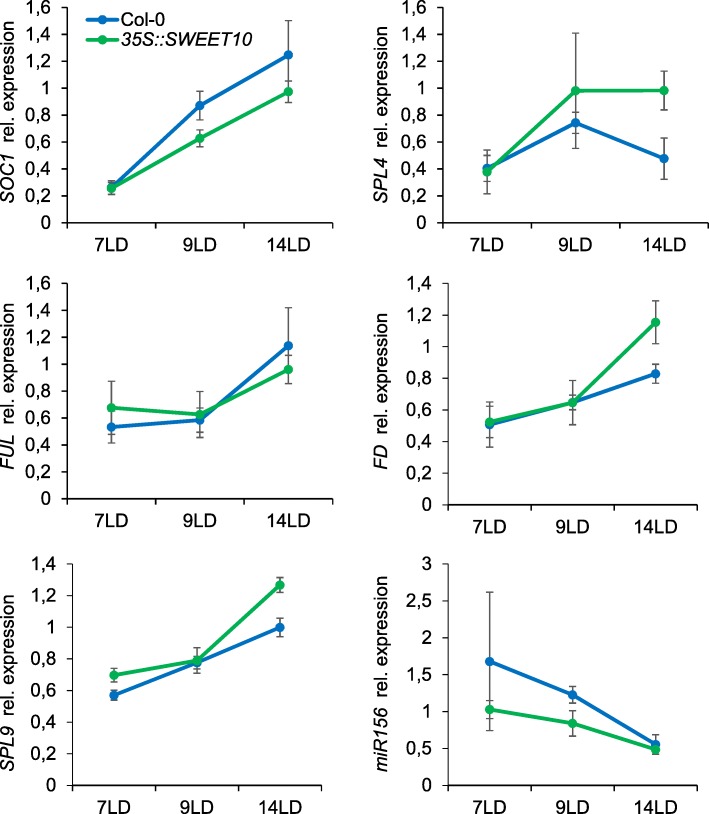
In order to address this issue, we first studied the leaf transcriptomic changes associated with FT overexpression in the companion cells of the phloem. We found that FT induces the transcription of SWEET10, which encodes a bidirectional sucrose transporter, specifically in the leaf veins. Moreover, SWEET10 is transcriptionally activated by long photoperiods, and this activation depends on FT and one of its earliest target genes SUPPRESSOR OF CONSTANS OVEREXPRESSION 1 (SOC1). The ectopic expression of SWEET10 causes early flowering and leads to higher levels of transcription of flowering-time related genes in the shoot apex.
Collectively, our results suggest that the FT-signaling pathway activates the transcription of a sucrose uptake/efflux carrier during floral transition, indicating that it alters the metabolism of flowering plants as well as reprogramming the transcription of floral regulators in the shoot meristem.
花的转变启动了植物的生殖发育,并对环境和内源性信号做出反应。在拟南芥中,这个过程被几种环境线索加速,包括长日照的暴露。光周期依赖性的促进开花涉及到 FT 在韧皮部的转录诱导。FT 编码一种移动蛋白,它从叶子运输到茎尖分生组织,在那里它形成诱导开花的调节复合物的一部分。FT 是否在野生型植物的叶子中也具有生物学功能尚不清楚。
为了解决这个问题,我们首先研究了 FT 在韧皮部伴胞中超表达与叶片转录组变化相关的问题。我们发现,FT 诱导 SWEET10 的转录,该基因编码一种双向蔗糖转运蛋白,专门在叶片脉中表达。此外,长日照促进 SWEET10 的转录,这种激活依赖于 FT 和其最早的靶基因之一 SOC1。SWEET10 的异位表达导致早期开花,并导致在茎尖中与开花时间相关的基因的转录水平升高。
总之,我们的结果表明,FT 信号通路在花转变过程中激活蔗糖摄取/外排载体的转录,表明它改变了开花植物的代谢,并重新编程了茎尖分生组织中花调节因子的转录。