Department of Cardiology, Affiliated Hospital of Jiaxing University, No.1882 Zhonghuan South Road, Jiaxing, Zhejiang, China.
Department of Cardiology, First Affiliated Hospital of Zhejiang Chinese Medical University, Hangzhou, China.
BMC Cardiovasc Disord. 2020 Feb 3;20(1):49. doi: 10.1186/s12872-020-01354-y.
Our aim was to determine the relationship between the use of fluoroquinolones and the risk of aortic diseases.
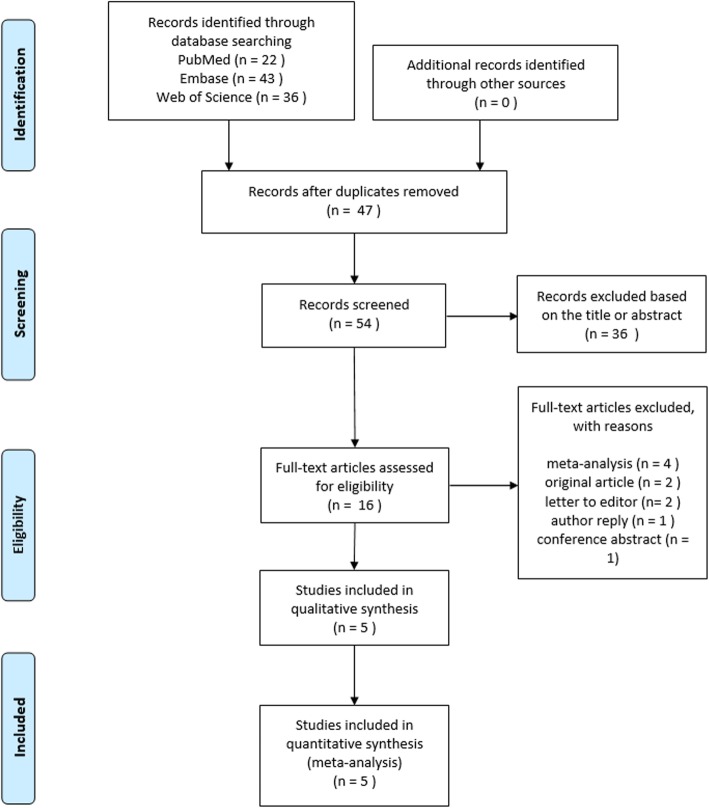
PubMed, EMBASE and the Web of Science were searched from inception to July 6, 2019, to identify observational studies that evaluated the risk of aortic diseases associated in users of fluoroquinolones compared with nonusers or users of other antibiotics. The primary outcome was the first occurrence of aortic diseases. We used the GRADE approach to rate the strength of evidence. We used the inverse variance method random-effect model to estimate the odds ratios (ORs) with 95% CIs, and statistical heterogeneity was assessed by the I statistic.
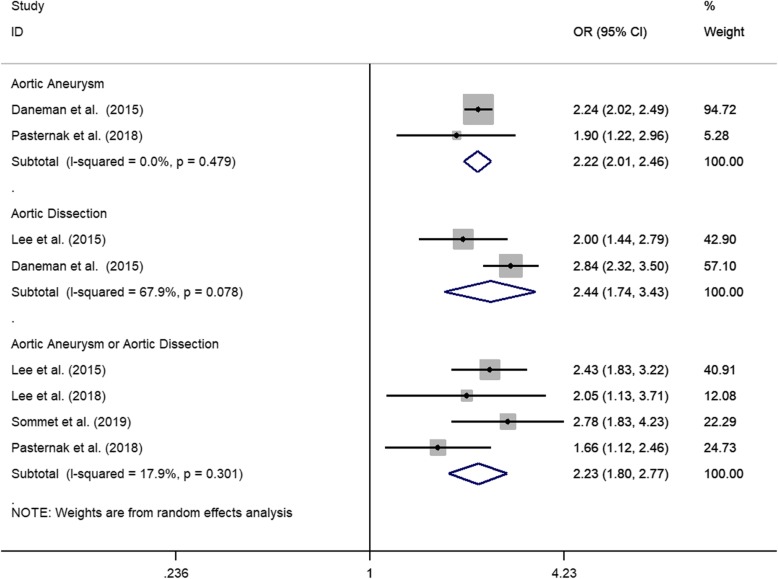
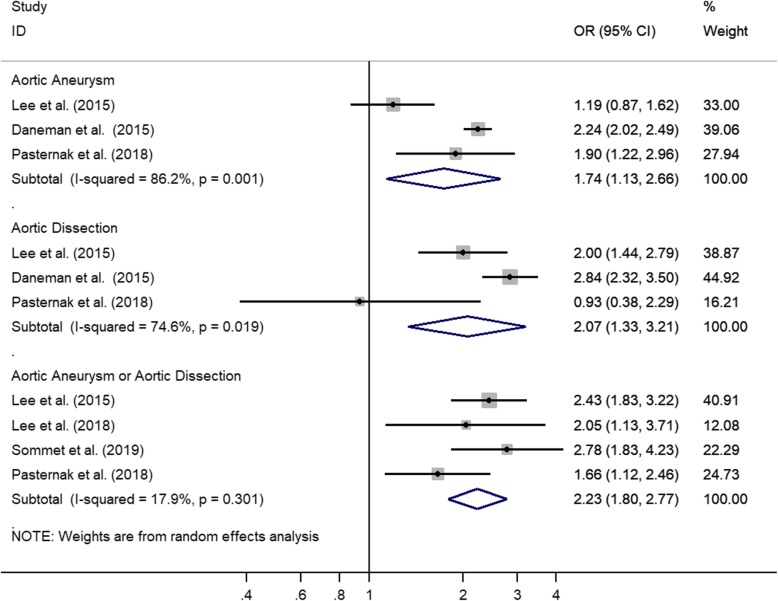
This meta-analysis enrolled 2,829,385 patients reported the relationship between fluoroquinolones and the risk of aortic diseases. Compared with nonusers or users of other antibiotics, users of fluoroquinolone had a significantly increased risk of aortic diseases (adjusted OR, 2.10; 95% CI, 1.65-2.68; P = .000, I = 16.4%). The quality of evidence was moderate, and the number needed to harm (NNH) for aortic diseases among patients was estimated to be 1301.
The fluoroquinolone use in patients significantly increases the risk of new-onset aortic diseases. Clinicians need to pay attention to these severe adverse events when considering fluoroquinolone use.
我们旨在确定氟喹诺酮类药物的使用与主动脉疾病风险之间的关系。
从建库到 2019 年 7 月 6 日,我们检索了 PubMed、EMBASE 和 Web of Science,以确定评估氟喹诺酮类药物使用者与非使用者或其他抗生素使用者相比,与主动脉疾病相关的风险的观察性研究。主要结局是主动脉疾病的首次发生。我们使用 GRADE 方法来评估证据的强度。我们使用逆方差方法随机效应模型来估计比值比(OR)及其 95%置信区间,并通过 I 统计量评估统计异质性。
这项荟萃分析纳入了 2829385 名患者,报告了氟喹诺酮类药物与主动脉疾病风险之间的关系。与非使用者或其他抗生素使用者相比,氟喹诺酮类药物使用者发生主动脉疾病的风险显著增加(校正 OR,2.10;95%CI,1.65-2.68;P = .000,I = 16.4%)。证据质量为中等,估计主动脉疾病患者的危害人数(NNH)为 1301。
氟喹诺酮类药物的使用显著增加了新发主动脉疾病的风险。临床医生在考虑使用氟喹诺酮类药物时需要注意这些严重的不良事件。