Student Research Committee, Shiraz University of Medical Sciences, Shiraz, Iran.
Cell and Molecular Medicine Student Research Group, School of Medicine, Shiraz University of Medical Sciences, Shiraz, Iran.
Stem Cell Res Ther. 2020 Feb 3;11(1):45. doi: 10.1186/s13287-020-1565-6.
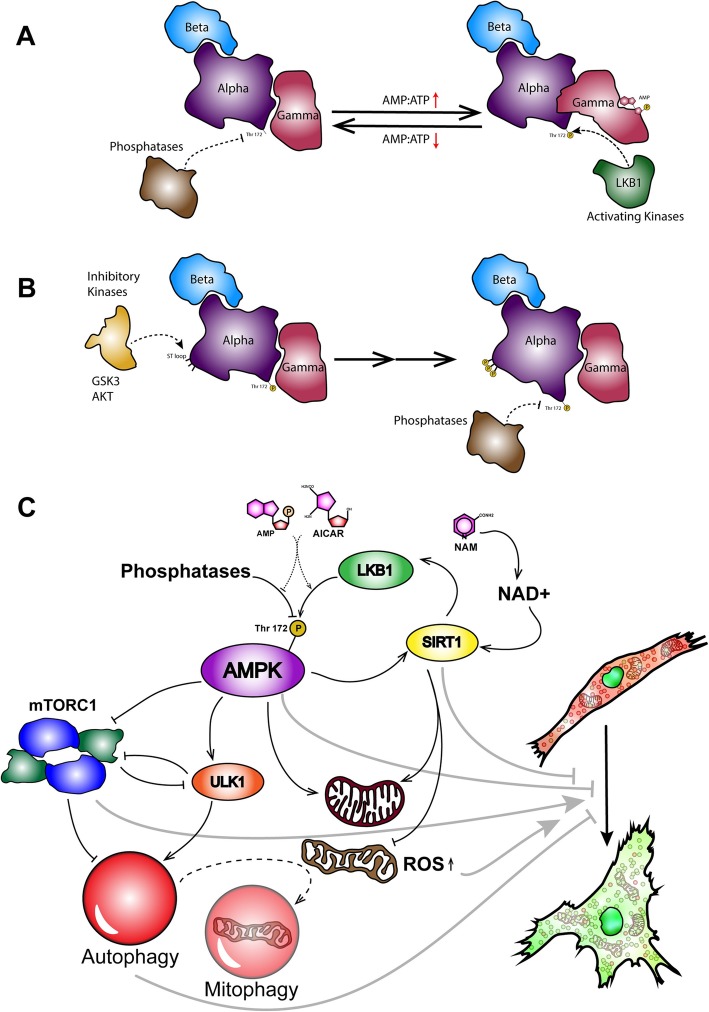
Mesenchymal stromal cell (MSC) stemness capacity diminishes over prolonged in vitro culture, which negatively affects their application in regenerative medicine. To slow down the senescence of MSCs, here, we have evaluated the in vitro effects of 5-aminoimidazole-4-carboxamide ribonucleotide (AICAR), an AMPK activator, and nicotinamide (NAM), an activator of sirtuin1 (SIRT1).
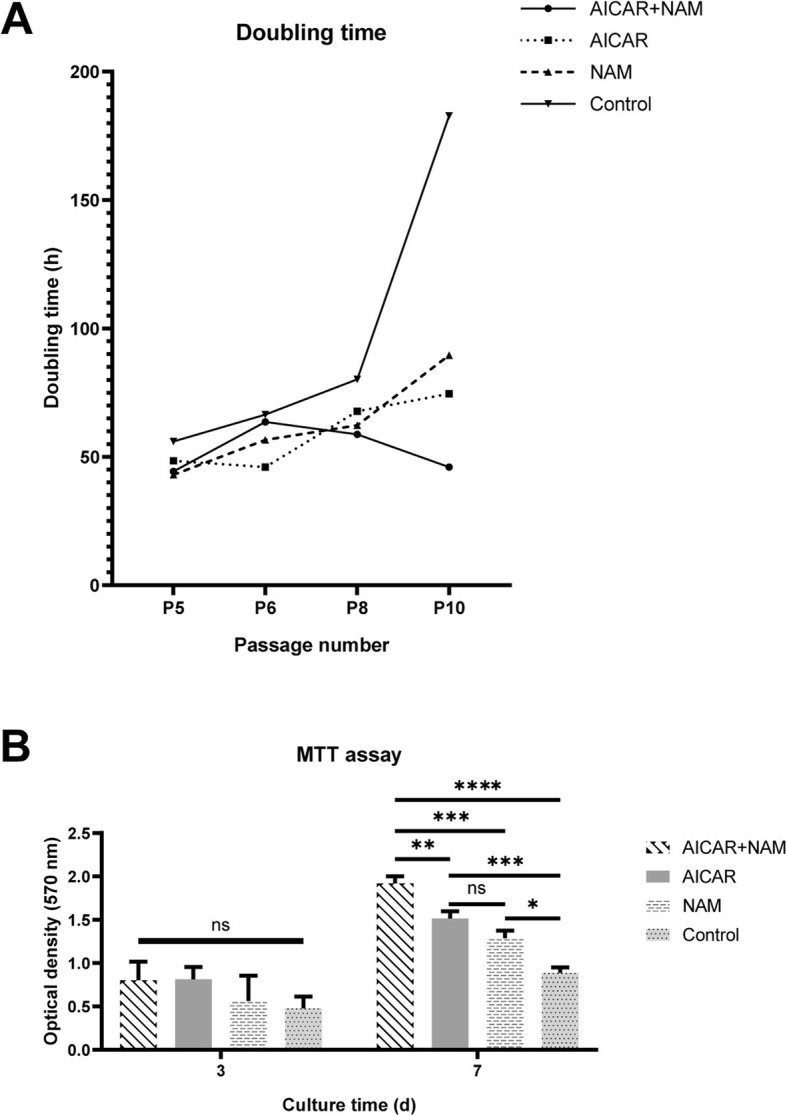
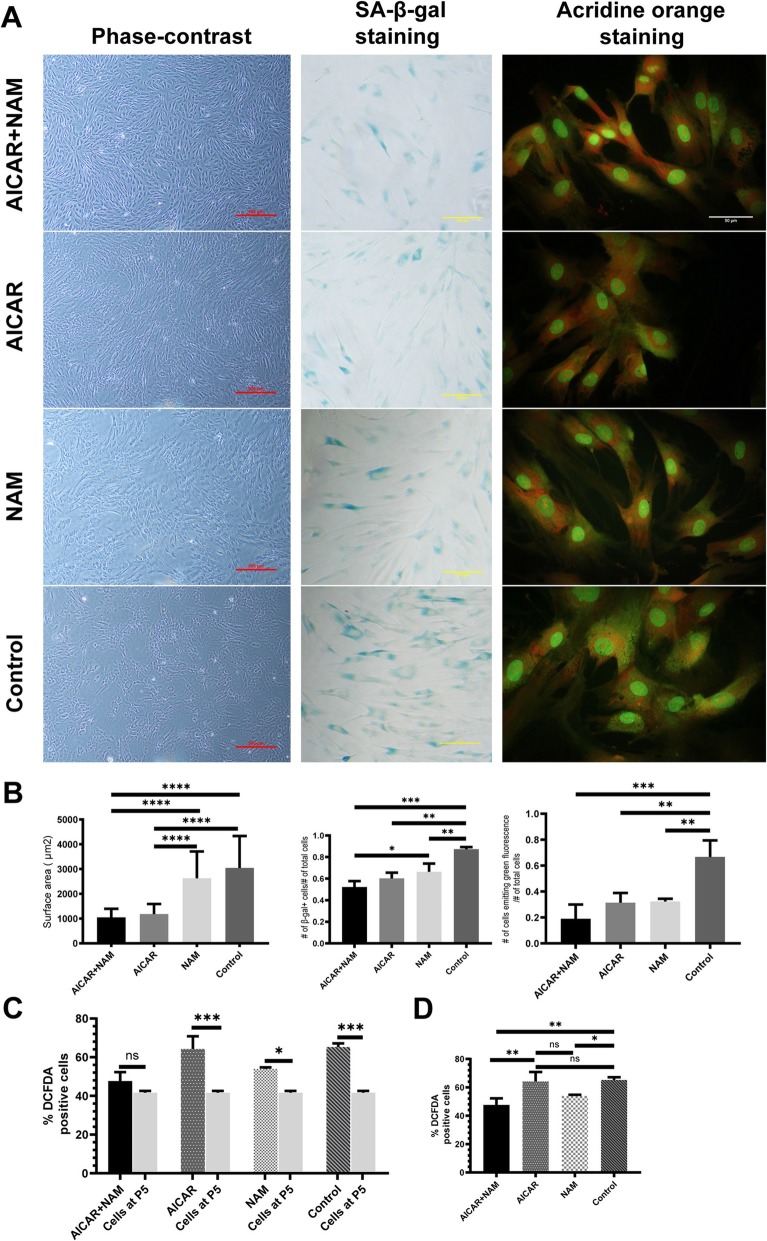
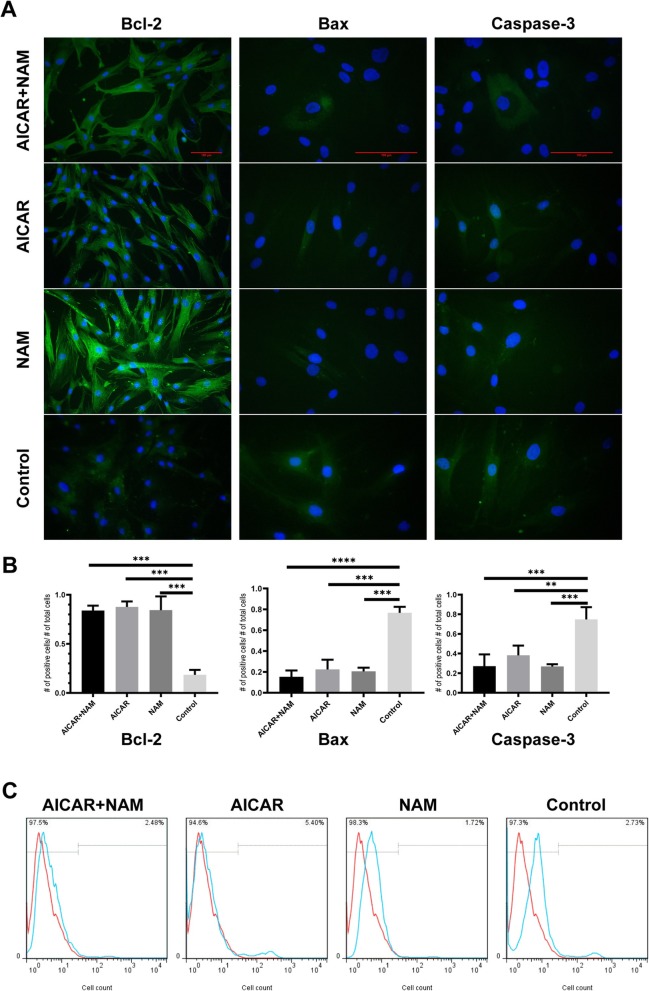
Human adipose-derived MSCs were cultured to passage (P) 5. Subsequently, the cells were grown in either normal medium alone (control group), the medium supplemented with AICAR (1 mM) and NAM (5 mM), or in the presence of both for 5 weeks to P10. Cell proliferation, differentiation capacity, level of apoptosis and autophagy, morphological changes, total cellular reactive oxygen species (ROS), and activity of mTORC1 and AMPK were compared among different treatment groups.
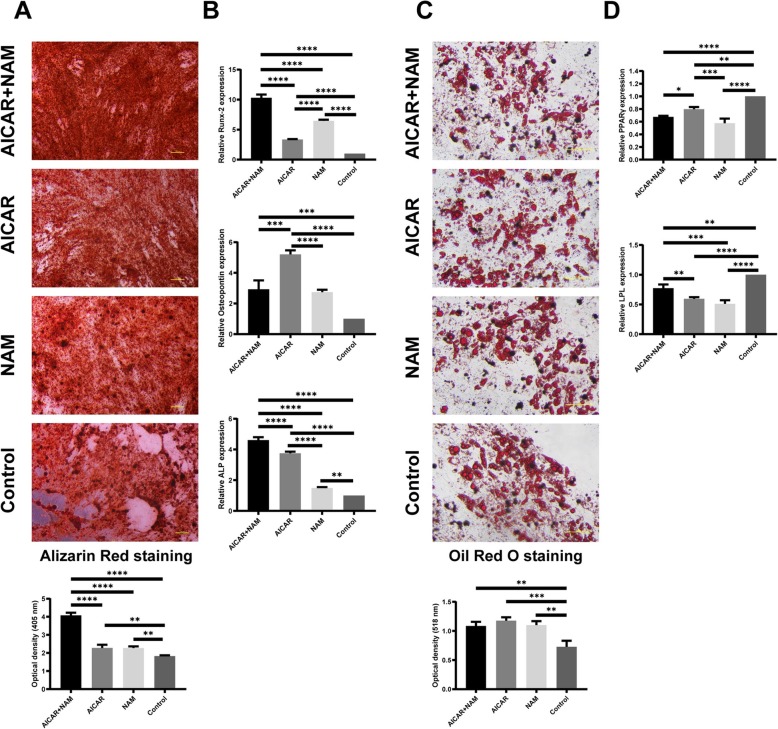
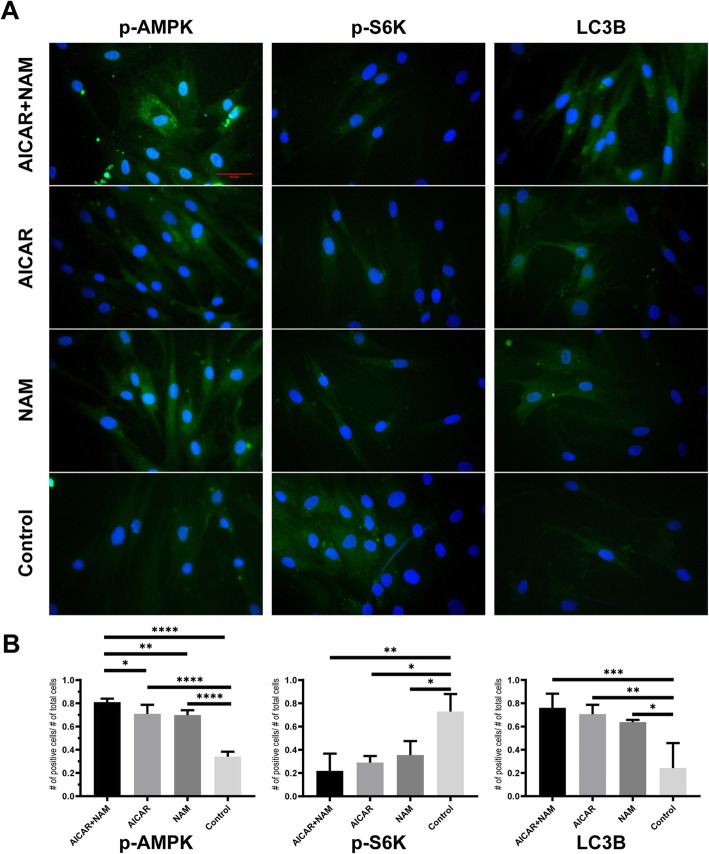
MSCs treated with AICAR, NAM, or both displayed an increase in proliferation and osteogenic differentiation, which was augmented in the group receiving both. Treatment with AICAR or NAM led to decreased expression of β-galactosidase, reduced accumulation of dysfunctional lysosomes, and characteristic morphologic features of young MSCs. Furthermore, while NAM administration could significantly reduce the total cellular ROS in aged MSCs, AICAR treatment did not. Moreover, AICAR-treated cells possess a high proliferation capacity; however, they also show the highest level of cellular apoptosis. The observed effects of AICAR and NAM were in light of the attenuated mTORC1 activity and increased AMPK activity and autophagy.
Selective inhibition of mTORC1 by AICAR and NAM boosts autophagy, retains MSCs' self-renewal and multi-lineage differentiation capacity, and postpones senescence-associated changes after prolonged in vitro culture. Additionally, co-administration of AICAR and NAM shows an additive or probably a synergistic effect on cellular senescence.
间充质基质细胞 (MSC) 的干细胞能力在长时间的体外培养中会减弱,这会对其在再生医学中的应用产生负面影响。为了减缓 MSC 的衰老,我们在这里评估了 5-氨基咪唑-4-甲酰胺核苷酸 (AICAR),一种 AMPK 激活剂,和烟酰胺 (NAM),一种 SIRT1 激活剂,对体外的影响。
将人脂肪来源的 MSC 培养至第 5 代 (P5)。随后,将细胞在正常培养基中单独培养 (对照组),或在培养基中添加 AICAR (1mM) 和 NAM (5mM),或同时添加两种物质培养 5 周至 P10。比较不同处理组之间细胞增殖、分化能力、凋亡和自噬水平、形态变化、总细胞活性氧 (ROS) 和 mTORC1 和 AMPK 的活性。
用 AICAR、NAM 或两者处理的 MSC 显示出增殖和成骨分化能力的增加,同时接受两者处理的细胞增殖和分化能力增加。用 AICAR 或 NAM 处理导致β-半乳糖苷酶表达减少,功能失调的溶酶体积累减少,以及年轻 MSC 的特征形态特征。此外,虽然 NAM 处理可显著降低衰老 MSC 中的总细胞 ROS,但 AICAR 处理则不能。此外,AICAR 处理的细胞具有高增殖能力;然而,它们也表现出最高水平的细胞凋亡。观察到的 AICAR 和 NAM 的作用是由于 mTORC1 活性减弱,AMPK 活性和自噬增加。
选择性抑制 mTORC1 通过 AICAR 和 NAM 增强自噬,保留 MSC 的自我更新和多系分化能力,并在长时间的体外培养后推迟衰老相关的变化。此外,AICAR 和 NAM 的联合给药对细胞衰老表现出相加或可能协同作用。